
All rights reserved to the presidency Copyright © 2020


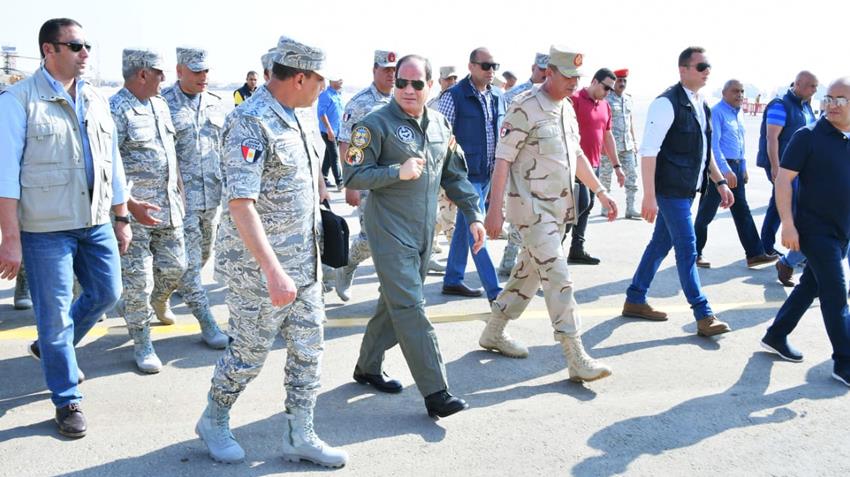
On Friday morning, President Abdel Fattah El-Sisi paid an official visit of inspection to airbases and Egypt’s Future mega project which is being implemented on the new Dabaa road, aiming at providing all the lands of the Million Feddan project to water access. The project started in Barkas, and many channels were drilled. Moreover, water was raised to different levels and transferred in pipes to agricultural areas.
Egypt’s Future project dates back to 2010, and the World Bank wanted to finance it. The project, however, halted when the 25th January Revolution staged. Assuming power, President Abdel Fattah El-Sisi ordered to revive the project and its implementation with the support of 100 percent of the Egyptian state. That is why many called it “the project of the century” as it is of an utmost importance to Egypt and represents a dream that would move Egypt faster to the world of development.
Egypt’s Future mega project on Dabaa road extends over a total area of 1 million feddans, with 70 investors working in this project. There are also 1200 central irrigation systems in the project.
About 170,000 feddans have been planted, and huge 500-megawatt power station has been established. The Karama Canal will be drilled as part of Egypt's Future project to transfer Nile water from Reyah el-Naseri and Rashid (Rosetta) to the heart of Western Sahara.
Hundreds of workers are taking part in this project, raising the motto of "I Won’t Sleep". The project aims to cultivate large parts in Western Sahara, always neglected by the farmers because of its harsh soil and salinity.
Leaders of the project announced that the project is targeting to cultivate 8 million feddans from the beginning of Dabaa road to El Alamein and the borders of Libya. This would result in providing large agricultural production. The American company Rinki,specialized in digging canals worldwide, will carry out the Karama Canal project. Furthermore, the least monthly salary employees earns there ranges from 4 to 5 thousands.
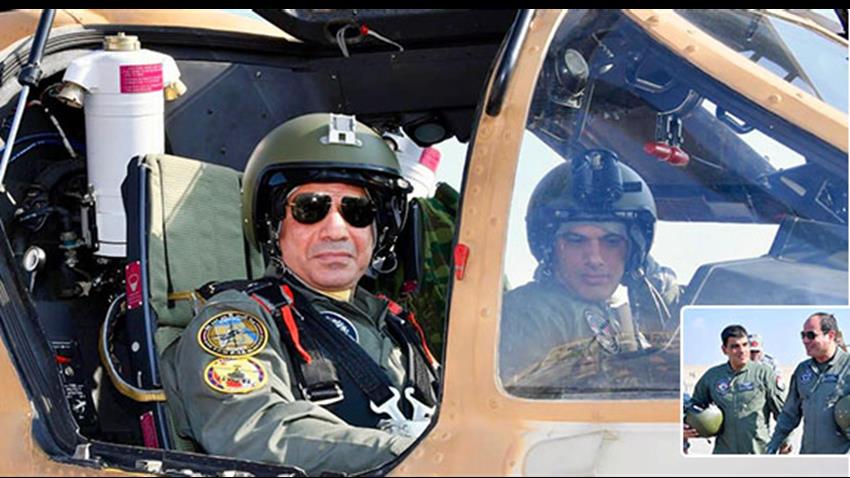
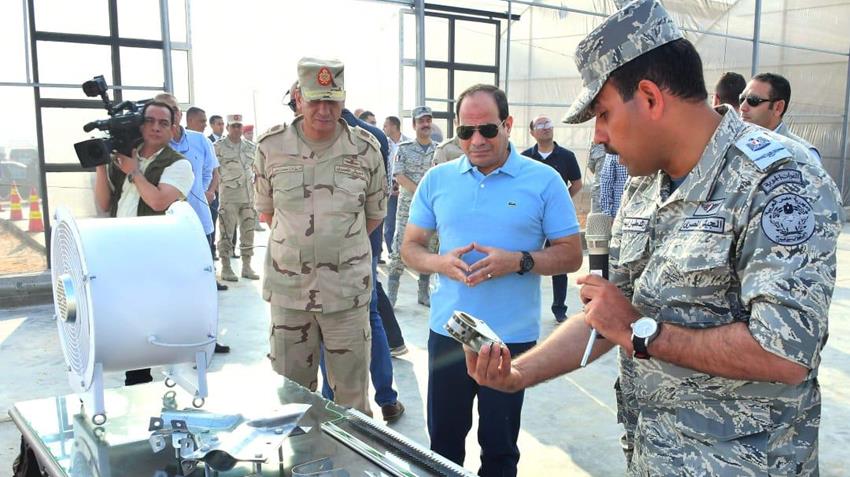
On Friday morning, President Abdel Fattah El-Sisi paid an official visit of inspection to airbases and Egypt’s Future mega project which is being implemented on the new Dabaa road, aiming at providing all the lands of the Million Feddan project to water access. The project started in Barkas, and many channels were drilled. Moreover, water was raised to different levels and transferred in pipes to agricultural areas.
Egypt’s Future project dates back to 2010, and the World Bank wanted to finance it. The project, however, halted when the 25th January Revolution staged. Assuming power, President Abdel Fattah El-Sisi ordered to revive the project and its implementation with the support of 100 percent of the Egyptian state. That is why many called it “the project of the century” as it is of an utmost importance to Egypt and represents a dream that would move Egypt faster to the world of development.
Egypt’s Future mega project on Dabaa road extends over a total area of 1 million feddans, with 70 investors working in this project. There are also 1200 central irrigation systems in the project.
About 170,000 feddans have been planted, and huge 500-megawatt power station has been established. The Karama Canal will be drilled as part of Egypt's Future project to transfer Nile water from Reyah el-Naseri and Rashid (Rosetta) to the heart of Western Sahara.
Hundreds of workers are taking part in this project, raising the motto of "I Won’t Sleep". The project aims to cultivate large parts in Western Sahara, always neglected by the farmers because of its harsh soil and salinity.
Leaders of the project announced that the project is targeting to cultivate 8 million feddans from the beginning of Dabaa road to El Alamein and the borders of Libya. This would result in providing large agricultural production. The American company Rinki,specialized in digging canals worldwide, will carry out the Karama Canal project. Furthermore, the least monthly salary employees earns there ranges from 4 to 5 thousands.


All rights reserved to the presidency Copyright © 2020
All rights reserved to the presidency Copyright © 2020