
All rights reserved to the presidency Copyright © 2020



The establishment of the Egyptian State Strategic Command Headquarters came as part of a comprehensive plan to build a new, modern capital that includes the state's most important and prominent sovereign institutions.
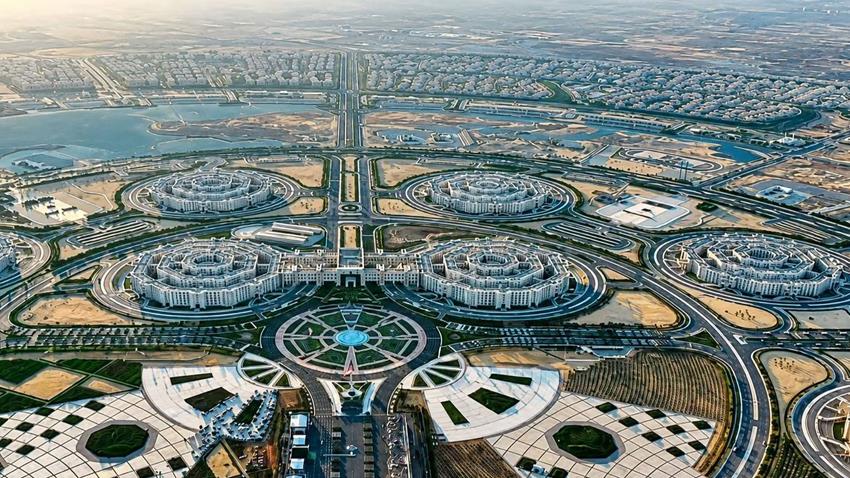
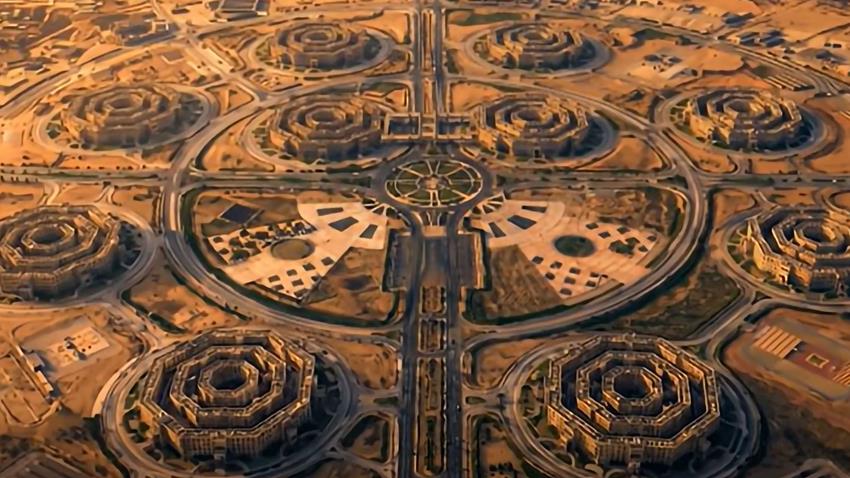
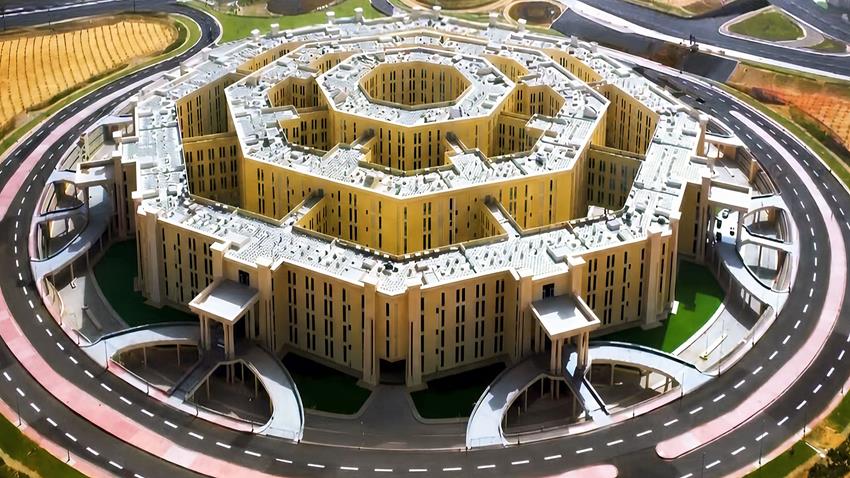
It was planned and implemented by the dedicated efforts of the Egyptian Armed Forces in cooperation with major national companies to match the efficiency and security of the world's most advanced command and control centers. In its grandeur, it draws inspiration from the authenticity of the ancient Egyptian civilization, while adopting an octagonal geometric design (The Octagon) as a symbol of strategic power and the close interconnection among all sovereign state branches and systems. This supports the efficiency of joint institutional work and enhances the speed of control and the successful management of emergency situations.
The main strategic and security drivers that prompted the state to construct this headquarters:
• Administrative and Strategic Centralization: To eliminate the geographical separation of sovereign headquarters and operations rooms, consolidating them under a single, secure umbrella to guarantee a rapid flow of information and issuance of directives.
• Confronting Modern Threats: To counter fourth- and fifth-generation warfare, alongside cyber threats that require ultra-advanced digital defense systems.
• Centralized Crisis Management: Driven by the critical need for a unified nerve center linking all of Egypt’s governorates and ministries, enabling a swift, synchronized response to emergencies and disasters.
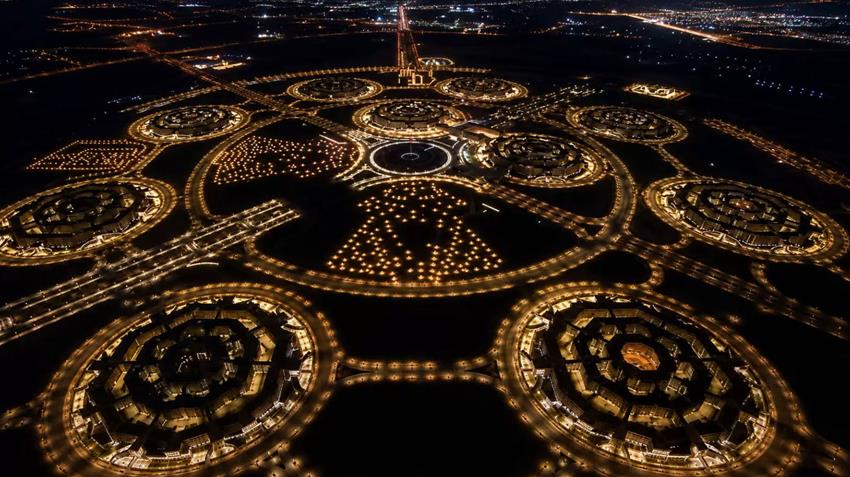
The location of the Strategic Command Headquarters was selected with the utmost care in the heart of the New Capital to ensure it is geographically and strategically secure. This massive complex spans a vast area of 22,000 feddans and is divided into 13 integrated strategic and logistical zones.
Its most prominent components include:
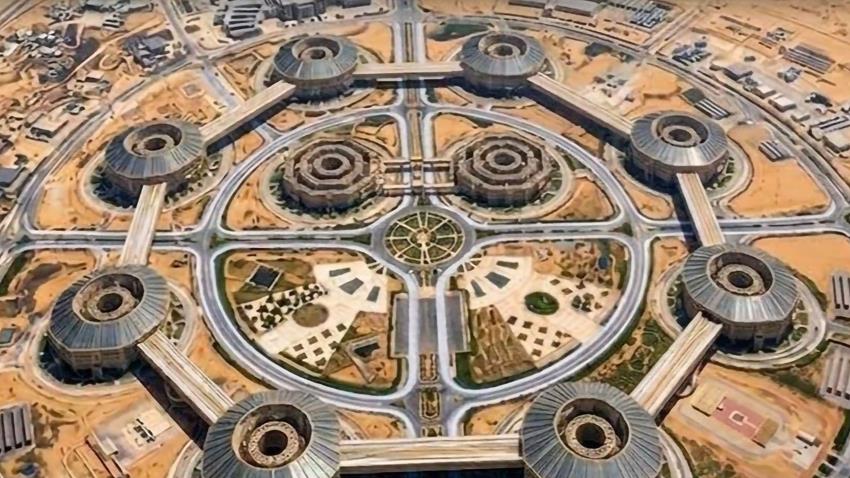
The Octagon: The architecture of the complex is distinguished by its geometric design, consisting of 8 octagon-shaped buildings that represent all branches of the Armed Forces and their sovereign directorates. This unique design symbolizes strength and close interconnection. At the center sits the Central Command Building, ensuring a rapid flow of information and security directives under a single, fully secured umbrella.
Cloud Data Centers: A massive, ultra-advanced digital infrastructure dedicated to storing, processing, and protecting national data in accordance with the highest cybersecurity standards.
Utility and Logistical Facilities: They include independent alternative power centers, advanced water and cooling networks, and integrated residential areas that ensure operational continuity for consecutive months under any exceptional circumstances.
Command and Control System: The headquarters relies on a hyper-intelligent command and control system fully driven by smart fifth- and sixth-generation technologies, characterized by:
- Secure and Real-Time Networking: Activation of a high-speed fiber-optic network and the latest generations of encrypted wireless networks, linking the headquarters to all state institutions, field armies, and governorates with absolute real-time immediacy.
- Computational Artificial Intelligence: Utilization of advanced AI algorithms to analyze massive amounts of incoming Big Data, displaying it on giant control screens to support immediate decision-making powered by ultra-fast data processing.
- Impenetrable Cybersecurity: Implementation of cutting-edge software firewalls and global cybersecurity protection systems to secure the exchange of classified information and safeguard the infrastructure against any digital attacks.
Objectives of the Headquarters:
The headquarters aims to achieve the pillars of stability through the following:
- Comprehensive Central Control: Monitoring performance indicators and national security across all state sectors around the clock.
- Emergency Management: Leading and directing joint national emergency plans among the military, police, and utility ministries.
- Strategic Planning: Formulating long-term security and defense visions, and testing them using advanced digital simulation models.



The establishment of the Egyptian State Strategic Command Headquarters came as part of a comprehensive plan to build a new, modern capital that includes the state's most important and prominent sovereign institutions.
It was planned and implemented by the dedicated efforts of the Egyptian Armed Forces in cooperation with major national companies to match the efficiency and security of the world's most advanced command and control centers. In its grandeur, it draws inspiration from the authenticity of the ancient Egyptian civilization, while adopting an octagonal geometric design (The Octagon) as a symbol of strategic power and the close interconnection among all sovereign state branches and systems. This supports the efficiency of joint institutional work and enhances the speed of control and the successful management of emergency situations.
The main strategic and security drivers that prompted the state to construct this headquarters:
• Administrative and Strategic Centralization: To eliminate the geographical separation of sovereign headquarters and operations rooms, consolidating them under a single, secure umbrella to guarantee a rapid flow of information and issuance of directives.
• Confronting Modern Threats: To counter fourth- and fifth-generation warfare, alongside cyber threats that require ultra-advanced digital defense systems.
• Centralized Crisis Management: Driven by the critical need for a unified nerve center linking all of Egypt’s governorates and ministries, enabling a swift, synchronized response to emergencies and disasters.
The location of the Strategic Command Headquarters was selected with the utmost care in the heart of the New Capital to ensure it is geographically and strategically secure. This massive complex spans a vast area of 22,000 feddans and is divided into 13 integrated strategic and logistical zones.
Its most prominent components include:
The Octagon: The architecture of the complex is distinguished by its geometric design, consisting of 8 octagon-shaped buildings that represent all branches of the Armed Forces and their sovereign directorates. This unique design symbolizes strength and close interconnection. At the center sits the Central Command Building, ensuring a rapid flow of information and security directives under a single, fully secured umbrella.
Cloud Data Centers: A massive, ultra-advanced digital infrastructure dedicated to storing, processing, and protecting national data in accordance with the highest cybersecurity standards.
Utility and Logistical Facilities: They include independent alternative power centers, advanced water and cooling networks, and integrated residential areas that ensure operational continuity for consecutive months under any exceptional circumstances.
Command and Control System: The headquarters relies on a hyper-intelligent command and control system fully driven by smart fifth- and sixth-generation technologies, characterized by:
- Secure and Real-Time Networking: Activation of a high-speed fiber-optic network and the latest generations of encrypted wireless networks, linking the headquarters to all state institutions, field armies, and governorates with absolute real-time immediacy.
- Computational Artificial Intelligence: Utilization of advanced AI algorithms to analyze massive amounts of incoming Big Data, displaying it on giant control screens to support immediate decision-making powered by ultra-fast data processing.
- Impenetrable Cybersecurity: Implementation of cutting-edge software firewalls and global cybersecurity protection systems to secure the exchange of classified information and safeguard the infrastructure against any digital attacks.
Objectives of the Headquarters:
The headquarters aims to achieve the pillars of stability through the following:
- Comprehensive Central Control: Monitoring performance indicators and national security across all state sectors around the clock.
- Emergency Management: Leading and directing joint national emergency plans among the military, police, and utility ministries.
- Strategic Planning: Formulating long-term security and defense visions, and testing them using advanced digital simulation models.


All rights reserved to the presidency Copyright © 2020
All rights reserved to the presidency Copyright © 2020