
All rights reserved to the presidency Copyright © 2020


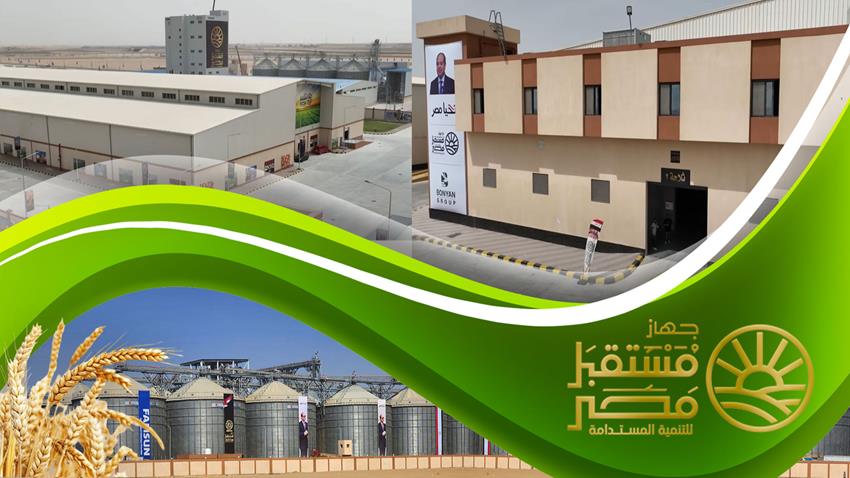
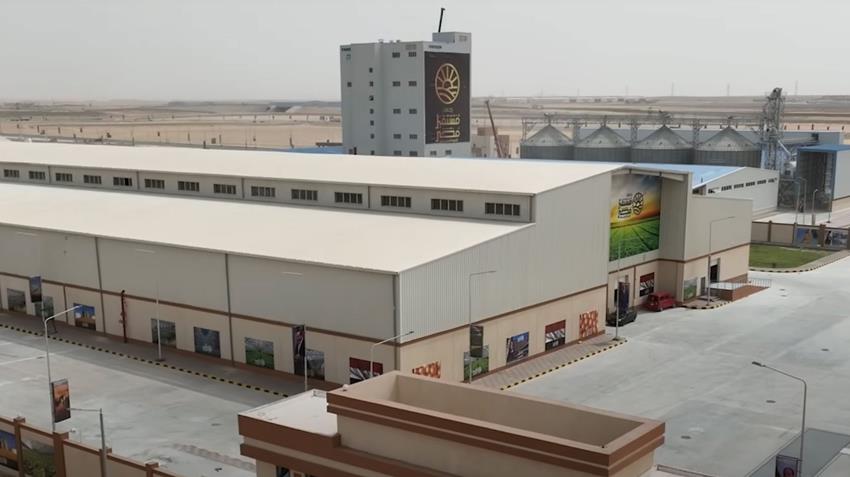
The “Future of Egypt” Industrial City includes silos for grain storage, refrigeration and freezing units for crops, as well as specialized factories for producing animal feed and dried products. These facilities significantly enhance Egypt's industrial capabilities.
Grain Storage Silos:
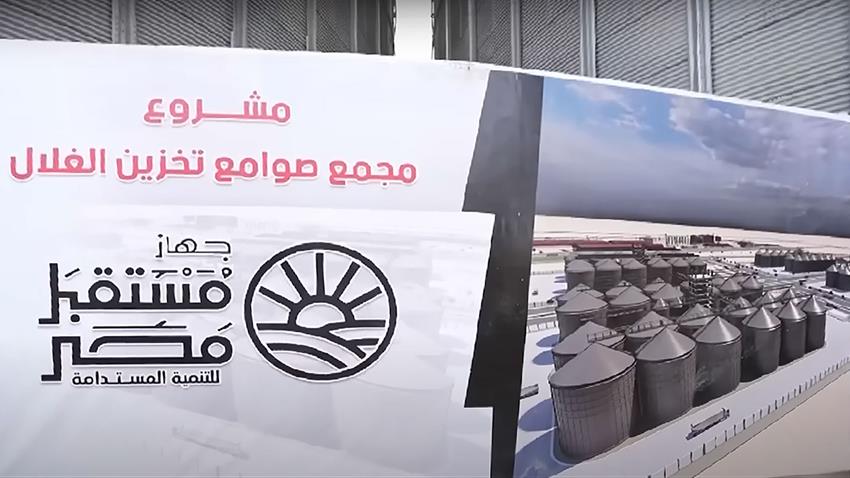
The silos were built with a view to secure the country’s needs for essential agricultural crop and achieve a significant leap in grain storage in Egypt. The goal is to preserve existing stock, minimize waste, and ensure the country maintains a secure strategic reserve of wheat, protected from spoilage, thereby increasing storage capacity.
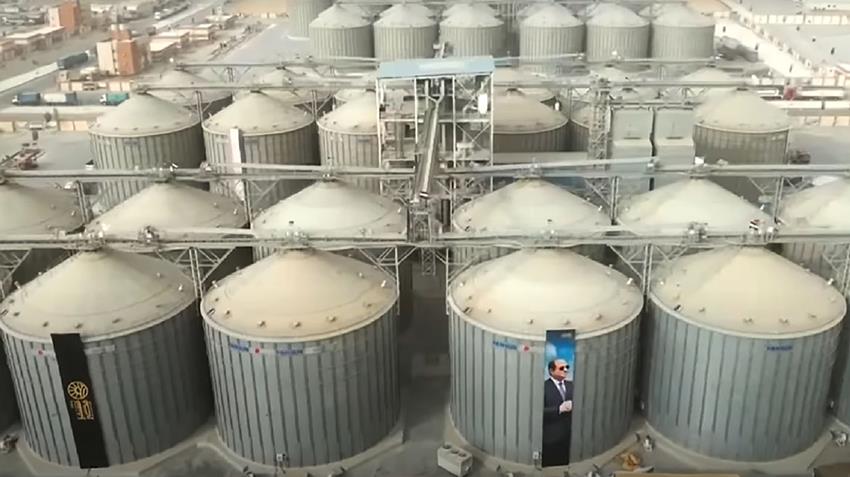
Phases I and II of the silo project have been completed, with a total storage capacity of 500,000 tons. Phase I has a capacity of 120,000 tons, and phase II has 380,000 tons. There are 76 silo units, each with a capacity of 5,000 tons. Additionally, there are three corn dryers, each capable of processing 100,000 tons per hour, with an operational capacity of 200 tons per hour.
The silos are equipped with systems to purify grains from metallic impurities and agricultural or insect pests. Moreover, a drying tower has been constructed to reduce grain moisture content.
Refrigeration and Freezing Complex:
High-standard cooling, sorting, and packaging stations are essential to enable the penetration of Egyptian exports into global markets and significantly increase export volumes. Egypt produces approximately 20 million tons of fruits and vegetables annually.
The complex includes a 90,000-ton capacity refrigeration unit, two refrigerators equipped with manual sorting and packaging systems for export, and two more refrigerators each equipped with two locally-manufactured automated sorting and packaging lines.
Dried Product Factories:
These factories are designed to process surplus goods and food products and convert them into products that maximize their added value. This also provides significant opportunities to boost and multiply exports.
Animal Feed Factory:
The animal feed industry is one of the most important inputs for livestock, poultry, and fish production. Egypt currently imports 90% of its feed input needs.
The factory has a production capacity of 50 tons/hour, totaling 150,000 tons annually, with expected revenues of EGP 2.5 billion per year.
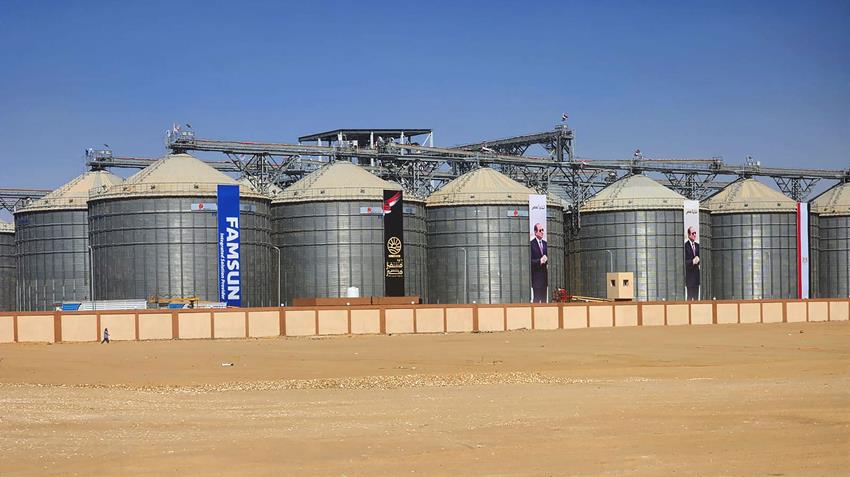
The “Future of Egypt” Industrial City includes silos for grain storage, refrigeration and freezing units for crops, as well as specialized factories for producing animal feed and dried products. These facilities significantly enhance Egypt's industrial capabilities.
Grain Storage Silos:
The silos were built with a view to secure the country’s needs for essential agricultural crop and achieve a significant leap in grain storage in Egypt. The goal is to preserve existing stock, minimize waste, and ensure the country maintains a secure strategic reserve of wheat, protected from spoilage, thereby increasing storage capacity.
Phases I and II of the silo project have been completed, with a total storage capacity of 500,000 tons. Phase I has a capacity of 120,000 tons, and phase II has 380,000 tons. There are 76 silo units, each with a capacity of 5,000 tons. Additionally, there are three corn dryers, each capable of processing 100,000 tons per hour, with an operational capacity of 200 tons per hour.
The silos are equipped with systems to purify grains from metallic impurities and agricultural or insect pests. Moreover, a drying tower has been constructed to reduce grain moisture content.
Refrigeration and Freezing Complex:
High-standard cooling, sorting, and packaging stations are essential to enable the penetration of Egyptian exports into global markets and significantly increase export volumes. Egypt produces approximately 20 million tons of fruits and vegetables annually.
The complex includes a 90,000-ton capacity refrigeration unit, two refrigerators equipped with manual sorting and packaging systems for export, and two more refrigerators each equipped with two locally-manufactured automated sorting and packaging lines.
Dried Product Factories:
These factories are designed to process surplus goods and food products and convert them into products that maximize their added value. This also provides significant opportunities to boost and multiply exports.
Animal Feed Factory:
The animal feed industry is one of the most important inputs for livestock, poultry, and fish production. Egypt currently imports 90% of its feed input needs.
The factory has a production capacity of 50 tons/hour, totaling 150,000 tons annually, with expected revenues of EGP 2.5 billion per year.


All rights reserved to the presidency Copyright © 2020
All rights reserved to the presidency Copyright © 2020