
All rights reserved to the presidency Copyright © 2020


Tuesday, 17 November 2026 / 01:47 PM
In the Name of Allah, the Most Gracious, the Most Merciful,
Your Excellency Alois Zwinggi,
President of the World Economic Forum;
Ladies and Gentlemen,
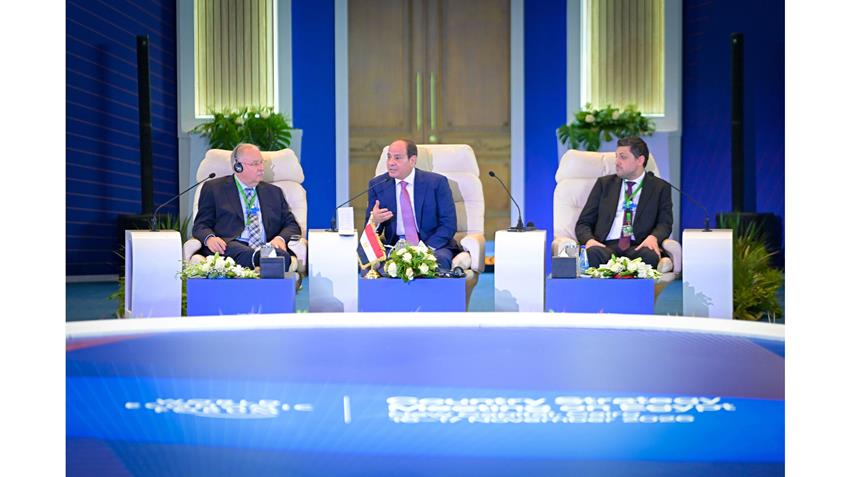
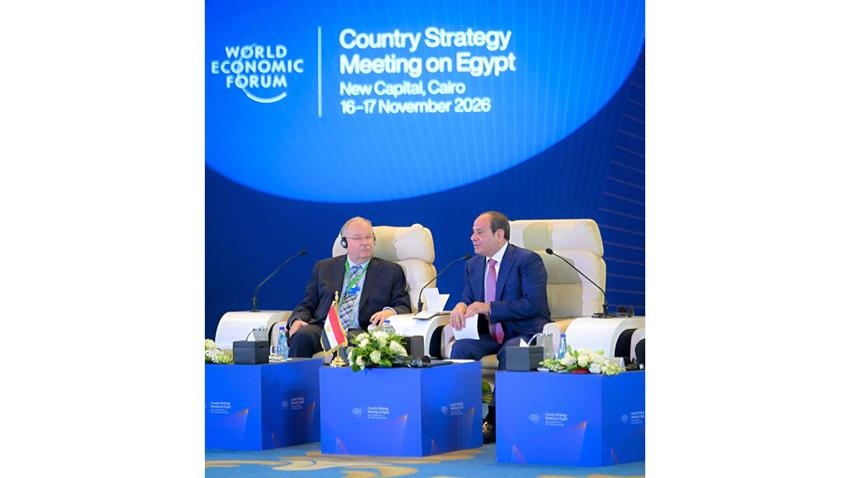
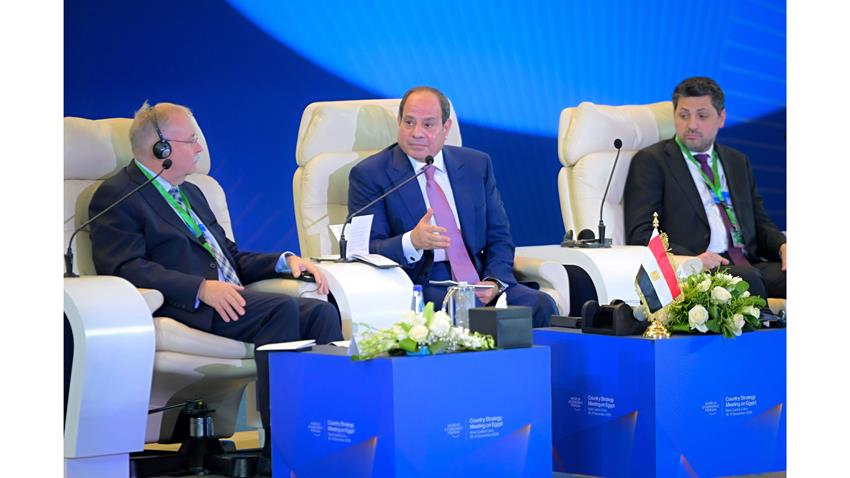
I warmly welcome you all to Egypt and extend my sincere gratitude to Mr. Alois Zwinggi and his team for taking the initiative to organize this meeting, which provides an opportunity to review Egypt’s ongoing development and nation-building journey and reflects the Egyptian state’s commitment to strengthening the role of the private sector in achieving development.
I would like to point out that today’s meeting is taking place amid escalating geopolitical tensions and economic challenges, as well as the reshaping of production, energy, and supply chain networks. This requires concerted efforts to achieve the desired development.
I reaffirm that, despite the challenges, Egypt has succeeded in maintaining high growth rates and is continuing to implement its national project for achieving sustainable development. This project is based on empowering the private sector, developing infrastructure, attracting and encouraging investment, supporting the establishment of advanced productive activities, as well as investing in human capital and enhancing people's skills.
I would like to emphasize that, over the past 12 years, Egypt has undertaken economic reform programs in cooperation with numerous institutions, most notably the International Monetary Fund (IMF), with the cooperation program with the Fund now approaching completion.
I also want to note that Egypt recorded an economic growth rate of 5.1% in fiscal year 2025/2026. Foreign exchange reserves rose to approximately USD 57.5 billion by the end of October 2026, while foreign direct investment in Egypt reached USD 18 billion.
Moreover, I would like to highlight the growth witnessed in Egypt’s construction sector, where the inhabited area has doubled from approximately 7% to 14%, while the number of new cities has increased from 22 to 61.
I confirm that Egypt has witnessed a major transformation in the development of its transportation and road networks, which now extend to approximately 31,000 kilometers, alongside the development and construction of ports, railway networks, and logistics centers. These efforts have contributed to increasing domestic and international trade flows and transforming Egypt into a hub for trade exchange and logistics services.
Furthermore, I would like to confirm Egypt’s success in attracting numerous major international companies to invest in various industrial sectors, capitalizing on the country's competitive advantages and the incentives it offers, in addition to the reforms introduced to improve the investment climate.
Our objective is to transform Egypt into an industrial production and export hub by encouraging the localization of industries, facilitating technology transfer, increasing local content, and strengthening the integration of Egyptian companies into global value chains. We remain committed to further developing investment-supportive policies and providing an increasingly attractive environment for both domestic and foreign investment.
I would also like to point out the launch of Egypt’s Industrial Strategy 2030, which aims to increase the industrial sector’s contribution to 20% of GDP annually, while raising the contribution of green industries to 5%.
Efforts to develop the legislative and tax environment are also ongoing. Egypt offers numerous investment incentives, particularly in priority sectors such as clean energy, the automotive industry and its components, including electric vehicles, the pharmaceutical industry, solar panel manufacturing, and information and communications technology.
In this regard, I want to highlight the launch of Egypt’s Golden License program, which facilitates and accelerates the process of obtaining the approvals required for investment. I also affirm that reforms have been implemented to reduce customs clearance times and costs, bringing the average clearance time down to just two days.
We are also working to digitize relevant government services and launch a unified digital business platform to streamline procedures and ensure transparency.
I would also like to emphasize Egypt’s success in increasing its electricity generation capacity to approximately 64,000 megawatts to support industrial and productive development. The State is working to strengthen reliance on new and renewable energy, with the aim of increasing its share to 45% by 2028. We are also working toward strengthening electricity interconnection with neighboring countries.
I confirm that Egypt has taken measures to address the challenges associated with foreign currency shortages and difficulties in transferring foreign capital abroad, most notably by adopting a flexible exchange rate regime. I would like to emphasize that foreign investors can now operate in an investment-friendly environment in Egypt, with the ability to repatriate their profits and import the resources they need through streamlined banking procedures.
I would also like to draw attention to the National Transformation Program for 2027–2030, which is scheduled to be announced in December 2026. The program aims to move Egypt into a new phase focused on enhancing economic productivity, making our economy more integrated into regional and global value chains, while empowering the private sector and strengthening its competitiveness.
I reiterate that Egypt offers promising opportunities across various sectors, and invite you to expand your investments in Egypt. I assure you of our commitment to addressing and overcoming any obstacles you may encounter.
In conclusion, I would like to express my gratitude to Mr. Alois Zwinggi and to the representatives of the business community attending today.
Thank you


Tuesday, 17 November 2026 / 01:47 PM
In the Name of Allah, the Most Gracious, the Most Merciful,
Your Excellency Alois Zwinggi,
President of the World Economic Forum;
Ladies and Gentlemen,
I warmly welcome you all to Egypt and extend my sincere gratitude to Mr. Alois Zwinggi and his team for taking the initiative to organize this meeting, which provides an opportunity to review Egypt’s ongoing development and nation-building journey and reflects the Egyptian state’s commitment to strengthening the role of the private sector in achieving development.
I would like to point out that today’s meeting is taking place amid escalating geopolitical tensions and economic challenges, as well as the reshaping of production, energy, and supply chain networks. This requires concerted efforts to achieve the desired development.
I reaffirm that, despite the challenges, Egypt has succeeded in maintaining high growth rates and is continuing to implement its national project for achieving sustainable development. This project is based on empowering the private sector, developing infrastructure, attracting and encouraging investment, supporting the establishment of advanced productive activities, as well as investing in human capital and enhancing people's skills.
I would like to emphasize that, over the past 12 years, Egypt has undertaken economic reform programs in cooperation with numerous institutions, most notably the International Monetary Fund (IMF), with the cooperation program with the Fund now approaching completion.
I also want to note that Egypt recorded an economic growth rate of 5.1% in fiscal year 2025/2026. Foreign exchange reserves rose to approximately USD 57.5 billion by the end of October 2026, while foreign direct investment in Egypt reached USD 18 billion.
Moreover, I would like to highlight the growth witnessed in Egypt’s construction sector, where the inhabited area has doubled from approximately 7% to 14%, while the number of new cities has increased from 22 to 61.
I confirm that Egypt has witnessed a major transformation in the development of its transportation and road networks, which now extend to approximately 31,000 kilometers, alongside the development and construction of ports, railway networks, and logistics centers. These efforts have contributed to increasing domestic and international trade flows and transforming Egypt into a hub for trade exchange and logistics services.
Furthermore, I would like to confirm Egypt’s success in attracting numerous major international companies to invest in various industrial sectors, capitalizing on the country's competitive advantages and the incentives it offers, in addition to the reforms introduced to improve the investment climate.
Our objective is to transform Egypt into an industrial production and export hub by encouraging the localization of industries, facilitating technology transfer, increasing local content, and strengthening the integration of Egyptian companies into global value chains. We remain committed to further developing investment-supportive policies and providing an increasingly attractive environment for both domestic and foreign investment.
I would also like to point out the launch of Egypt’s Industrial Strategy 2030, which aims to increase the industrial sector’s contribution to 20% of GDP annually, while raising the contribution of green industries to 5%.
Efforts to develop the legislative and tax environment are also ongoing. Egypt offers numerous investment incentives, particularly in priority sectors such as clean energy, the automotive industry and its components, including electric vehicles, the pharmaceutical industry, solar panel manufacturing, and information and communications technology.
In this regard, I want to highlight the launch of Egypt’s Golden License program, which facilitates and accelerates the process of obtaining the approvals required for investment. I also affirm that reforms have been implemented to reduce customs clearance times and costs, bringing the average clearance time down to just two days.
We are also working to digitize relevant government services and launch a unified digital business platform to streamline procedures and ensure transparency.
I would also like to emphasize Egypt’s success in increasing its electricity generation capacity to approximately 64,000 megawatts to support industrial and productive development. The State is working to strengthen reliance on new and renewable energy, with the aim of increasing its share to 45% by 2028. We are also working toward strengthening electricity interconnection with neighboring countries.
I confirm that Egypt has taken measures to address the challenges associated with foreign currency shortages and difficulties in transferring foreign capital abroad, most notably by adopting a flexible exchange rate regime. I would like to emphasize that foreign investors can now operate in an investment-friendly environment in Egypt, with the ability to repatriate their profits and import the resources they need through streamlined banking procedures.
I would also like to draw attention to the National Transformation Program for 2027–2030, which is scheduled to be announced in December 2026. The program aims to move Egypt into a new phase focused on enhancing economic productivity, making our economy more integrated into regional and global value chains, while empowering the private sector and strengthening its competitiveness.
I reiterate that Egypt offers promising opportunities across various sectors, and invite you to expand your investments in Egypt. I assure you of our commitment to addressing and overcoming any obstacles you may encounter.
In conclusion, I would like to express my gratitude to Mr. Alois Zwinggi and to the representatives of the business community attending today.
Thank you

All rights reserved to the presidency Copyright © 2020
All rights reserved to the presidency Copyright © 2020