
All rights reserved to the presidency Copyright © 2020


Wednesday, 21 October 2026 / 06:08 PM
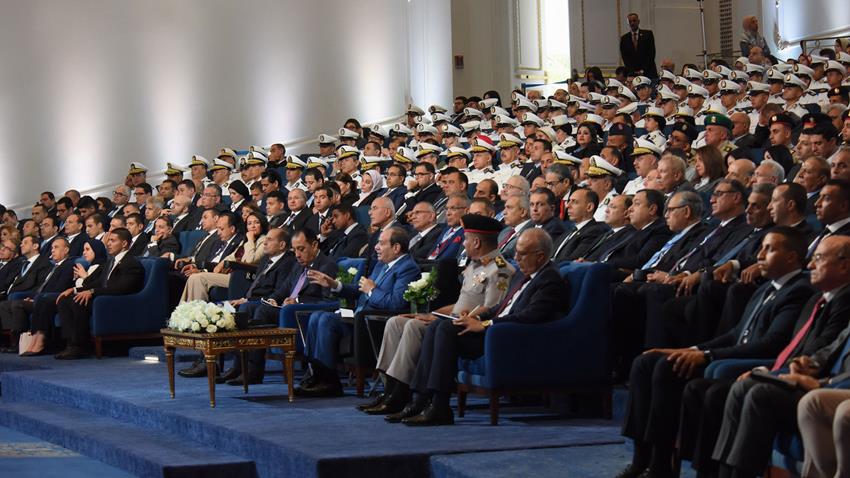
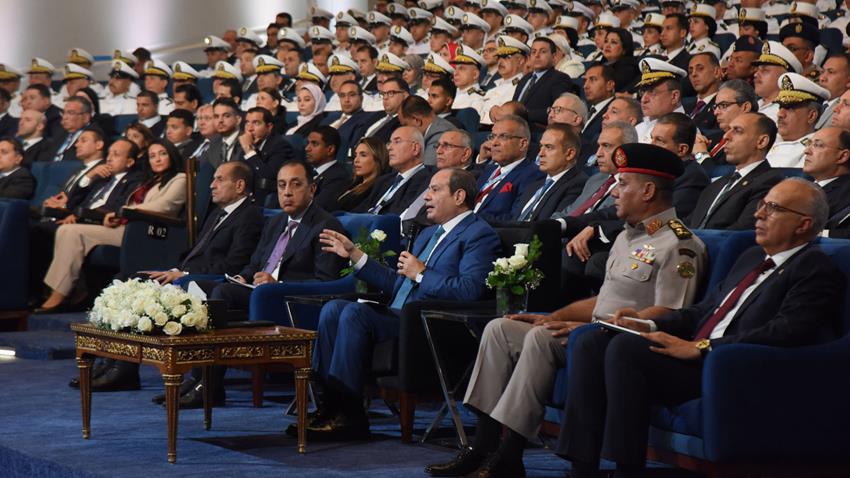
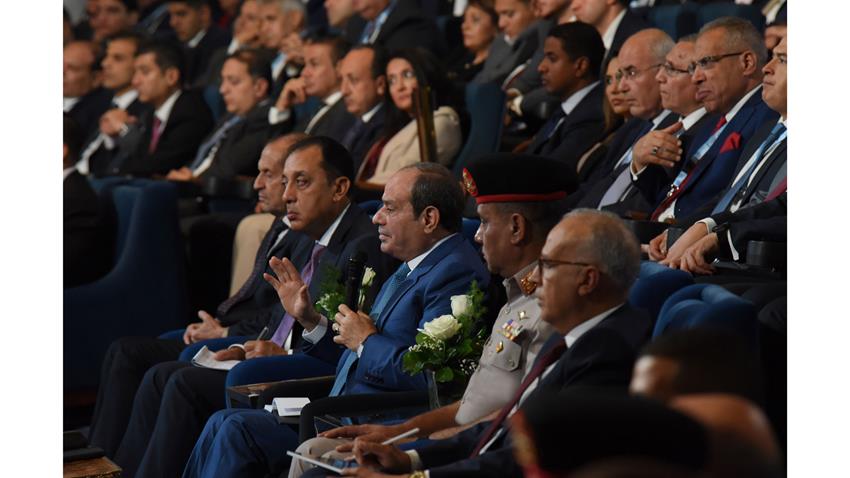
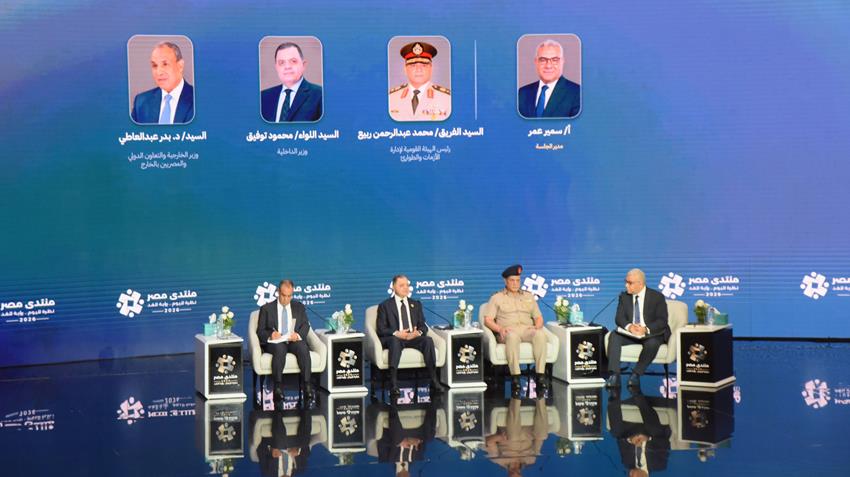
Today, President Abdel Fattah El-Sisi participated in a session on the nation's and citizen's security, held on the third day of the Egypt Forum 2026. Prime Minister Dr. Moustafa Madbouly and Minister of Defense and Military Production, Lieutenant General Ashraf Salem Zaher attended and Minister of Interior Major General Mahmoud Tawfik, Minister of Foreign Affairs, International Cooperation, and Egyptian Expatriates Dr. Badr Abdelatty and the Chief of the Armed Forces Operations Authority, also Head of the National Authority for Crisis and Emergency Management Lieutenant General Mohamed Abdel Rahman Rabie participated in the session.
The Spokesman for the Presidency, Ambassador Mohamed El-Shennawy, stated that the session started with screening of film that highlighted the efforts of state institutions, mainly the Ministry of Interior, to ensure security and safety for citizens, particularly since January 2011. The Minister of Interior outlined the efforts undertaken to advance the security apparatus, combat criminal activity, restore security to Egyptian streets, and ensure a rapid response to citizens' reports. As an example, he noted a significant decline in vehicle thefts—a reduction of 94%. He further explained that the Ministry of Interior has implemented a comprehensive strategy to reshape security operations in light of evolving criminal tactics. This strategy is built upon five pillars: upgrading police facilities and equipping them with modern technology to keep pace with advancements across various sectors; establishing an integrated, science-based security framework that utilizes AI and early detection of criminal patterns to devise effective countermeasures—a process that required modernizing operations centers across all governorates and linking them to a central hub; developing human capital—a prerequisite for the success of this framework—which involved creating new specialized security functions, including units focused on cybercrime, intellectual property, and the early monitoring of terrorist organizations; fostering public awareness to serve as a vital line of defense against attempts to undermine national stability and public safety; and finally modernizing penal policies regarding convicts.
The Chief of the Armed Forces Operations Authority, also Head of the National Authority for Crisis and Emergency Management, outlined the operational mechanisms of both the
National Authority for Crisis and Emergency Management
and the State Defense Coordination Center. He noted that the Authority is a sovereign public entity with a distinct legal personality, as well as security, administrative, and technical independence. It is affiliated with the Presidency of the Republic and aims to safeguard Egyptian national security, protect public and private property, and serve the interests, safety, and stability of citizens. He confirmed that the administrative and legal framework for the Authority has been finalized, noting that it possesses the necessary executive bodies to manage any crisis efficiently.
In his remarks, the Minister of Foreign Affairs noted that foreign policy has become a matter of interest to all segments of Egyptian society primarily because it is an extension of domestic policy and the two are interconnected. An effective foreign policy stems from domestic stability, while events abroad, in turn, impact the internal situation. He noted that Egypt is surrounded by nations experiencing crises and conflicts, which directly concern Egypt’s national security. He highlighted that Egypt maintains strategic ties and partnerships with various global powers, managing them with wisdom in accordance with the doctrine of "strategic balance" established by the President.
Regarding Red Sea security, he noted that Egypt is working to achieve security and stability, in cooperation with the littoral states, by fostering partnerships across various sectors—including logistics, the economy, and tourism development.
As for the African sphere, the Minister emphasized that Egypt’s economic and developmental future is intrinsically linked to development across Africa. He noted that the President has made 38 visits to African nations—an unprecedented number—underscoring that this outreach strengthens solidarity with the African countries.
The Minister of Foreign Affairs described the issue of water security as an existential matter, asserting that the lives of 110 million Egyptians can not be made contingent upon the unilateral will of any other party. He stressed that Egypt merely calls for the application of international law. He further outlined the principles guiding Egypt’s policy toward the Horn of Africa: non-interference in the internal affairs of other states; respect for the unity and sovereignty of these nations—with a firm rejection of any secession, partition, or fragmentation in the Horn of Africa and the facilitation of maritime access through coordination and agreement with neighboring states.
The Minister reaffirmed Egypt’s historic ties with Sudan, emphasizing its support for Sudan's unity and stability. He stated that Egypt will not permit the division of Sudan, nor will it allow the collapse of its state institutions. Furthermore, he noted that Egypt continues to engage with other regional stakeholders to pursue a political solution in Sudan.
Regarding the Palestinian issue, the Minister reaffirmed the President’s steadfast position that rejects the displacement of Palestinians. He also highlighted Egypt’s ongoing efforts to ensure the continued flow of humanitarian aid, which exceeded one million tons, through the Rafah crossing, while working to preserve the Palestinian cause against schemes aimed at its liquidation and striving to achieve Palestinian consensus.
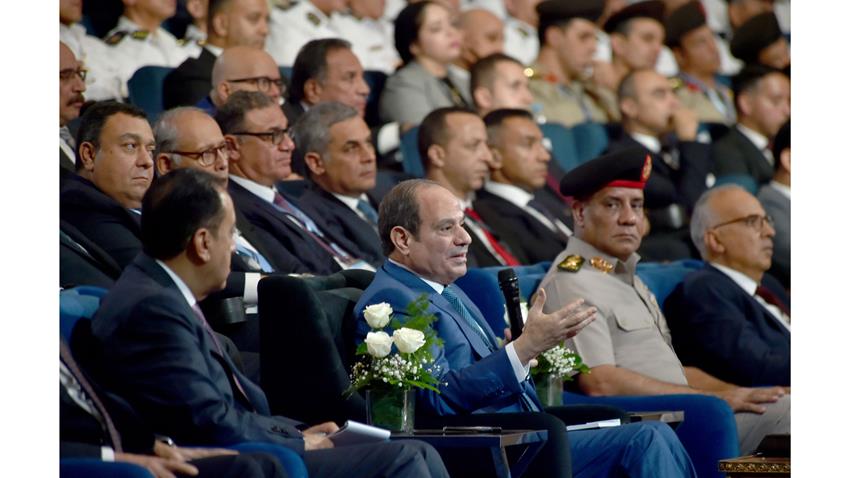
The President made an intervention to emphasize that undermining state institutions is a recurring tactic intended to cause the collapse of states—a pattern clearly evident during 2011. The President pointed out that the Armed Forces and the Ministry of Interior serve as the two pillars of national security, noting that the Ministry of Interior remains a target. The President further observed that a review of events over the past few years reveals that the idea of targeting and building a negative impression of the Ministry of Interior's practices is persistent, and that there is sometimes unintentional participation in building this impression through daily interaction with events. In this regard, the President stressed that this places a burden on the Ministry of Interior to adopt initiatives to improve and maintain the public's perception of the Ministry. The President reiterated that the targeting of the security institution in 2011 was among the objectives of implementing the plan against the Egyptian State.
President El-Sisi emphasized the necessity of preserving state institutions, noting that the failure to protect them is what leads to the collapse of states, which in turn causes severe problems. The President pointed out that the current situation in the region illustrates this reality.
President El-Sisi emphasized the need to refresh public memory and shed light on the events of 2011 to ensure that they are not repeated. The President referred to the attacks targeting security forces, the storming of police stations and prisons, and the escape of 33,000 prisoners, along with the resulting repercussions.
The President further noted that targeting the Police and the Armed Forces also aims to cast doubt on the competence and capability of both institutions. President El-Sisi reiterated that bringing down the state would be difficult as long as its institutions remain strong and hold the trust of the people.
In this context, the President directed the Armed Forces and the Ministry of Interior to put forward further ideas and initiatives to maintain continuous communication with the public and convey the facts, thereby fostering a positive public perception.
President El-Sisi mentioned that what had been accomplished regarding the construction, redevelopment, and modernization of reform and rehabilitation centers, stemmed from an ethical, religious, and humanitarian perspective, ensuring the principle that a person should not be punished twice for the same offense. Accordingly, the focus was placed on rebuilding individuals' character and transforming convicted persons into productive members of society. This prompted the state to convert prisons into correctional and rehabilitation centers. The President underscored the importance of arranging visits to these centers to assess the efforts made in this regard.
President El-Sisi reaffirmed that the massive damage inflicted on the country before 2011 had prompted the state to consider a new approach to the security sector's responsibilities concerning detention conditions, an area that is also being targeted. The President therefore instructed the Ministries of Defense and Interior to develop ideas and initiatives for maintaining continuous communication with the Egyptian people, ensuring that no rift occurs between the people and state institutions.
President El-Sisi also noted that the National Authority for Crisis and Emergency Management serves as a parallel support arm for the Egyptian state and government in managing the country during crises and emergencies nationwide, particularly in light of the database established by the Authority. The President affirmed that the Authority possesses the necessary capabilities to carry out its responsibilities and has become an additional source of support for state entities, helping improve the performance of the state and government more effectively.
President El-Sisi stated that the fundamental constants of Egypt's foreign policy since 2014 have been based on non-interference in the internal affairs of other states, refraining from conspiracies, preserving the unity of the nation-state and its institutions, refusing to engage with armed militias, cooperating in reconstruction, development, and nation-building, and pursuing positive engagement through balanced relations with all parties.
The President stressed the need to to adhere to strategic balance and avoid letting the state be driven into taking actions or steps based on popular pressure.
In this context, Dr. Hani Sewilam, Minister of Water Resources and Irrigation, referred to efforts undertaken in previous periods to secure the Egyptian state against the risks posed by the Ethiopian dam. The directive had been to ensure that Egyptian citizens would not suffer harm. Accordingly, water treatment plants and various projects had been established, including canal lining projects and the New Delta Project.
The Minister noted that the volume of treated water being reused had reached 23.2 billion cubic meters annually. These efforts aim to protect citizens from the effects of any unilateral measures that might be taken, mitigate the consequences of climate change, and respond to population growth. He also reviewed details of several projects implemented in Egypt to secure water supplies.
With regard to the Ethiopian dam, the Minister noted that Egypt had exercised patience and consistently handled the situation with calm at all times. The Egyptian state had done everything within its power on this issue, both through negotiations and through the Declaration of Principles agreement, which served as a step toward demonstrating Egypt's good intentions toward the Ethiopian people. Unfortunately, however, the Ethiopian side failed to implement the Declaration of Principles.
The Minister further explained that negotiations hosted by Washington had resulted in an agreement approved by the Ethiopian and Sudanese sides, as well as Egypt. The agreement was balanced and served the interests of all parties. However, the Ethiopian side withdrew before signing it. Matters subsequently evolved into different tracks that yielded no results until the Egyptian state decided not to continue negotiations.
The Minister also pointed out that the Nile Basin comprises more than just Ethiopia. During President El-Sisi's tenure, Egypt's relations with the other countries of the southern Nile Basin had reached their highest levels. This cooperation had taken various forms, including Egyptian investments totaling $120 million in these countries; projects involving water wells, dams, and flood protection; technical support for establishing meteorological forecasting centers; and reciprocal visits.
The Minister noted that solutions were available, but achieving them required the necessary goodwill from all parties. He noted that it would be possible to establish an electricity grid connecting Egypt with all Nile Basin countries. Consequently, electricity should not be used as a justification for building dams, since electricity is a technical issue that can be resolved in the future.
He added that if the goals of building dams were to share water resources, the Nile Basin countries receive approximately 7,000 billion cubic meters of rainfall, which could be harnessed, collected, and directed toward agriculture, drinking water, or industry.
The Minister explained that the Nile Basin's annual water resources range from 1,600 to 2,000 billion cubic meters, while Egypt receives 55.5 billion cubic meters annually. This represents less than 3% of the rainfall across the Nile Basin countries. This indicates that there is no water shortage across the Nile Basin as a whole, whereas Egypt faces a water crisis because of its limited water resources. Accordingly, Egypt and the other Nile Basin countries could cooperate to harness available water resources and achieve mutual benefits for all countries in the basin.
President El-Sisi concluded his remarks by emphasizing the need to continue strengthening Egypt's capabilities and ensuring that Egyptian public opinion remains resolute and strong, given the numerous risks facing the country, which are not limited to the Ethiopian dam.
The President added that Arab national security is indivisible, stressing that the stability of Egypt's brothers in the Gulf is a matter of concern to Egypt from a national security perspective. The President further emphasized the need to restore stability throughout the Arab world, including in Sudan, Libya, and Somalia, affirming that Egypt's support for the Gulf states is an extension of the shared Arab national security framework.
President El-Sisi also pointed out that Egypt's military efforts are intended to defend the territory of the Kingdom of Saudi Arabia and do not include launching attacks on Yemen. The President reiterated that the objective is to defend the Kingdom's territory and borders, as well as the territory of any other Arab state if requested of Egypt, and that Egyptian military deployment does not extend beyond Egypt's borders except to aid a sisterly country whose security and stability Egypt is keen to safeguard.


Wednesday, 21 October 2026 / 06:08 PM
Today, President Abdel Fattah El-Sisi participated in a session on the nation's and citizen's security, held on the third day of the Egypt Forum 2026. Prime Minister Dr. Moustafa Madbouly and Minister of Defense and Military Production, Lieutenant General Ashraf Salem Zaher attended and Minister of Interior Major General Mahmoud Tawfik, Minister of Foreign Affairs, International Cooperation, and Egyptian Expatriates Dr. Badr Abdelatty and the Chief of the Armed Forces Operations Authority, also Head of the National Authority for Crisis and Emergency Management Lieutenant General Mohamed Abdel Rahman Rabie participated in the session.
The Spokesman for the Presidency, Ambassador Mohamed El-Shennawy, stated that the session started with screening of film that highlighted the efforts of state institutions, mainly the Ministry of Interior, to ensure security and safety for citizens, particularly since January 2011. The Minister of Interior outlined the efforts undertaken to advance the security apparatus, combat criminal activity, restore security to Egyptian streets, and ensure a rapid response to citizens' reports. As an example, he noted a significant decline in vehicle thefts—a reduction of 94%. He further explained that the Ministry of Interior has implemented a comprehensive strategy to reshape security operations in light of evolving criminal tactics. This strategy is built upon five pillars: upgrading police facilities and equipping them with modern technology to keep pace with advancements across various sectors; establishing an integrated, science-based security framework that utilizes AI and early detection of criminal patterns to devise effective countermeasures—a process that required modernizing operations centers across all governorates and linking them to a central hub; developing human capital—a prerequisite for the success of this framework—which involved creating new specialized security functions, including units focused on cybercrime, intellectual property, and the early monitoring of terrorist organizations; fostering public awareness to serve as a vital line of defense against attempts to undermine national stability and public safety; and finally modernizing penal policies regarding convicts.
The Chief of the Armed Forces Operations Authority, also Head of the National Authority for Crisis and Emergency Management, outlined the operational mechanisms of both the
National Authority for Crisis and Emergency Management
and the State Defense Coordination Center. He noted that the Authority is a sovereign public entity with a distinct legal personality, as well as security, administrative, and technical independence. It is affiliated with the Presidency of the Republic and aims to safeguard Egyptian national security, protect public and private property, and serve the interests, safety, and stability of citizens. He confirmed that the administrative and legal framework for the Authority has been finalized, noting that it possesses the necessary executive bodies to manage any crisis efficiently.
In his remarks, the Minister of Foreign Affairs noted that foreign policy has become a matter of interest to all segments of Egyptian society primarily because it is an extension of domestic policy and the two are interconnected. An effective foreign policy stems from domestic stability, while events abroad, in turn, impact the internal situation. He noted that Egypt is surrounded by nations experiencing crises and conflicts, which directly concern Egypt’s national security. He highlighted that Egypt maintains strategic ties and partnerships with various global powers, managing them with wisdom in accordance with the doctrine of "strategic balance" established by the President.
Regarding Red Sea security, he noted that Egypt is working to achieve security and stability, in cooperation with the littoral states, by fostering partnerships across various sectors—including logistics, the economy, and tourism development.
As for the African sphere, the Minister emphasized that Egypt’s economic and developmental future is intrinsically linked to development across Africa. He noted that the President has made 38 visits to African nations—an unprecedented number—underscoring that this outreach strengthens solidarity with the African countries.
The Minister of Foreign Affairs described the issue of water security as an existential matter, asserting that the lives of 110 million Egyptians can not be made contingent upon the unilateral will of any other party. He stressed that Egypt merely calls for the application of international law. He further outlined the principles guiding Egypt’s policy toward the Horn of Africa: non-interference in the internal affairs of other states; respect for the unity and sovereignty of these nations—with a firm rejection of any secession, partition, or fragmentation in the Horn of Africa and the facilitation of maritime access through coordination and agreement with neighboring states.
The Minister reaffirmed Egypt’s historic ties with Sudan, emphasizing its support for Sudan's unity and stability. He stated that Egypt will not permit the division of Sudan, nor will it allow the collapse of its state institutions. Furthermore, he noted that Egypt continues to engage with other regional stakeholders to pursue a political solution in Sudan.
Regarding the Palestinian issue, the Minister reaffirmed the President’s steadfast position that rejects the displacement of Palestinians. He also highlighted Egypt’s ongoing efforts to ensure the continued flow of humanitarian aid, which exceeded one million tons, through the Rafah crossing, while working to preserve the Palestinian cause against schemes aimed at its liquidation and striving to achieve Palestinian consensus.
The President made an intervention to emphasize that undermining state institutions is a recurring tactic intended to cause the collapse of states—a pattern clearly evident during 2011. The President pointed out that the Armed Forces and the Ministry of Interior serve as the two pillars of national security, noting that the Ministry of Interior remains a target. The President further observed that a review of events over the past few years reveals that the idea of targeting and building a negative impression of the Ministry of Interior's practices is persistent, and that there is sometimes unintentional participation in building this impression through daily interaction with events. In this regard, the President stressed that this places a burden on the Ministry of Interior to adopt initiatives to improve and maintain the public's perception of the Ministry. The President reiterated that the targeting of the security institution in 2011 was among the objectives of implementing the plan against the Egyptian State.
President El-Sisi emphasized the necessity of preserving state institutions, noting that the failure to protect them is what leads to the collapse of states, which in turn causes severe problems. The President pointed out that the current situation in the region illustrates this reality.
President El-Sisi emphasized the need to refresh public memory and shed light on the events of 2011 to ensure that they are not repeated. The President referred to the attacks targeting security forces, the storming of police stations and prisons, and the escape of 33,000 prisoners, along with the resulting repercussions.
The President further noted that targeting the Police and the Armed Forces also aims to cast doubt on the competence and capability of both institutions. President El-Sisi reiterated that bringing down the state would be difficult as long as its institutions remain strong and hold the trust of the people.
In this context, the President directed the Armed Forces and the Ministry of Interior to put forward further ideas and initiatives to maintain continuous communication with the public and convey the facts, thereby fostering a positive public perception.
President El-Sisi mentioned that what had been accomplished regarding the construction, redevelopment, and modernization of reform and rehabilitation centers, stemmed from an ethical, religious, and humanitarian perspective, ensuring the principle that a person should not be punished twice for the same offense. Accordingly, the focus was placed on rebuilding individuals' character and transforming convicted persons into productive members of society. This prompted the state to convert prisons into correctional and rehabilitation centers. The President underscored the importance of arranging visits to these centers to assess the efforts made in this regard.
President El-Sisi reaffirmed that the massive damage inflicted on the country before 2011 had prompted the state to consider a new approach to the security sector's responsibilities concerning detention conditions, an area that is also being targeted. The President therefore instructed the Ministries of Defense and Interior to develop ideas and initiatives for maintaining continuous communication with the Egyptian people, ensuring that no rift occurs between the people and state institutions.
President El-Sisi also noted that the National Authority for Crisis and Emergency Management serves as a parallel support arm for the Egyptian state and government in managing the country during crises and emergencies nationwide, particularly in light of the database established by the Authority. The President affirmed that the Authority possesses the necessary capabilities to carry out its responsibilities and has become an additional source of support for state entities, helping improve the performance of the state and government more effectively.
President El-Sisi stated that the fundamental constants of Egypt's foreign policy since 2014 have been based on non-interference in the internal affairs of other states, refraining from conspiracies, preserving the unity of the nation-state and its institutions, refusing to engage with armed militias, cooperating in reconstruction, development, and nation-building, and pursuing positive engagement through balanced relations with all parties.
The President stressed the need to to adhere to strategic balance and avoid letting the state be driven into taking actions or steps based on popular pressure.
In this context, Dr. Hani Sewilam, Minister of Water Resources and Irrigation, referred to efforts undertaken in previous periods to secure the Egyptian state against the risks posed by the Ethiopian dam. The directive had been to ensure that Egyptian citizens would not suffer harm. Accordingly, water treatment plants and various projects had been established, including canal lining projects and the New Delta Project.
The Minister noted that the volume of treated water being reused had reached 23.2 billion cubic meters annually. These efforts aim to protect citizens from the effects of any unilateral measures that might be taken, mitigate the consequences of climate change, and respond to population growth. He also reviewed details of several projects implemented in Egypt to secure water supplies.
With regard to the Ethiopian dam, the Minister noted that Egypt had exercised patience and consistently handled the situation with calm at all times. The Egyptian state had done everything within its power on this issue, both through negotiations and through the Declaration of Principles agreement, which served as a step toward demonstrating Egypt's good intentions toward the Ethiopian people. Unfortunately, however, the Ethiopian side failed to implement the Declaration of Principles.
The Minister further explained that negotiations hosted by Washington had resulted in an agreement approved by the Ethiopian and Sudanese sides, as well as Egypt. The agreement was balanced and served the interests of all parties. However, the Ethiopian side withdrew before signing it. Matters subsequently evolved into different tracks that yielded no results until the Egyptian state decided not to continue negotiations.
The Minister also pointed out that the Nile Basin comprises more than just Ethiopia. During President El-Sisi's tenure, Egypt's relations with the other countries of the southern Nile Basin had reached their highest levels. This cooperation had taken various forms, including Egyptian investments totaling $120 million in these countries; projects involving water wells, dams, and flood protection; technical support for establishing meteorological forecasting centers; and reciprocal visits.
The Minister noted that solutions were available, but achieving them required the necessary goodwill from all parties. He noted that it would be possible to establish an electricity grid connecting Egypt with all Nile Basin countries. Consequently, electricity should not be used as a justification for building dams, since electricity is a technical issue that can be resolved in the future.
He added that if the goals of building dams were to share water resources, the Nile Basin countries receive approximately 7,000 billion cubic meters of rainfall, which could be harnessed, collected, and directed toward agriculture, drinking water, or industry.
The Minister explained that the Nile Basin's annual water resources range from 1,600 to 2,000 billion cubic meters, while Egypt receives 55.5 billion cubic meters annually. This represents less than 3% of the rainfall across the Nile Basin countries. This indicates that there is no water shortage across the Nile Basin as a whole, whereas Egypt faces a water crisis because of its limited water resources. Accordingly, Egypt and the other Nile Basin countries could cooperate to harness available water resources and achieve mutual benefits for all countries in the basin.
President El-Sisi concluded his remarks by emphasizing the need to continue strengthening Egypt's capabilities and ensuring that Egyptian public opinion remains resolute and strong, given the numerous risks facing the country, which are not limited to the Ethiopian dam.
The President added that Arab national security is indivisible, stressing that the stability of Egypt's brothers in the Gulf is a matter of concern to Egypt from a national security perspective. The President further emphasized the need to restore stability throughout the Arab world, including in Sudan, Libya, and Somalia, affirming that Egypt's support for the Gulf states is an extension of the shared Arab national security framework.
President El-Sisi also pointed out that Egypt's military efforts are intended to defend the territory of the Kingdom of Saudi Arabia and do not include launching attacks on Yemen. The President reiterated that the objective is to defend the Kingdom's territory and borders, as well as the territory of any other Arab state if requested of Egypt, and that Egyptian military deployment does not extend beyond Egypt's borders except to aid a sisterly country whose security and stability Egypt is keen to safeguard.

All rights reserved to the presidency Copyright © 2020
All rights reserved to the presidency Copyright © 2020