
All rights reserved to the presidency Copyright © 2020


Sunday, 21 June 2026 / 12:39 PM
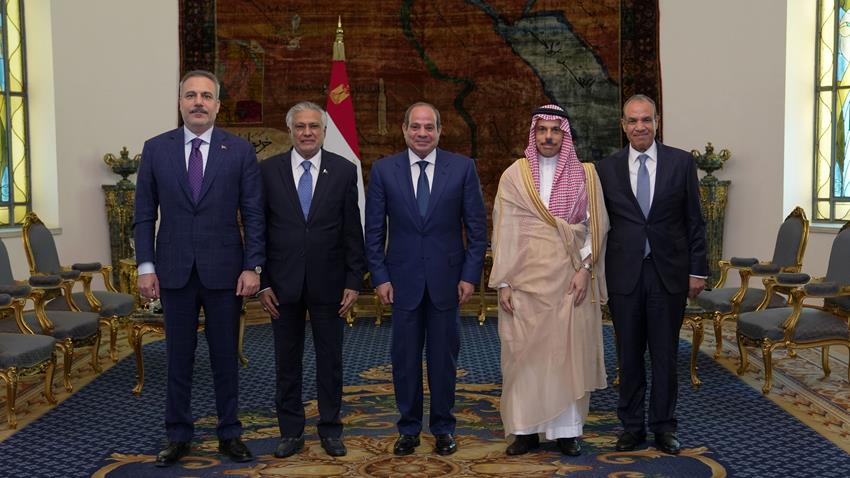
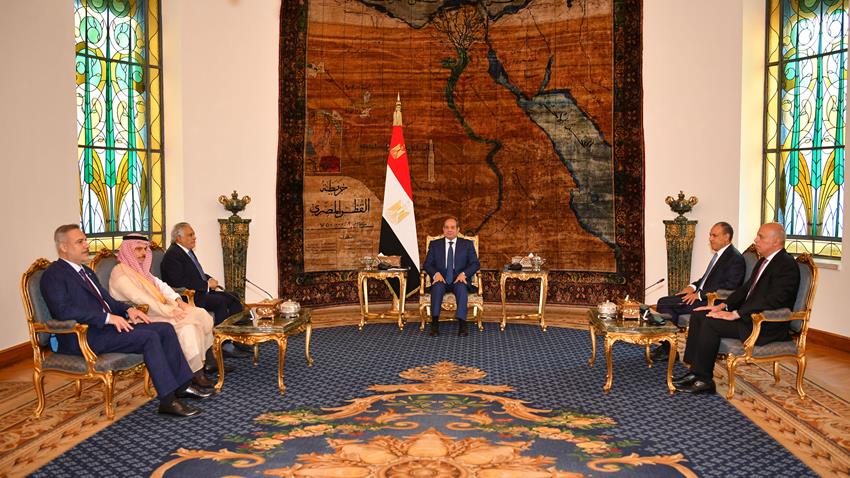
Today, President Abdel Fattah El-Sisi received Deputy Prime Minister and Minister of Foreign Affairs of the Islamic Republic of Pakistan Mr. Mohammad Ishaq Dar, Minister of Foreign Affairs of the Kingdom of Saudi Arabia His Highness Prince Faisal bin Farhan bin Abdullah Al Saud, and Minister of Foreign Affairs of the Republic of Türkiye Mr. Hakan Fidan, in the presence of Minister of Foreign Affairs, Immigration and Egyptian Expatriates Affairs Dr. Badr Abdelatty.
Spokesman for the Presidency Ambassador Mohamed El-Shennawy stated that the President welcomed the convening of the fourth meeting of the Foreign Ministers of the Quadrilateral Group, comprising Egypt, Saudi Arabia, Pakistan, and Türkiye, hosted in Cairo. President El-Sisi emphasized that the recent regional developments have highlighted the pivotal role of these countries as key pillars of regional security and stability, thereby underscoring the importance of continuing and further developing this consultative mechanism into an effective institutional framework capable of formulating comprehensive and sustainable solutions to the region’s crises.
The President commended the intensive coordination among the four countries over the past period, stressing Egypt’s commitment to working with Saudi Arabia, Pakistan, Türkiye, and all Arab and regional states to support the implementation of the US–Iran Memorandum of Understanding and to ensure the success of the negotiating process between the two sides. President El-Sisi further underscored the need to reach a just and comprehensive solution to the Palestinian cause, as a fundamental prerequisite for achieving lasting and comprehensive stability in the region.
The three ministers expressed their profound appreciation for meeting with the President. The meeting reaffirmed Egypt’s unwavering position of constructive and positive engagement in efforts to support peace and stability regionally and internationally. The ministers also praised the constructive discussions held during their fourth meeting in Cairo, affirming their agreement with the President’s view on the priority of further developing coordination among the four countries into an effective institutional framework.
The meeting addressed recent developments pertinent to the Iranian crisis track. President El-Sisi reiterated Egypt’s welcome of the Memorandum of Understanding concluded between the United States and Iran and lauded the effective role played by Pakistan in bringing viewpoints closer and bridging gaps between the two sides. President El-Sisi stressed the necessity of continuing joint efforts to implement the MoU and to complete negotiations between the two sides to reach a final, comprehensive, and sustainable agreement.
The President affirmed that the final agreement must ensure the security of the Gulf Cooperation Council states and all Arab countries, take into account their concerns particularly respect for state sovereignty and territorial integrity, adhere to the principles of good neighborliness, guarantee freedom of navigation, and commit to settling disputes by peaceful means.


Sunday, 21 June 2026 / 12:39 PM
Today, President Abdel Fattah El-Sisi received Deputy Prime Minister and Minister of Foreign Affairs of the Islamic Republic of Pakistan Mr. Mohammad Ishaq Dar, Minister of Foreign Affairs of the Kingdom of Saudi Arabia His Highness Prince Faisal bin Farhan bin Abdullah Al Saud, and Minister of Foreign Affairs of the Republic of Türkiye Mr. Hakan Fidan, in the presence of Minister of Foreign Affairs, Immigration and Egyptian Expatriates Affairs Dr. Badr Abdelatty.
Spokesman for the Presidency Ambassador Mohamed El-Shennawy stated that the President welcomed the convening of the fourth meeting of the Foreign Ministers of the Quadrilateral Group, comprising Egypt, Saudi Arabia, Pakistan, and Türkiye, hosted in Cairo. President El-Sisi emphasized that the recent regional developments have highlighted the pivotal role of these countries as key pillars of regional security and stability, thereby underscoring the importance of continuing and further developing this consultative mechanism into an effective institutional framework capable of formulating comprehensive and sustainable solutions to the region’s crises.
The President commended the intensive coordination among the four countries over the past period, stressing Egypt’s commitment to working with Saudi Arabia, Pakistan, Türkiye, and all Arab and regional states to support the implementation of the US–Iran Memorandum of Understanding and to ensure the success of the negotiating process between the two sides. President El-Sisi further underscored the need to reach a just and comprehensive solution to the Palestinian cause, as a fundamental prerequisite for achieving lasting and comprehensive stability in the region.
The three ministers expressed their profound appreciation for meeting with the President. The meeting reaffirmed Egypt’s unwavering position of constructive and positive engagement in efforts to support peace and stability regionally and internationally. The ministers also praised the constructive discussions held during their fourth meeting in Cairo, affirming their agreement with the President’s view on the priority of further developing coordination among the four countries into an effective institutional framework.
The meeting addressed recent developments pertinent to the Iranian crisis track. President El-Sisi reiterated Egypt’s welcome of the Memorandum of Understanding concluded between the United States and Iran and lauded the effective role played by Pakistan in bringing viewpoints closer and bridging gaps between the two sides. President El-Sisi stressed the necessity of continuing joint efforts to implement the MoU and to complete negotiations between the two sides to reach a final, comprehensive, and sustainable agreement.
The President affirmed that the final agreement must ensure the security of the Gulf Cooperation Council states and all Arab countries, take into account their concerns particularly respect for state sovereignty and territorial integrity, adhere to the principles of good neighborliness, guarantee freedom of navigation, and commit to settling disputes by peaceful means.

All rights reserved to the presidency Copyright © 2020
All rights reserved to the presidency Copyright © 2020