
All rights reserved to the presidency Copyright © 2020


Monday, 27 July 2026 / 02:52 PM
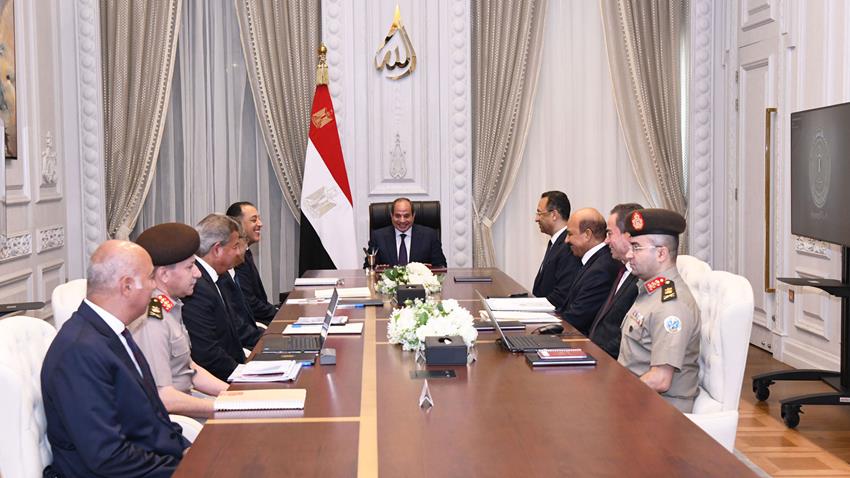
Today, in El Alamein City, President Abdel Fattah El-Sisi met with Prime Minister Dr. Mostafa Madbouly, Minister of Communications and Information Technology Eng. Raafat Hindi, Minister of State for Information Mr. Diaa Rashwan, Presidential Advisor for Media Affairs Major General Mohsen Abd El-Nabi, Chairman of the Supreme Council for Media Regulation (SCMR) Mr. Khaled Abdel Aziz, Chairman of the National Media Authority Mr. Ahmed Al-Moslemany, Director of the Armed Forces Signal Department Major General Hani Mansour, and Director of the Armed Forces Information Systems Department Major General Walid Attia.
Spokesman for the Presidency Ambassador Mohamed El-Shennawy stated that the meeting reviewed the implementation status of the project to archive and digitize the heritage of Egyptian Radio and Television. The project is one of the state's strategic initiatives aimed at safeguarding Egypt's most significant cultural and media assets and making them available through modern technological means to serve cultural, educational, and media purposes. This will be achieved by converting the historical, media, and artistic content of the National Media Authority's radio and television archives into digital formats, in cooperation and coordination with the relevant state entities and leading international companies specializing in this field.
In this context, the Chairman of the National Media Authority noted that the Egyptian Radio and Television archive is the largest and most significant media archive in the Arab region. It contains audio and visual recordings, programs, and documents that chronicle the history of the Egyptian state and society over many decades. He pointed out that implementing this project represents a long-term investment in preserving the nation's heritage and ensuring its secure and modern accessibility for future generations.
The meeting reviewed the measures being taken to implement the archiving and digitization project. These include establishing organised and indexed digital databases to catalogue and document nearly one million audio and video tapes, comprising approximately 800,000 hours of content. It also involves utilizing state-of-the-art specialized technologies to convert audio and visual materials from traditional media into high-quality digital formats, organizing them within an integrated electronic system that allows for easy preservation and retrieval. Furthermore, all necessary measures are being taken to ensure the highest levels of security and content preservation, including the integration of selected artificial intelligence applications into the system.
The meeting also reviewed ongoing efforts to modernize the Maspero studios, in order to enhance media production efficiency and upgrade the technological infrastructure of the Maspero building, including its equipment and facilities, and expand content distribution across digital viewing platforms.
President El-Sisi also followed up on a number of projects and initiatives aimed at strengthening the digital presence of national media content, including the "Maspero Platform."
The meeting also reviewed the latest developments in preserving the heritage of renowned Quran reciters and religious chanters, as well as safeguarding the extensive collection of programs that have been broadcast on the Holy Quran Radio since its establishment in 1964. These efforts form part of the broader strategy to maximize the role of digital media under the slogan "Digital First."
The President directed that the progress achieved in the Egyptian Radio and Television heritage archiving and digitization project be presented to the public, highlighting the scale of the efforts undertaken to document and preserve Egypt's rich heritage within the Egyptian Television Library. In this regard, the President stressed the importance of ensuring that the modernization of Maspero encompasses infrastructure upgrades, expansion of media content, and digitization of heritage.
President El-Sisi also gave directives to the relevant state institutions to coordinate closely and exchange views on mechanisms for developing Egypt's media sector across both public and private institutions and channels. Furthermore, the President emphasized the importance of keeping pace with the rapid developments in the media industry and engaging qualified specialists and experts to ensure that the national media message reaches citizens in a professional and effective manner.


Monday, 27 July 2026 / 02:52 PM
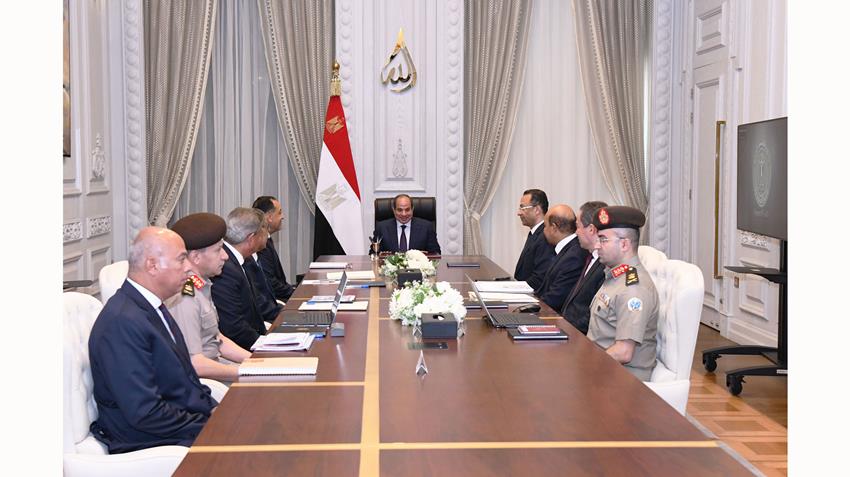
Today, in El Alamein City, President Abdel Fattah El-Sisi met with Prime Minister Dr. Mostafa Madbouly, Minister of Communications and Information Technology Eng. Raafat Hindi, Minister of State for Information Mr. Diaa Rashwan, Presidential Advisor for Media Affairs Major General Mohsen Abd El-Nabi, Chairman of the Supreme Council for Media Regulation (SCMR) Mr. Khaled Abdel Aziz, Chairman of the National Media Authority Mr. Ahmed Al-Moslemany, Director of the Armed Forces Signal Department Major General Hani Mansour, and Director of the Armed Forces Information Systems Department Major General Walid Attia.
Spokesman for the Presidency Ambassador Mohamed El-Shennawy stated that the meeting reviewed the implementation status of the project to archive and digitize the heritage of Egyptian Radio and Television. The project is one of the state's strategic initiatives aimed at safeguarding Egypt's most significant cultural and media assets and making them available through modern technological means to serve cultural, educational, and media purposes. This will be achieved by converting the historical, media, and artistic content of the National Media Authority's radio and television archives into digital formats, in cooperation and coordination with the relevant state entities and leading international companies specializing in this field.
In this context, the Chairman of the National Media Authority noted that the Egyptian Radio and Television archive is the largest and most significant media archive in the Arab region. It contains audio and visual recordings, programs, and documents that chronicle the history of the Egyptian state and society over many decades. He pointed out that implementing this project represents a long-term investment in preserving the nation's heritage and ensuring its secure and modern accessibility for future generations.
The meeting reviewed the measures being taken to implement the archiving and digitization project. These include establishing organised and indexed digital databases to catalogue and document nearly one million audio and video tapes, comprising approximately 800,000 hours of content. It also involves utilizing state-of-the-art specialized technologies to convert audio and visual materials from traditional media into high-quality digital formats, organizing them within an integrated electronic system that allows for easy preservation and retrieval. Furthermore, all necessary measures are being taken to ensure the highest levels of security and content preservation, including the integration of selected artificial intelligence applications into the system.
The meeting also reviewed ongoing efforts to modernize the Maspero studios, in order to enhance media production efficiency and upgrade the technological infrastructure of the Maspero building, including its equipment and facilities, and expand content distribution across digital viewing platforms.
President El-Sisi also followed up on a number of projects and initiatives aimed at strengthening the digital presence of national media content, including the "Maspero Platform."
The meeting also reviewed the latest developments in preserving the heritage of renowned Quran reciters and religious chanters, as well as safeguarding the extensive collection of programs that have been broadcast on the Holy Quran Radio since its establishment in 1964. These efforts form part of the broader strategy to maximize the role of digital media under the slogan "Digital First."
The President directed that the progress achieved in the Egyptian Radio and Television heritage archiving and digitization project be presented to the public, highlighting the scale of the efforts undertaken to document and preserve Egypt's rich heritage within the Egyptian Television Library. In this regard, the President stressed the importance of ensuring that the modernization of Maspero encompasses infrastructure upgrades, expansion of media content, and digitization of heritage.
President El-Sisi also gave directives to the relevant state institutions to coordinate closely and exchange views on mechanisms for developing Egypt's media sector across both public and private institutions and channels. Furthermore, the President emphasized the importance of keeping pace with the rapid developments in the media industry and engaging qualified specialists and experts to ensure that the national media message reaches citizens in a professional and effective manner.

All rights reserved to the presidency Copyright © 2020
All rights reserved to the presidency Copyright © 2020