
All rights reserved to the presidency Copyright © 2020


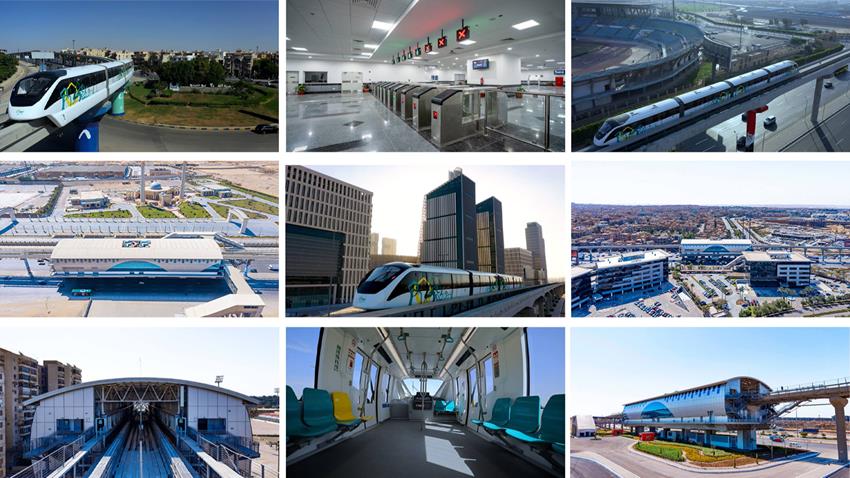
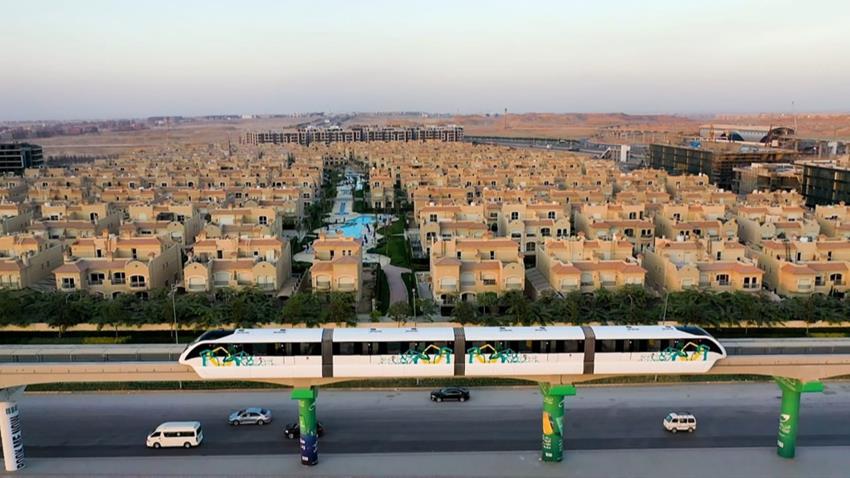
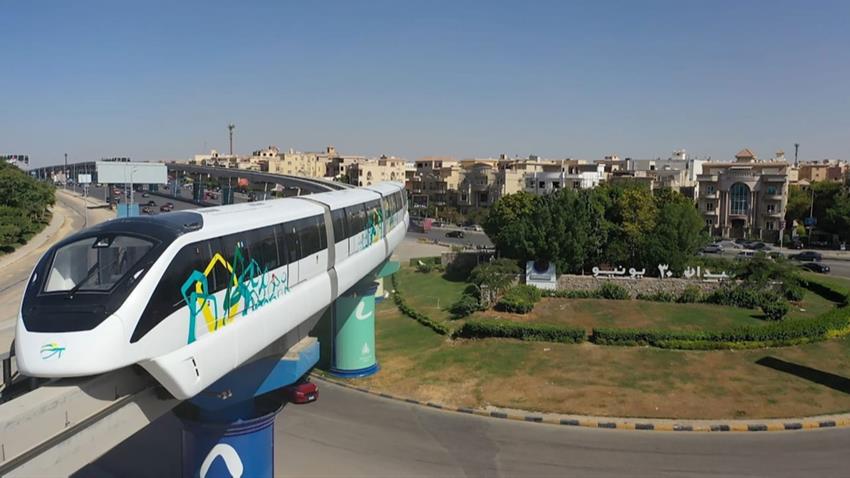
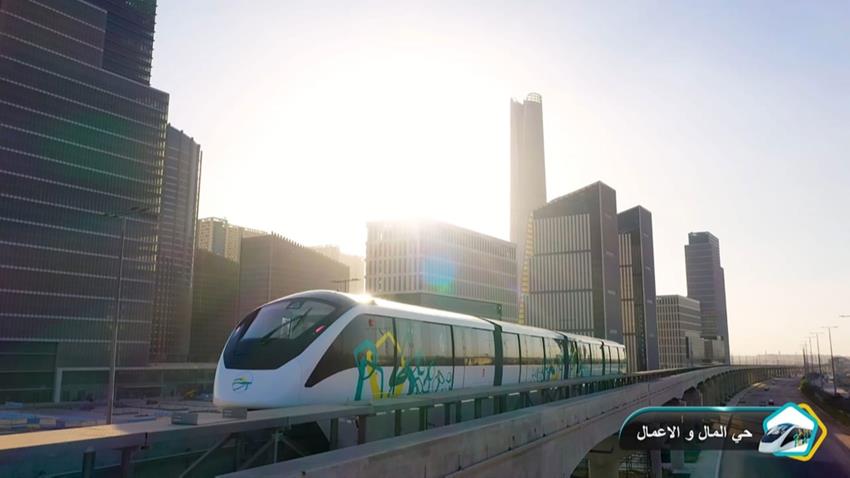
The monorail project has been implemented for the first time in Egypt and represents a major civilizational leap in mass transportation.
It is characterized as a fast, modern, and safe mode of transport that saves fuel consumption, reduces environmental pollution, and eases traffic congestion on major roads and axes.
The monorail encourages passengers to use it instead of private cars, as it operates on electric power (environmentally friendly).
The monorail features 30% lower energy consumption compared to other electric rail traction systems, in addition to reduced noise levels due to trains running on rubber tires.
It can be implemented in areas where metro lines and other rail transport systems are difficult to construct, and on streets with sharp horizontal curves.
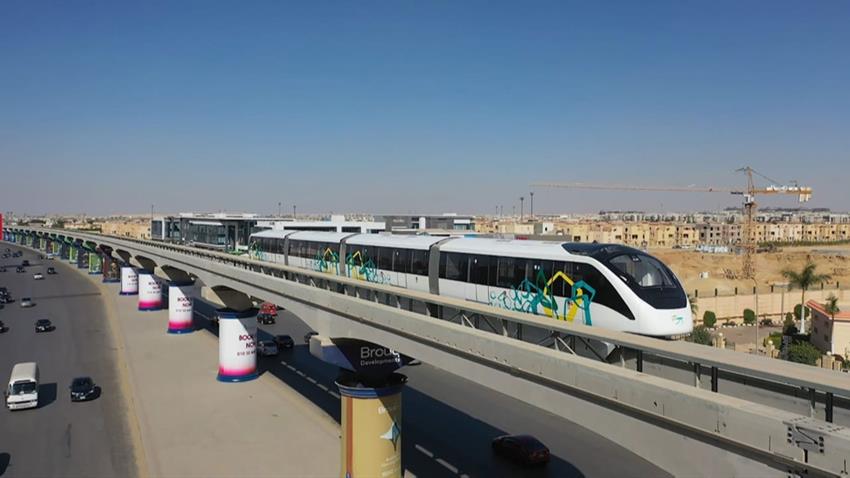
The monorail further requires minimal utility modifications and significantly reduces land expropriation. It is built on an elevated track along the central median of streets it passes through, without occupying road space, meaning traffic flow is not affected.
The monorail connects three vital areas—Nasr City, New Cairo, and the New Capital—over a length of 56.5 km with 22 stations. The route is served by a control and operations center built on an area of 85 feddans, comprising 13 buildings, 8 main switches along the route, and a storage yard at the midpoint.
Each monorail station covers approximately 2,500 square meters (100 m long and 25 m wide) and consists of two levels (ticket hall and platform).
The Cairo Stadium and Al-Azhar University stations include two ticket halls to reduce congestion, based on transport studies.
Stations are equipped with 2 fixed staircases, 4 escalators, and 2 elevators from outside, and 4 fixed staircases, 4 escalators, and 2 elevators inside. There are also designated accessible paths for people with disabilities in ticket halls and on platforms.
The project includes 40 trains with an operational speed of 80 km/h. Each train consists of 4 cars to accommodate urban expansion in the New Capital and the increasing number of daily passengers.
Monorail train features:
The project has contributed to creating 15,000 direct job opportunities in design and implementation (civil and electromechanical works), and approximately 10,000 indirect jobs in related industries and services.
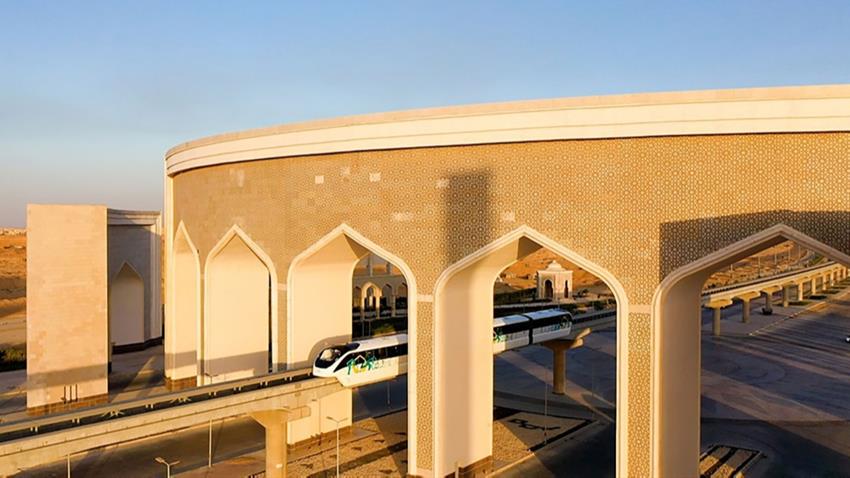
The monorail project has been implemented for the first time in Egypt and represents a major civilizational leap in mass transportation.
It is characterized as a fast, modern, and safe mode of transport that saves fuel consumption, reduces environmental pollution, and eases traffic congestion on major roads and axes.
The monorail encourages passengers to use it instead of private cars, as it operates on electric power (environmentally friendly).
The monorail features 30% lower energy consumption compared to other electric rail traction systems, in addition to reduced noise levels due to trains running on rubber tires.
It can be implemented in areas where metro lines and other rail transport systems are difficult to construct, and on streets with sharp horizontal curves.
The monorail further requires minimal utility modifications and significantly reduces land expropriation. It is built on an elevated track along the central median of streets it passes through, without occupying road space, meaning traffic flow is not affected.
The monorail connects three vital areas—Nasr City, New Cairo, and the New Capital—over a length of 56.5 km with 22 stations. The route is served by a control and operations center built on an area of 85 feddans, comprising 13 buildings, 8 main switches along the route, and a storage yard at the midpoint.
Each monorail station covers approximately 2,500 square meters (100 m long and 25 m wide) and consists of two levels (ticket hall and platform).
The Cairo Stadium and Al-Azhar University stations include two ticket halls to reduce congestion, based on transport studies.
Stations are equipped with 2 fixed staircases, 4 escalators, and 2 elevators from outside, and 4 fixed staircases, 4 escalators, and 2 elevators inside. There are also designated accessible paths for people with disabilities in ticket halls and on platforms.
The project includes 40 trains with an operational speed of 80 km/h. Each train consists of 4 cars to accommodate urban expansion in the New Capital and the increasing number of daily passengers.
Monorail train features:
The project has contributed to creating 15,000 direct job opportunities in design and implementation (civil and electromechanical works), and approximately 10,000 indirect jobs in related industries and services.


All rights reserved to the presidency Copyright © 2020
All rights reserved to the presidency Copyright © 2020