
All rights reserved to the presidency Copyright © 2020



Saturday, 06 June 2026 / 02:56 PM
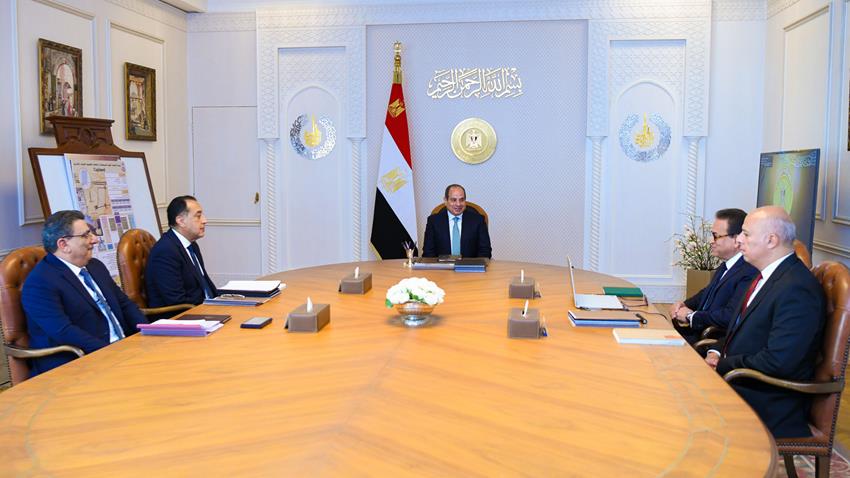
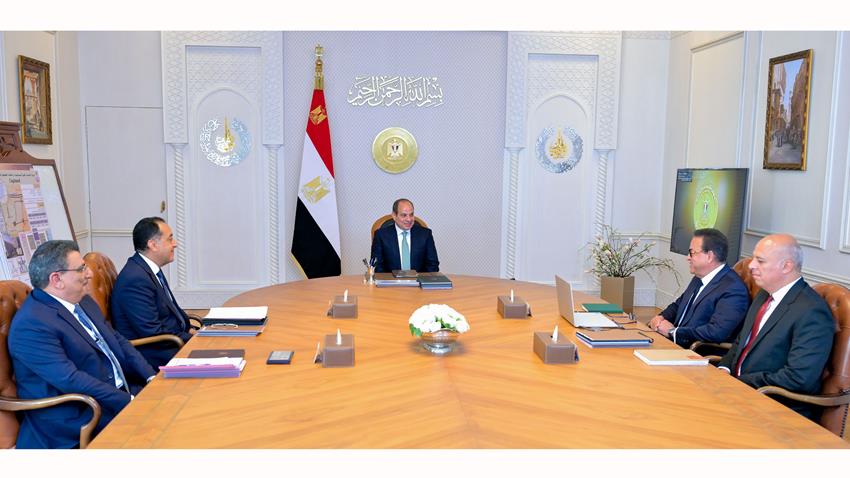
Today, President Abdel Fattah El-Sisi met with Prime Minister Dr. Mostafa Madbouly, Minister of Health and Population Dr. Khaled Abdel Ghaffar, and Advisor to the President for Financial Affairs Lieutenant General Ahmed El-Shazly.
The Spokesman for the Presidency, Ambassador Mohamed El-Shennawy, said President El-Sisi reviewed the main pillars of implementing the Universal Health Insurance System, the progress achieved in the digitalization of the system, as well as the latest developments and preparations related to the pilot operation of the system in Minya Governorate. The Minister of Health and Population noted that the Universal Health Insurance System represents a model of health equity and social solidarity through the establishment of a healthcare system based on quality, sustainability, and fairness in service delivery. The Minister highlighted the success achieved in implementing the first phase of the system and referred to the ongoing preparations for the launch of the second phase.
President El-Sisi stressed the necessity of ensuring that every medical facility is fully prepared medically, technically, and administratively before its inauguration, so as to provide healthcare services that meet citizens’ expectations. The President also underscored the importance of expediting the completion of the digitalization of the Universal Health Insurance System and implementing a fully integrated national digital healthcare system that ensures the integration and interoperability of health information and data management, thereby enhancing operational and spending efficiency, while supporting the use of Artificial Intelligence applications in healthcare facilities.
The meeting also reviewed the implementation status of projects for the construction, development, and upgrading of a number of healthcare and medical facilities across the country, as well as the timelines set for their completion. These projects include the New El Alamein Hospital, Ras El-Hekma Hospital, Nile Medical City, Nile Children’s Hospital, the Central Laboratories in Badr City, and Qalawoon Eye Hospital, in addition to healthcare projects in Northern, Central, and Southern Upper Egypt.
In this context, the President emphasized the importance of enhancing integration among government agencies, the private sector, and strategic partners to implement national projects and achieve the goals of the state's vision for developing the health sector. The meeting also addressed developments related to the Egyptian Ambulance Organization. President El-Sisi approved a proposal to improve salaries within the Organization. The Minister of Health and Population also reviewed the current status of ambulances in Egypt.
The meeting also reviewed the latest pertinent to the development of the Nile Medical City project, as well as a proposal to implement the Hospitals and Educational Institutes for Research and Training project in the new capital. This project aims to establish an integrated medical city encompassing hospitals, research centers, and training facilities to improve healthcare services, ensure high-quality healthcare, and support medical tourism. The Minister of Health and Population noted that the project is set to be a leading medical center for advanced treatment services, medical research, training, and education. He noted that several proposals have been submitted by various international companies to implement this project, which are being reviewed in accordance with the Egyptian state's objectives in the healthcare sector. The Minister also reviewed the latest developments with regard to the implementation of the Nile National Center for Excellence in Medical Education project, the first Egyptian center for medical simulation, excellence, and learning. This is part of a strategy to develop medical education and clinical training using the latest global simulation technologies.
Dr. Abdel Ghaffar reviewed investment opportunities in healthcare and mechanisms to support local manufacturing. The President emphasized the importance of providing an attractive and supportive investment environment for quality investments in the health sector, based on a strategic vision aimed at localizing medical industries, expanding specialized healthcare, and supporting self-sufficiency. The President stressed the need to raise the efficiency and accessibility of health and medical services for all citizens across the country through advanced health facilities equipped with the latest medical technologies.



Saturday, 06 June 2026 / 02:56 PM
Today, President Abdel Fattah El-Sisi met with Prime Minister Dr. Mostafa Madbouly, Minister of Health and Population Dr. Khaled Abdel Ghaffar, and Advisor to the President for Financial Affairs Lieutenant General Ahmed El-Shazly.
The Spokesman for the Presidency, Ambassador Mohamed El-Shennawy, said President El-Sisi reviewed the main pillars of implementing the Universal Health Insurance System, the progress achieved in the digitalization of the system, as well as the latest developments and preparations related to the pilot operation of the system in Minya Governorate. The Minister of Health and Population noted that the Universal Health Insurance System represents a model of health equity and social solidarity through the establishment of a healthcare system based on quality, sustainability, and fairness in service delivery. The Minister highlighted the success achieved in implementing the first phase of the system and referred to the ongoing preparations for the launch of the second phase.
President El-Sisi stressed the necessity of ensuring that every medical facility is fully prepared medically, technically, and administratively before its inauguration, so as to provide healthcare services that meet citizens’ expectations. The President also underscored the importance of expediting the completion of the digitalization of the Universal Health Insurance System and implementing a fully integrated national digital healthcare system that ensures the integration and interoperability of health information and data management, thereby enhancing operational and spending efficiency, while supporting the use of Artificial Intelligence applications in healthcare facilities.
The meeting also reviewed the implementation status of projects for the construction, development, and upgrading of a number of healthcare and medical facilities across the country, as well as the timelines set for their completion. These projects include the New El Alamein Hospital, Ras El-Hekma Hospital, Nile Medical City, Nile Children’s Hospital, the Central Laboratories in Badr City, and Qalawoon Eye Hospital, in addition to healthcare projects in Northern, Central, and Southern Upper Egypt.
In this context, the President emphasized the importance of enhancing integration among government agencies, the private sector, and strategic partners to implement national projects and achieve the goals of the state's vision for developing the health sector. The meeting also addressed developments related to the Egyptian Ambulance Organization. President El-Sisi approved a proposal to improve salaries within the Organization. The Minister of Health and Population also reviewed the current status of ambulances in Egypt.
The meeting also reviewed the latest pertinent to the development of the Nile Medical City project, as well as a proposal to implement the Hospitals and Educational Institutes for Research and Training project in the new capital. This project aims to establish an integrated medical city encompassing hospitals, research centers, and training facilities to improve healthcare services, ensure high-quality healthcare, and support medical tourism. The Minister of Health and Population noted that the project is set to be a leading medical center for advanced treatment services, medical research, training, and education. He noted that several proposals have been submitted by various international companies to implement this project, which are being reviewed in accordance with the Egyptian state's objectives in the healthcare sector. The Minister also reviewed the latest developments with regard to the implementation of the Nile National Center for Excellence in Medical Education project, the first Egyptian center for medical simulation, excellence, and learning. This is part of a strategy to develop medical education and clinical training using the latest global simulation technologies.
Dr. Abdel Ghaffar reviewed investment opportunities in healthcare and mechanisms to support local manufacturing. The President emphasized the importance of providing an attractive and supportive investment environment for quality investments in the health sector, based on a strategic vision aimed at localizing medical industries, expanding specialized healthcare, and supporting self-sufficiency. The President stressed the need to raise the efficiency and accessibility of health and medical services for all citizens across the country through advanced health facilities equipped with the latest medical technologies.

All rights reserved to the presidency Copyright © 2020
All rights reserved to the presidency Copyright © 2020