
All rights reserved to the presidency Copyright © 2020


Wednesday, 21 October 2026 / 07:23 PM
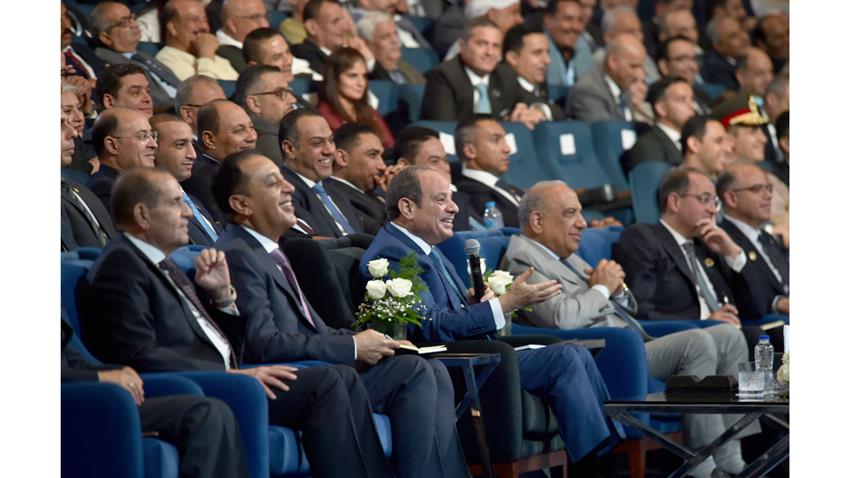
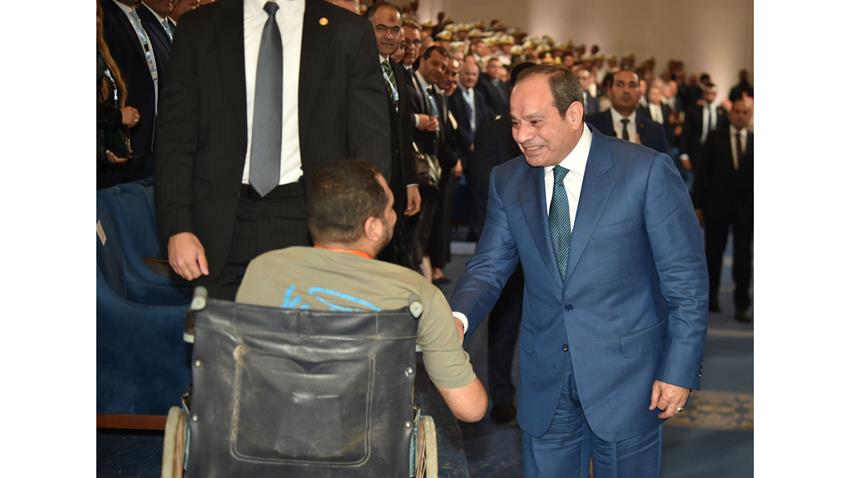
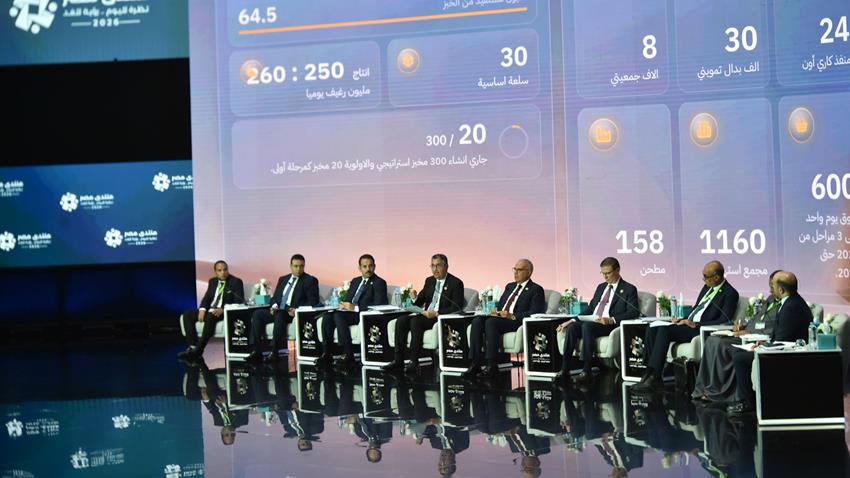
Today, President Abdel Fattah El-Sisi participated in a session titled "Food and Water Security: Today’s Challenges and Future Guarantees," held on the third day of the Egypt Forum 2026. The session was attended by Prime Minister Dr. Moustafa Madbouly, Minister of Supply and Internal Trade Dr. Sherif Farouk, Minister of Water Resources and Irrigation Dr. Hany Sewilam, Minister of Agriculture and Land Reclamation Alaa Farouk, and Head of the Future of Egypt Authority for Sustainable Development Dr. Bahaa El-Ghannam. Also in attendance were MP Ehab Mansour, Deputy Chair of the Manpower Committee; MP Abdel Moneim Imam, head of the Justice Party; Dr. Ahmed Ramadan, a lecturer at the Faculty of Agriculture, Fayoum University; and Eid Mersal, head of the General Union for Workers in Agriculture, Irrigation, Fisheries, and Land Reclamation.
The Spokesman for the Presidency, Ambassador Mohamed El-Shennawy, said the session addressed the Egyptian state's efforts since 2014 to enhance the availability of food commodities and achieve food security. This included expanding and developing agricultural land and land reclamation. The session also reviewed state initiatives to ensure that subsidies reach those who truly deserve them, as well as efforts to strengthen the food subsidy system, maintain a stable strategic reserve of essential commodities, and increase the number and storage capacity of silos.
President El-Sisi made an intervention to emphasize that the cash-based subsidy system the state intends to implement is more equitable, transparent, and well-governed. The President explained that data on citizens has been consolidated for inclusion in this system, ensuring full transparency and robust governance. Regarding matters related to supply agriculture, the President highlighted the importance of striving to maximize livestock production, noting the numerous benefits this would yield. The President emphasized that all governors, officials, head of villages and citizens should work toward the goal of replacing existing livestock breeds with improved ones to boost production.
The President added that Egypt’s strategic reserves of essential commodities are sufficient for a period of six months, taking into account disruptions in supply chains and the geopolitical conditions in the region.
With regard to water consumption topics, President El-Sisi raised the issue of water consumption approaches in Siwa, including well drilling, emphasizing the importance of state intervention to ensure the governance of this situation.
In connection with matters relating to Egypt’s lakes, the President noted that, over the past decades, the lakes had been subjected to encroachments, neglect, and various violations, which had led to a decline in their fish production. The President highlighted the efforts undertaken by the State in this regard and its action to address encroachments and violations affecting the lakes. These efforts had resulted in restoring the lakes to their natural state, including Lake Bardawil, Lake Manzala, and Lake Nasser.
In this context, President El-Sisi reiterated that the deterioration of state agencies and their inability to maintain control over the situation had necessitated the establishment of another entity to address the accumulated, long-standing challenges, particularly those affecting the lakes. The President reaffirmed that the goal was to restore the lakes to their natural state, which had prompted the State to assign responsibility for overseeing the lakes to the Future of Egypt Authority for Sustainable Development. The President expressed hope that fish production from these lakes would return to its normal levels, particularly in light of the substantial population growth. President El-Sisi also mentioned that the lakes had been subjected to various violations, including the discharge of sewage and agricultural drainage water into some of them. The President underscored that the State’s efforts would benefit citizens, particularly those in Port Said, Damietta, and Dakahlia.
President El-Sisi pointed out that Egypt had gained experience in land reclamation over previous decades, but the results had not been as successful as hoped. The President highlighted that the achievements made in land reclamation since 2014 were unprecedented in both scale and significance. The President also indicated that the State was open to allowing the private sector to purchase reclaimed land, provided that the plots were sufficiently large to avoid the fragmentation of agricultural land, which had not been in Egypt’s best interests.
President El-Sisi further highlighted the efforts undertaken since 2014 to reclaim land, affirming that the State was prepared to reclaim ten million feddans, provided that the necessary water resources were available. The President noted that the objective was to achieve tangible results, and for that purpose, the President insisted on implementing the New Delta project. The President outlined the extensive efforts and works undertaken as part of this massive national project, including the construction of large-scale water-lifting stations. In this regard, President El-Sisi underscored the importance of the role played by the Future of Egypt Authority for Sustainable Development.


Wednesday, 21 October 2026 / 07:23 PM
Today, President Abdel Fattah El-Sisi participated in a session titled "Food and Water Security: Today’s Challenges and Future Guarantees," held on the third day of the Egypt Forum 2026. The session was attended by Prime Minister Dr. Moustafa Madbouly, Minister of Supply and Internal Trade Dr. Sherif Farouk, Minister of Water Resources and Irrigation Dr. Hany Sewilam, Minister of Agriculture and Land Reclamation Alaa Farouk, and Head of the Future of Egypt Authority for Sustainable Development Dr. Bahaa El-Ghannam. Also in attendance were MP Ehab Mansour, Deputy Chair of the Manpower Committee; MP Abdel Moneim Imam, head of the Justice Party; Dr. Ahmed Ramadan, a lecturer at the Faculty of Agriculture, Fayoum University; and Eid Mersal, head of the General Union for Workers in Agriculture, Irrigation, Fisheries, and Land Reclamation.
The Spokesman for the Presidency, Ambassador Mohamed El-Shennawy, said the session addressed the Egyptian state's efforts since 2014 to enhance the availability of food commodities and achieve food security. This included expanding and developing agricultural land and land reclamation. The session also reviewed state initiatives to ensure that subsidies reach those who truly deserve them, as well as efforts to strengthen the food subsidy system, maintain a stable strategic reserve of essential commodities, and increase the number and storage capacity of silos.
President El-Sisi made an intervention to emphasize that the cash-based subsidy system the state intends to implement is more equitable, transparent, and well-governed. The President explained that data on citizens has been consolidated for inclusion in this system, ensuring full transparency and robust governance. Regarding matters related to supply agriculture, the President highlighted the importance of striving to maximize livestock production, noting the numerous benefits this would yield. The President emphasized that all governors, officials, head of villages and citizens should work toward the goal of replacing existing livestock breeds with improved ones to boost production.
The President added that Egypt’s strategic reserves of essential commodities are sufficient for a period of six months, taking into account disruptions in supply chains and the geopolitical conditions in the region.
With regard to water consumption topics, President El-Sisi raised the issue of water consumption approaches in Siwa, including well drilling, emphasizing the importance of state intervention to ensure the governance of this situation.
In connection with matters relating to Egypt’s lakes, the President noted that, over the past decades, the lakes had been subjected to encroachments, neglect, and various violations, which had led to a decline in their fish production. The President highlighted the efforts undertaken by the State in this regard and its action to address encroachments and violations affecting the lakes. These efforts had resulted in restoring the lakes to their natural state, including Lake Bardawil, Lake Manzala, and Lake Nasser.
In this context, President El-Sisi reiterated that the deterioration of state agencies and their inability to maintain control over the situation had necessitated the establishment of another entity to address the accumulated, long-standing challenges, particularly those affecting the lakes. The President reaffirmed that the goal was to restore the lakes to their natural state, which had prompted the State to assign responsibility for overseeing the lakes to the Future of Egypt Authority for Sustainable Development. The President expressed hope that fish production from these lakes would return to its normal levels, particularly in light of the substantial population growth. President El-Sisi also mentioned that the lakes had been subjected to various violations, including the discharge of sewage and agricultural drainage water into some of them. The President underscored that the State’s efforts would benefit citizens, particularly those in Port Said, Damietta, and Dakahlia.
President El-Sisi pointed out that Egypt had gained experience in land reclamation over previous decades, but the results had not been as successful as hoped. The President highlighted that the achievements made in land reclamation since 2014 were unprecedented in both scale and significance. The President also indicated that the State was open to allowing the private sector to purchase reclaimed land, provided that the plots were sufficiently large to avoid the fragmentation of agricultural land, which had not been in Egypt’s best interests.
President El-Sisi further highlighted the efforts undertaken since 2014 to reclaim land, affirming that the State was prepared to reclaim ten million feddans, provided that the necessary water resources were available. The President noted that the objective was to achieve tangible results, and for that purpose, the President insisted on implementing the New Delta project. The President outlined the extensive efforts and works undertaken as part of this massive national project, including the construction of large-scale water-lifting stations. In this regard, President El-Sisi underscored the importance of the role played by the Future of Egypt Authority for Sustainable Development.

All rights reserved to the presidency Copyright © 2020
All rights reserved to the presidency Copyright © 2020