
All rights reserved to the presidency Copyright © 2020


First Day Events:
El-Sisi Heads to Saudi Arabia
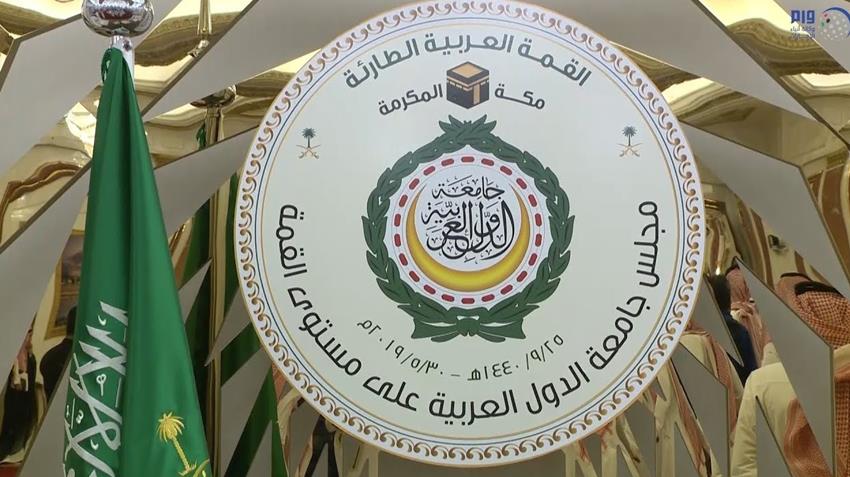
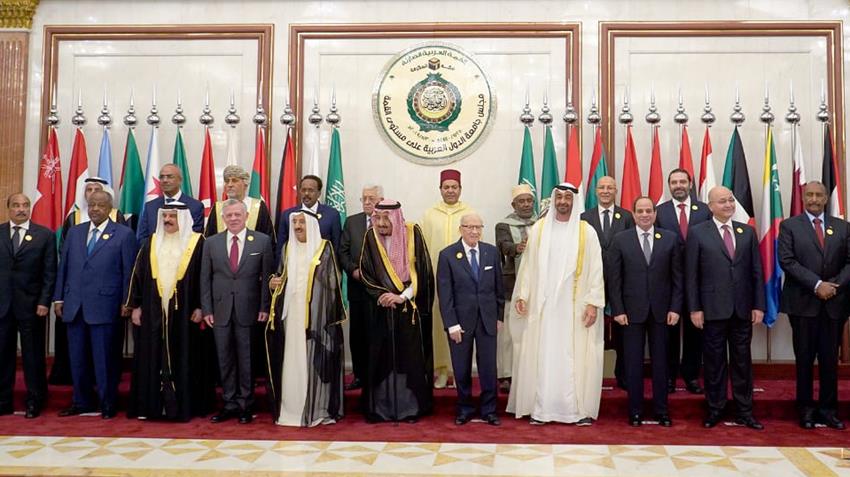
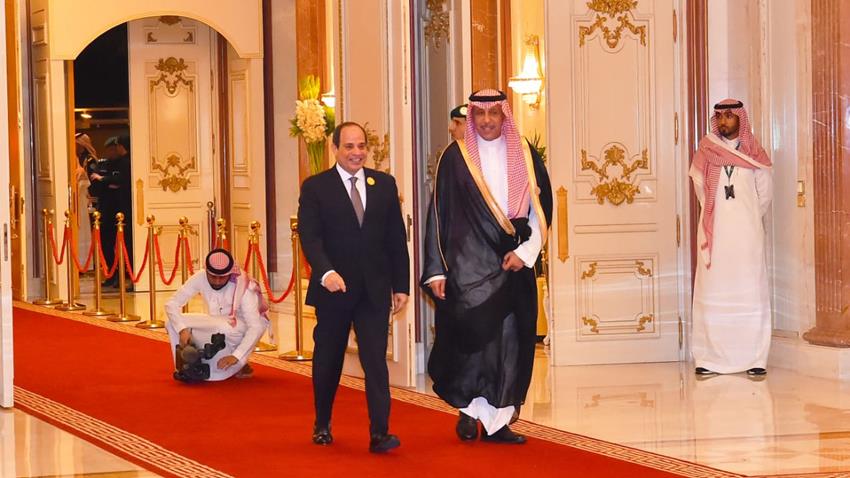
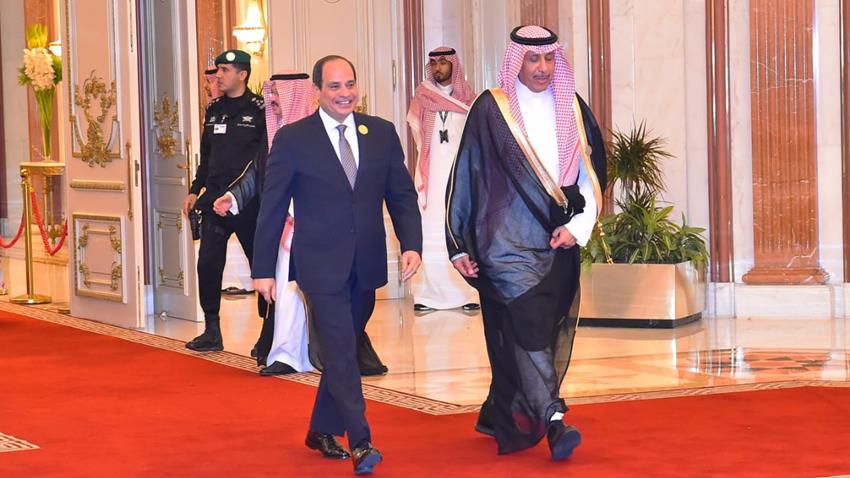
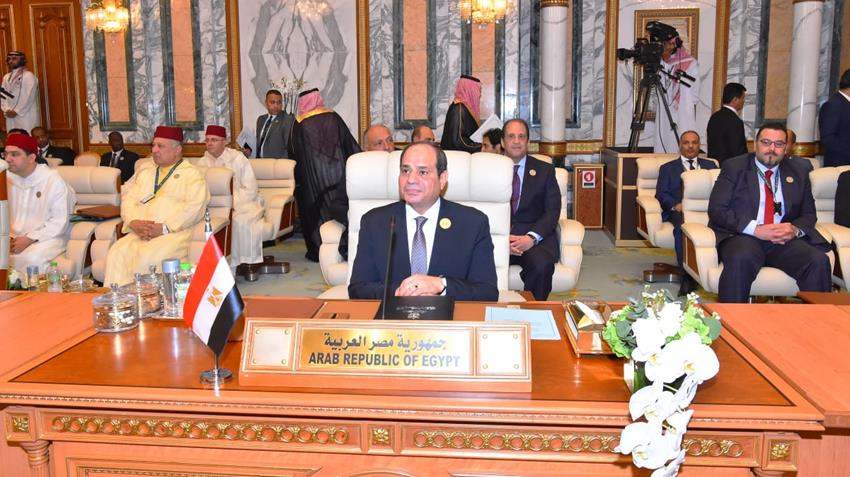
President Abdel Fattah El-Sisi headed to Saudi Arabia this morning to participate in the Arab Emergency Summit and the Ordinary Summit of the Organization of Islamic Cooperation (OIC).
The President's participation in the Arab and Islamic summits comes within the framework of Egypt's keenness to strengthen and develop relations with all member states of the two organizations in the Arab and Islamic worlds and to contribute effectively to promoting efforts to strengthen joint action mechanisms for Arab and Islamic peoples.
The President delivered a speech at the Arab Emergency Summit, which included a comprehensive vision for maintaining the security and stability of the region and facing the current challenges, as well as means of enhancing consultation and coordination among the brotherly Arab countries.
The Spokesman of the Egyptian Presidency stated that the 14th Islamic Summit coincides with the celebration of the half-century anniversary of the Organization of Islamic Cooperation, which represents the collective voice of the Islamic world. The summit is held under the slogan "Hand by hand towards the future". In his speech, El-Sisi reviewed ways to crystallize a unified stance on the current issues and events in the Islamic world, on top of which is the fight against extremist ideology, as well as the dissemination of the discourse of discrimination and hatred against Muslims.
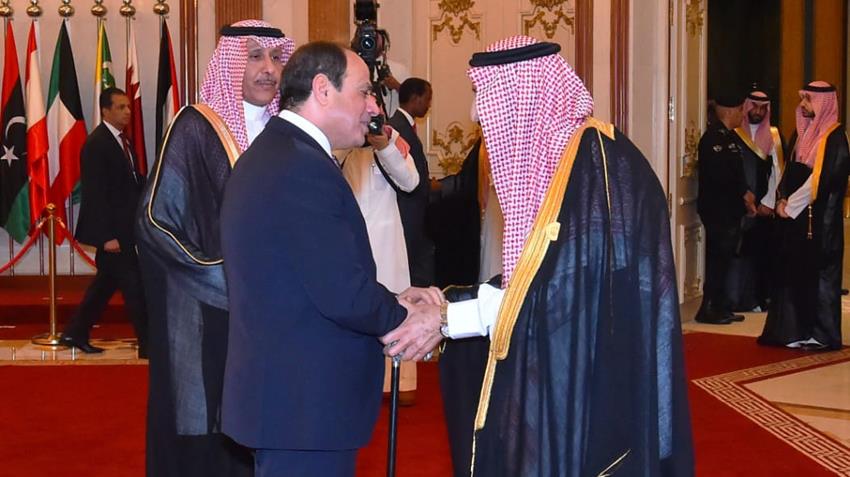
The president's program also includes holding bilateral meetings, on the sidelines of the two summits, with a number of Arab and Muslim leaders to discuss ways of enhancing bilateral relations, as well as the latest developments on the regional and international arenas and issues of common concern.
Spokesman of the Arab Coalition Forces Informs El-Sisi about the Latest Updates in the Saudi Arena
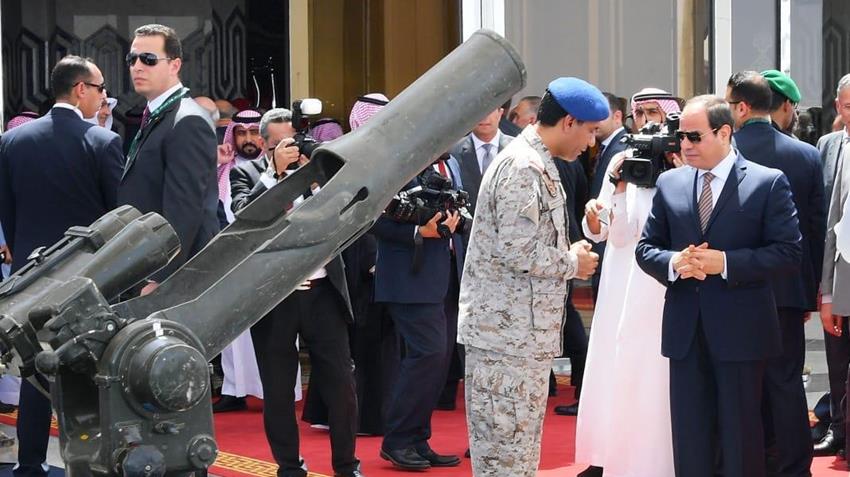
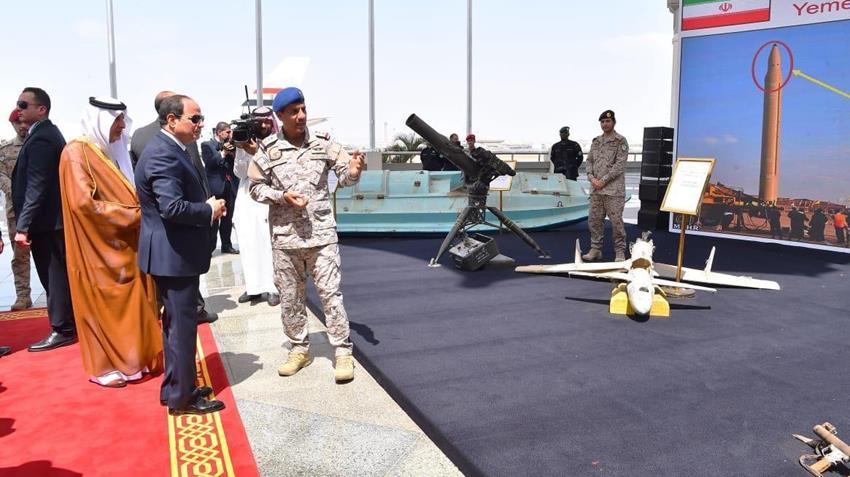
Colonel Turki al-Malki, Spokesman of the Arab Coalition Forces, informs President Abdel Fattah El-Sisi- right after arriving in King Fahd International Airport- about the attacks launched on the Saudi territory, where his Excellency saw the remnants of some weapons and missiles recently intercepted by the Royal Saudi Air Defense.
Second Day Events:
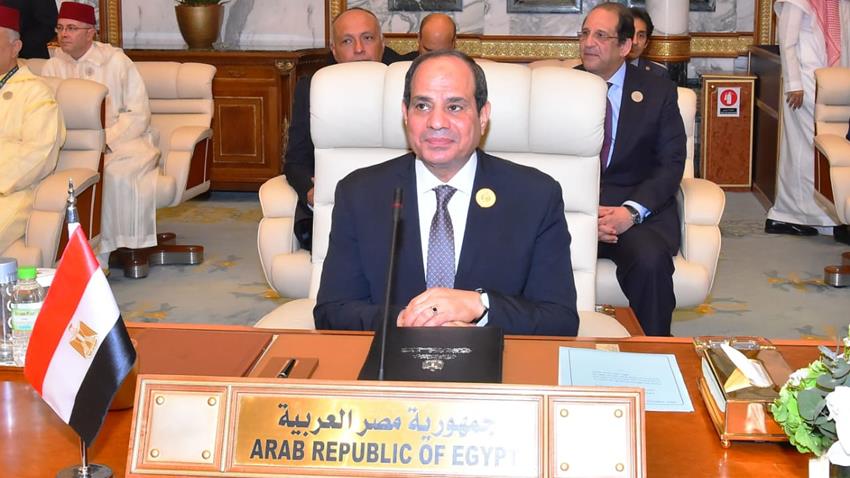
El-Sisi's Speech in the Urgent Arab Summit in Mecca
Ladies and Gentlemen, following is the speech of President Abdel Fattah El-Sisi during the urgent Arab Summit in Mecca:
"Brother, King Salman Bin Abdul Aziz Al Saud,
The Custodian of the Two Holy Shrines and King of Saudi Arabia
Your Majesties, Excellencies and Highnesses, Kings and Heads of Arab States
Your Hhighness Mr. Ahmed Abo El-Gheit, Secretary General of the League of Arab States
At the outset, I would like to extend my sincere thanks to my brother, the Custodian of the Two Holy Shrines, King Salman Bin Abdul Aziz Al Saud, King of Saudi Arabia, for his invitation to hold this summit in Mecca, and for his hospitality and good organization, praying that God Almighty to guide us towards the path for the good of our Arab nation.
Your Majesties, Excellencies and Highnesses,
There is no doubt that our summit is taking place today in light of serious and unprecedented threats facing the Arab national security, especially in the Gulf region of great strategic importance. I do not think that I need to emphasize that the security of the Arab Gulf region is one of the main pillars of Arab national security and it is closely linked to Egypt's national security.
Hence, we all have to take a decisive stand with wisdom and determination against any threat to the security of the Gulf and the Arab national security.
Determination is required to deliver a message to everyone; the Arabs are not willing to let go of their national security and will not accept any violations against their rights. Wisdom is necessary to contain any tension and prevent it from exploding. The Arabs have been and are still advocates of peace and stability.
Allow me to seize the opportunity of our meeting today, in this blessed place, to review with you the elements of the Egyptian Vision of how to deal decisively and wisely with the threats that we have gathered today to discuss; the threats that face the Arab National Security in general. Let me outline this vision in four key elements:
First: the recent attacks on oil facilities in the Kingdom of Saudi Arabia by Al-Houthi militias, the repeated attempts to launch missiles to its territory and the attacks against territorial waters of United Arab Emirates undoubtedly are explicit acts of terrorism that require a clear stance from all the international community to condemn them first and then to act by all means to deter the perpetrators, hold them accountable and prevent the recurrence of such attacks against Arab national security and international peace and security.
Since we call on the international community to take full responsibility for these terrorist threats, we also have a responsibility to activate the mechanisms of Arab cooperation in the fight against terrorism and to strengthen our own potentials to confront it.
Indeed, these recent terrorist threats to our Arab national security may be representing an important occasion to renew the discussion on the activation of the mechanisms of joint Arab action, those already in place or proposed and have not yet been developed. This is the way to restore the lead of the Arabs initiative, enabling them to deter and confront any attempt seeking to undermine Arab national security in a swift and decisive manner.
Second: In parallel with the full solidarity with Saudi Arabia and the United Arab Emirates, and the support they give against any threats to lands, installations or territorial waters in either of the two brotherly states, there is a need to have a strategy convergence for the region's crises, roots of shaking the stability and threats to Arab national security, bringing together political and security procedures.
The Arab states will not tolerate any threat to their security. They will always remain at the forefront of the advocates of peace and dialogue. We can deduce a concept to follow from Allah’s words: “And if they incline to peace, then incline to it [also] and rely upon Allah.”
There is no need to ensure that the Arabs are the ones who are most keen on having healthy neighboring relations based on the principles of respect for the Arab states sovereignty and non-interference in their affairs, and refraining from any attempt to provoke sectarian and ethnic prejudices. Those who adhere to these principles, shall find an Arab hand extended to them offering peace and cooperation.
Thirdly: The desired strategic convergence for the Arab national security requires dealing simultaneously with all sources of threat to the security of the region, on top of which is the Palestinian cause; the main Arab issue and the first source of instability in the region. Stability in the region cannot be achieved without a comprehensive and peaceful solution that meets the legitimate Palestinian aspirations for independence, puts an end to occupation and establishes an independent and fully sovereign Palestinian state on the borders of June 1967, with Eastern Jerusalem as its capital. It is also meaningless to talk about a comprehensive strategic convergence to Arab national security without having a clear vision to address the ongoing crises in Syria, Libya and Yemen so as to restore their unity and sovereignty and to realize the aspirations of their peoples to freedom and a decent life under united sovereign nations that are not subjected to the will, interventions and greed of regional or external states or warlords and terrorist and sectarian leaders.
Fourth: The necessary condition to build this comprehensive strategic convergence to Arab national security is that it must be based on the principle pf confronting all regional or external intervention in the Arab states with the same degree of determination. The Arab states cannot tolerate having any regional party threatening the Arab states are addressed. The Arab states cannot tolerate any regional party threatening the territory, facilities and the waters of the dear Arab states or seeking to exercise their influence in the Arab states through a sectarian militias aiming to achieve their narrow interests.
In the same sense, the Arab states cannot accept the continued presence of military occupying forces of a regional party on the territory of two fraternal states or the fact that a regional party supports the militias and terrorists with arms and equipment before the entire international community.
The Arab national security and its healthy neighborly relations require, first and foremost, a sincere and determined stand with every regional party that tries to intervene in the Arab affairs. It also requires a frank stand with any Arab party that deviates from the requirements of the Arab national security and participates in the interventions in the affairs of other Arab countries.
Your Majesties, Excellencies and Highnesses,
We have gathered today to send a message of unambiguous solidarity to our brothers in Saudi Arabia and the United Arab Emirates and to renew our determination to build a comprehensive strategic convergence to Arab national security that will restore the historic initiative of the Arabs that is the most suitable for the magnitude of the risks and challenges facing our Arab security during this phase, and with the nature of the hopes that the Arab peoples attach to our meeting.
May God help us all to serve the causes of our Arab nation and maintain its national security,
Peace be upon you.
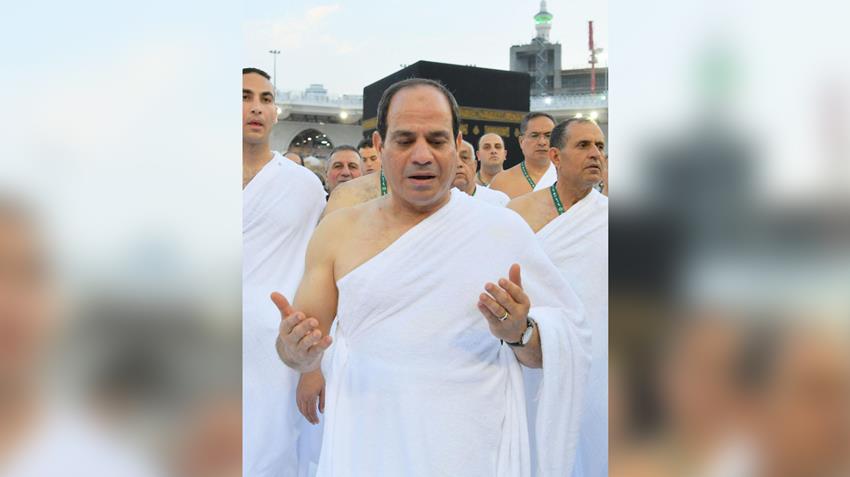
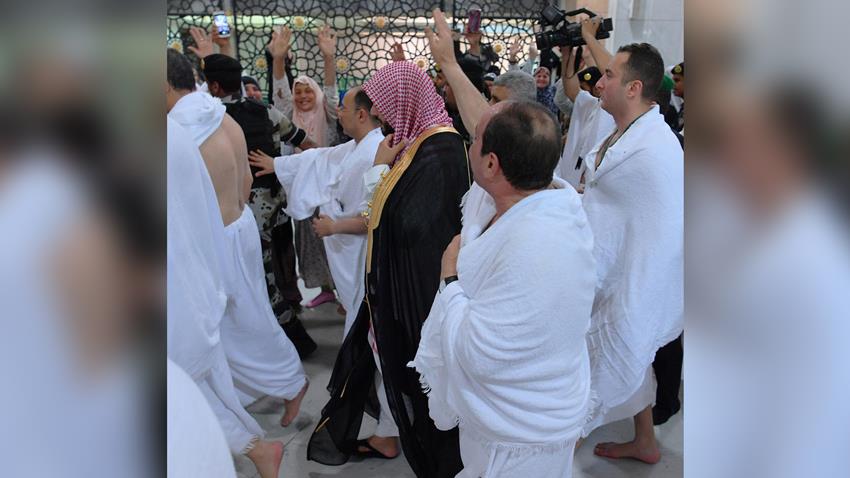
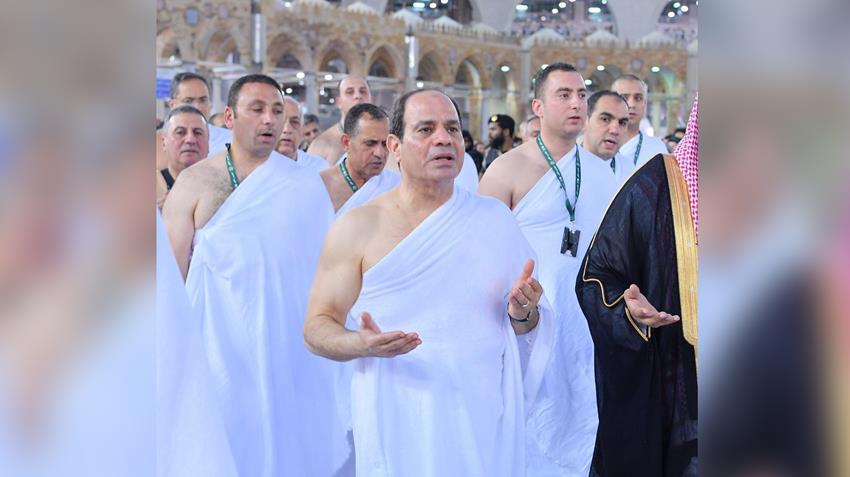
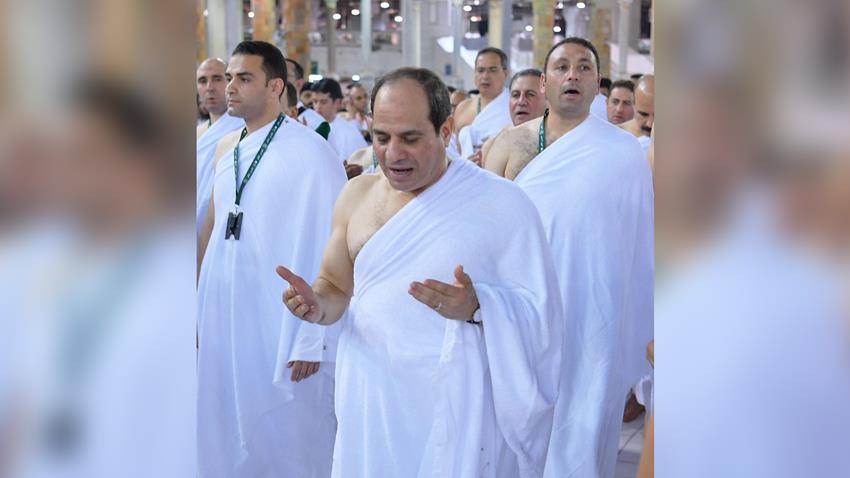
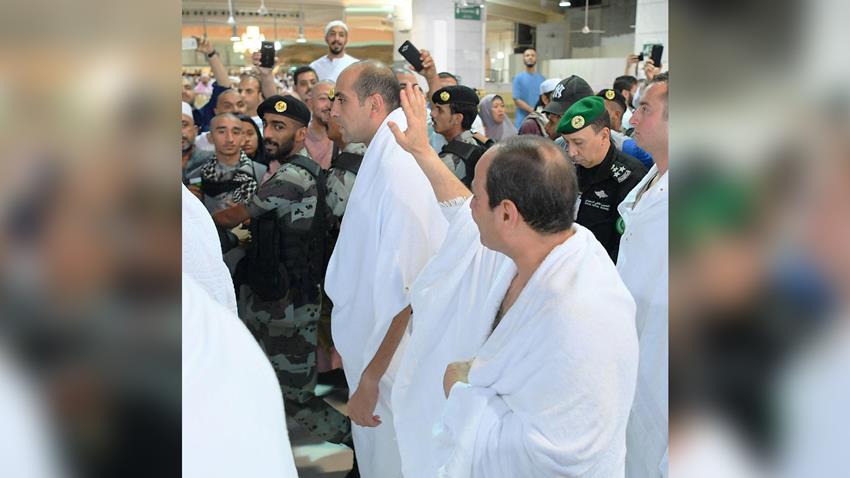
El-Sisi Performs Umrah
President Abdel Fattah El-Sisi performed Umrah (Friday, 31/5/2019).
El-Sisi Receives Pakistani Prime Minister
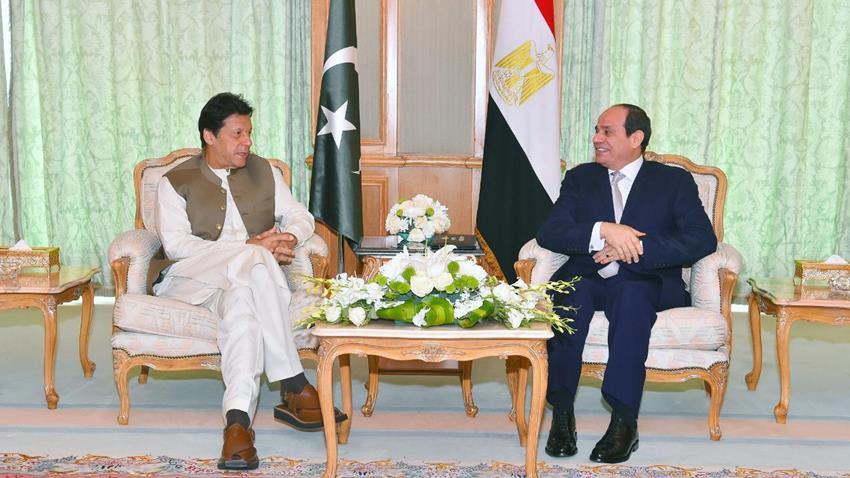
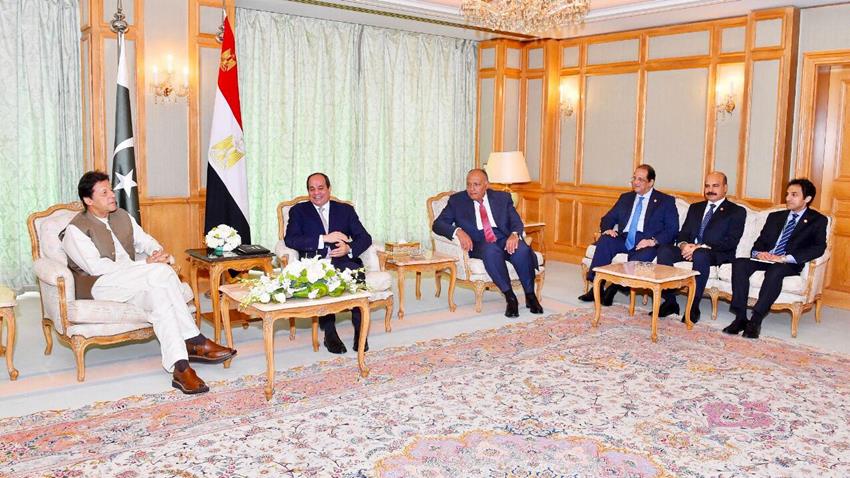
President Abdel Fattah El-Sisi received this afternoon Prime Minister of Pakistan, Imran Khan, at his Excellency’s residence in Mecca.
The President lauded the historical relations between the two countries, expressing his aspiration to develop bilateral cooperation with Pakistan in various fields, especially trade, and to promote coordination and consultation with it regarding various regional issues and others of common interest, on top of which is countering terrorism and extremist ideologies, one of the most common challenges we face.
For his part, the Prime Minister of Pakistan stressed the depth of the relations between the two countries and the two friendly peoples, praising the achievements witnessed by Egypt in the past period in various fields, especially in countering terrorism, the economic reform and the major national projects being implemented with the aim of achieving comprehensive development. Pakistan appreciates Egypt's pivotal and active role in the Arab and Muslim worlds; the role that Pakistan depends on for the stability and security of the Middle East and the Islamic world as a whole.
The meeting tackled ways to strengthen bilateral cooperation frameworks in a number of fields in line with the aspirations of the two peoples and the potentials of the two countries, especially at the level of security and economic cooperation and trade and investment exchanges, in addition to promoting cooperation and consultation in various international forums.
The meeting also reviewed the latest developments in the Middle East and the Islamic world, stressing the importance of continuing intensive coordination and enhancing the joint efforts between the two countries in light of the crises in the region aimed to maintain regional peace and security and intensify efforts exerted to reform religious discourse and spread the real Islam.
The Prime Minister of Pakistan has invited the President to visit Pakistan in order to further strengthen relations between the two countries.


First Day Events:
El-Sisi Heads to Saudi Arabia
President Abdel Fattah El-Sisi headed to Saudi Arabia this morning to participate in the Arab Emergency Summit and the Ordinary Summit of the Organization of Islamic Cooperation (OIC).
The President's participation in the Arab and Islamic summits comes within the framework of Egypt's keenness to strengthen and develop relations with all member states of the two organizations in the Arab and Islamic worlds and to contribute effectively to promoting efforts to strengthen joint action mechanisms for Arab and Islamic peoples.
The President delivered a speech at the Arab Emergency Summit, which included a comprehensive vision for maintaining the security and stability of the region and facing the current challenges, as well as means of enhancing consultation and coordination among the brotherly Arab countries.
The Spokesman of the Egyptian Presidency stated that the 14th Islamic Summit coincides with the celebration of the half-century anniversary of the Organization of Islamic Cooperation, which represents the collective voice of the Islamic world. The summit is held under the slogan "Hand by hand towards the future". In his speech, El-Sisi reviewed ways to crystallize a unified stance on the current issues and events in the Islamic world, on top of which is the fight against extremist ideology, as well as the dissemination of the discourse of discrimination and hatred against Muslims.
The president's program also includes holding bilateral meetings, on the sidelines of the two summits, with a number of Arab and Muslim leaders to discuss ways of enhancing bilateral relations, as well as the latest developments on the regional and international arenas and issues of common concern.
Spokesman of the Arab Coalition Forces Informs El-Sisi about the Latest Updates in the Saudi Arena
Colonel Turki al-Malki, Spokesman of the Arab Coalition Forces, informs President Abdel Fattah El-Sisi- right after arriving in King Fahd International Airport- about the attacks launched on the Saudi territory, where his Excellency saw the remnants of some weapons and missiles recently intercepted by the Royal Saudi Air Defense.
Second Day Events:
El-Sisi's Speech in the Urgent Arab Summit in Mecca
Ladies and Gentlemen, following is the speech of President Abdel Fattah El-Sisi during the urgent Arab Summit in Mecca:
"Brother, King Salman Bin Abdul Aziz Al Saud,
The Custodian of the Two Holy Shrines and King of Saudi Arabia
Your Majesties, Excellencies and Highnesses, Kings and Heads of Arab States
Your Hhighness Mr. Ahmed Abo El-Gheit, Secretary General of the League of Arab States
At the outset, I would like to extend my sincere thanks to my brother, the Custodian of the Two Holy Shrines, King Salman Bin Abdul Aziz Al Saud, King of Saudi Arabia, for his invitation to hold this summit in Mecca, and for his hospitality and good organization, praying that God Almighty to guide us towards the path for the good of our Arab nation.
Your Majesties, Excellencies and Highnesses,
There is no doubt that our summit is taking place today in light of serious and unprecedented threats facing the Arab national security, especially in the Gulf region of great strategic importance. I do not think that I need to emphasize that the security of the Arab Gulf region is one of the main pillars of Arab national security and it is closely linked to Egypt's national security.
Hence, we all have to take a decisive stand with wisdom and determination against any threat to the security of the Gulf and the Arab national security.
Determination is required to deliver a message to everyone; the Arabs are not willing to let go of their national security and will not accept any violations against their rights. Wisdom is necessary to contain any tension and prevent it from exploding. The Arabs have been and are still advocates of peace and stability.
Allow me to seize the opportunity of our meeting today, in this blessed place, to review with you the elements of the Egyptian Vision of how to deal decisively and wisely with the threats that we have gathered today to discuss; the threats that face the Arab National Security in general. Let me outline this vision in four key elements:
First: the recent attacks on oil facilities in the Kingdom of Saudi Arabia by Al-Houthi militias, the repeated attempts to launch missiles to its territory and the attacks against territorial waters of United Arab Emirates undoubtedly are explicit acts of terrorism that require a clear stance from all the international community to condemn them first and then to act by all means to deter the perpetrators, hold them accountable and prevent the recurrence of such attacks against Arab national security and international peace and security.
Since we call on the international community to take full responsibility for these terrorist threats, we also have a responsibility to activate the mechanisms of Arab cooperation in the fight against terrorism and to strengthen our own potentials to confront it.
Indeed, these recent terrorist threats to our Arab national security may be representing an important occasion to renew the discussion on the activation of the mechanisms of joint Arab action, those already in place or proposed and have not yet been developed. This is the way to restore the lead of the Arabs initiative, enabling them to deter and confront any attempt seeking to undermine Arab national security in a swift and decisive manner.
Second: In parallel with the full solidarity with Saudi Arabia and the United Arab Emirates, and the support they give against any threats to lands, installations or territorial waters in either of the two brotherly states, there is a need to have a strategy convergence for the region's crises, roots of shaking the stability and threats to Arab national security, bringing together political and security procedures.
The Arab states will not tolerate any threat to their security. They will always remain at the forefront of the advocates of peace and dialogue. We can deduce a concept to follow from Allah’s words: “And if they incline to peace, then incline to it [also] and rely upon Allah.”
There is no need to ensure that the Arabs are the ones who are most keen on having healthy neighboring relations based on the principles of respect for the Arab states sovereignty and non-interference in their affairs, and refraining from any attempt to provoke sectarian and ethnic prejudices. Those who adhere to these principles, shall find an Arab hand extended to them offering peace and cooperation.
Thirdly: The desired strategic convergence for the Arab national security requires dealing simultaneously with all sources of threat to the security of the region, on top of which is the Palestinian cause; the main Arab issue and the first source of instability in the region. Stability in the region cannot be achieved without a comprehensive and peaceful solution that meets the legitimate Palestinian aspirations for independence, puts an end to occupation and establishes an independent and fully sovereign Palestinian state on the borders of June 1967, with Eastern Jerusalem as its capital. It is also meaningless to talk about a comprehensive strategic convergence to Arab national security without having a clear vision to address the ongoing crises in Syria, Libya and Yemen so as to restore their unity and sovereignty and to realize the aspirations of their peoples to freedom and a decent life under united sovereign nations that are not subjected to the will, interventions and greed of regional or external states or warlords and terrorist and sectarian leaders.
Fourth: The necessary condition to build this comprehensive strategic convergence to Arab national security is that it must be based on the principle pf confronting all regional or external intervention in the Arab states with the same degree of determination. The Arab states cannot tolerate having any regional party threatening the Arab states are addressed. The Arab states cannot tolerate any regional party threatening the territory, facilities and the waters of the dear Arab states or seeking to exercise their influence in the Arab states through a sectarian militias aiming to achieve their narrow interests.
In the same sense, the Arab states cannot accept the continued presence of military occupying forces of a regional party on the territory of two fraternal states or the fact that a regional party supports the militias and terrorists with arms and equipment before the entire international community.
The Arab national security and its healthy neighborly relations require, first and foremost, a sincere and determined stand with every regional party that tries to intervene in the Arab affairs. It also requires a frank stand with any Arab party that deviates from the requirements of the Arab national security and participates in the interventions in the affairs of other Arab countries.
Your Majesties, Excellencies and Highnesses,
We have gathered today to send a message of unambiguous solidarity to our brothers in Saudi Arabia and the United Arab Emirates and to renew our determination to build a comprehensive strategic convergence to Arab national security that will restore the historic initiative of the Arabs that is the most suitable for the magnitude of the risks and challenges facing our Arab security during this phase, and with the nature of the hopes that the Arab peoples attach to our meeting.
May God help us all to serve the causes of our Arab nation and maintain its national security,
Peace be upon you.
El-Sisi Performs Umrah
President Abdel Fattah El-Sisi performed Umrah (Friday, 31/5/2019).
El-Sisi Receives Pakistani Prime Minister
President Abdel Fattah El-Sisi received this afternoon Prime Minister of Pakistan, Imran Khan, at his Excellency’s residence in Mecca.
The President lauded the historical relations between the two countries, expressing his aspiration to develop bilateral cooperation with Pakistan in various fields, especially trade, and to promote coordination and consultation with it regarding various regional issues and others of common interest, on top of which is countering terrorism and extremist ideologies, one of the most common challenges we face.
For his part, the Prime Minister of Pakistan stressed the depth of the relations between the two countries and the two friendly peoples, praising the achievements witnessed by Egypt in the past period in various fields, especially in countering terrorism, the economic reform and the major national projects being implemented with the aim of achieving comprehensive development. Pakistan appreciates Egypt's pivotal and active role in the Arab and Muslim worlds; the role that Pakistan depends on for the stability and security of the Middle East and the Islamic world as a whole.
The meeting tackled ways to strengthen bilateral cooperation frameworks in a number of fields in line with the aspirations of the two peoples and the potentials of the two countries, especially at the level of security and economic cooperation and trade and investment exchanges, in addition to promoting cooperation and consultation in various international forums.
The meeting also reviewed the latest developments in the Middle East and the Islamic world, stressing the importance of continuing intensive coordination and enhancing the joint efforts between the two countries in light of the crises in the region aimed to maintain regional peace and security and intensify efforts exerted to reform religious discourse and spread the real Islam.
The Prime Minister of Pakistan has invited the President to visit Pakistan in order to further strengthen relations between the two countries.

All rights reserved to the presidency Copyright © 2020
All rights reserved to the presidency Copyright © 2020