
All rights reserved to the presidency Copyright © 2020


The terminal is a giant economic project that raises the rank of the port of Alexandria and contributes to placing Egypt among the countries that own ports with modern global performance.
More than 95% of the terminal is staffed by Egyptians, thus providing about 1,500 direct jobs and 2,000 indirect jobs.
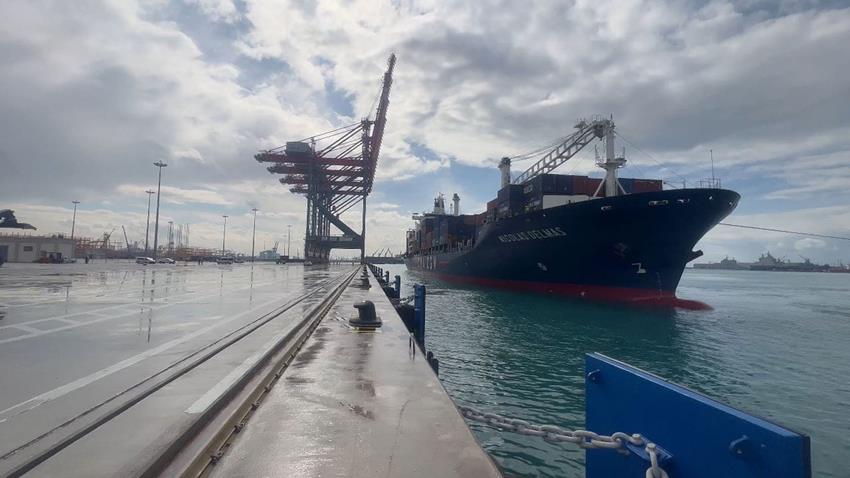
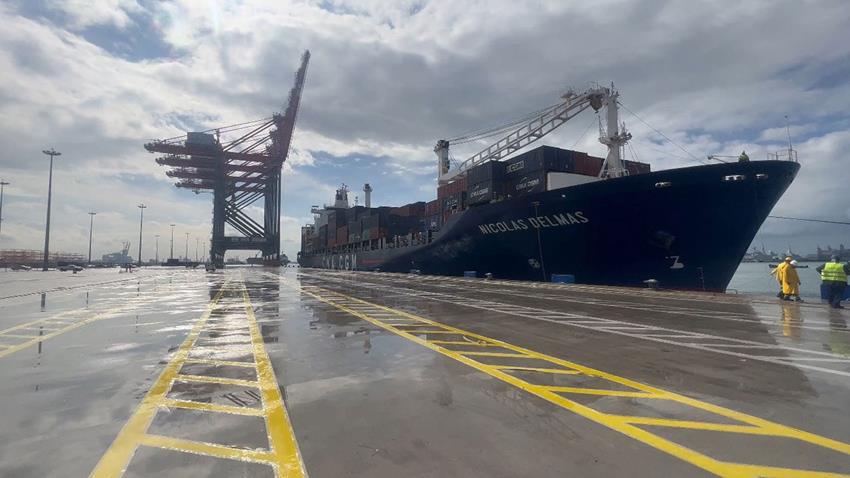
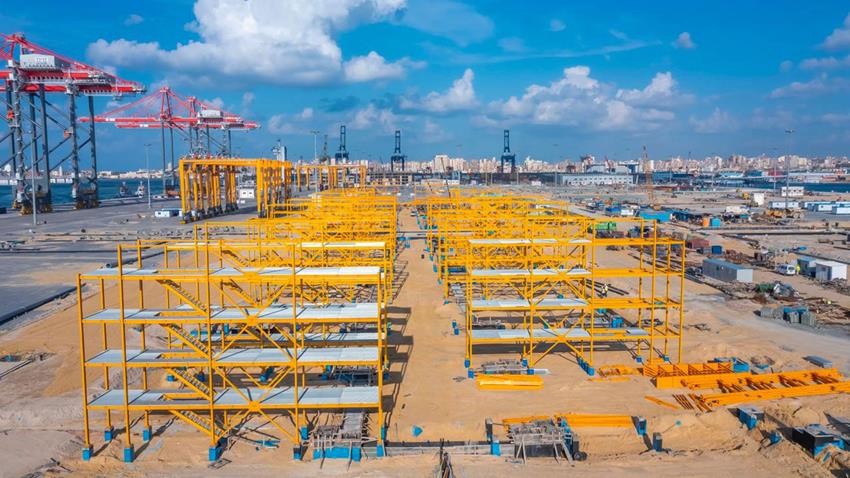
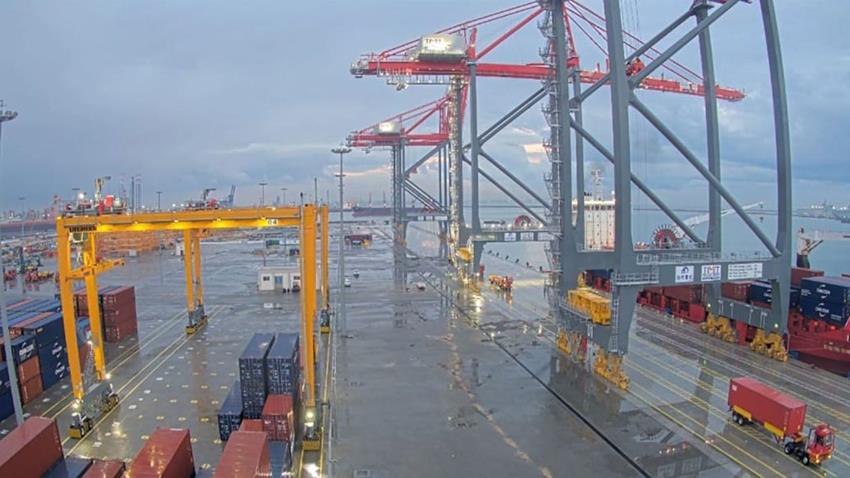
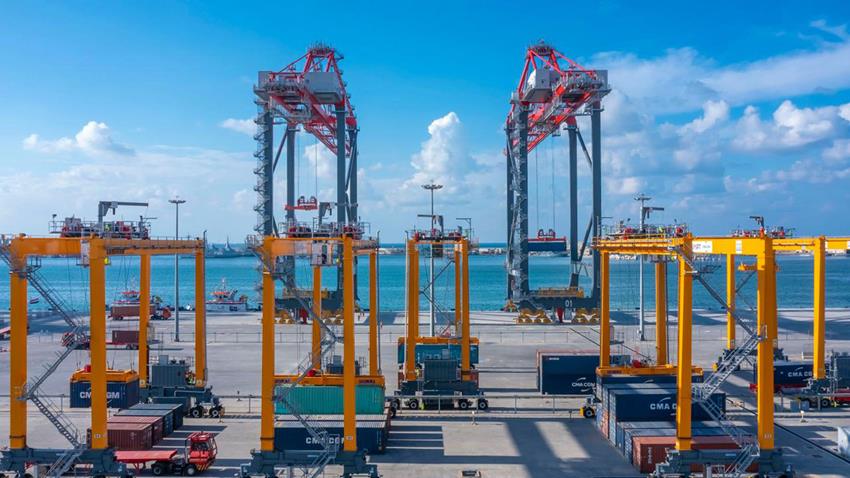
The terminal was equipped with world-class high-end equipment to accommodate the new generation of giant vessels including:
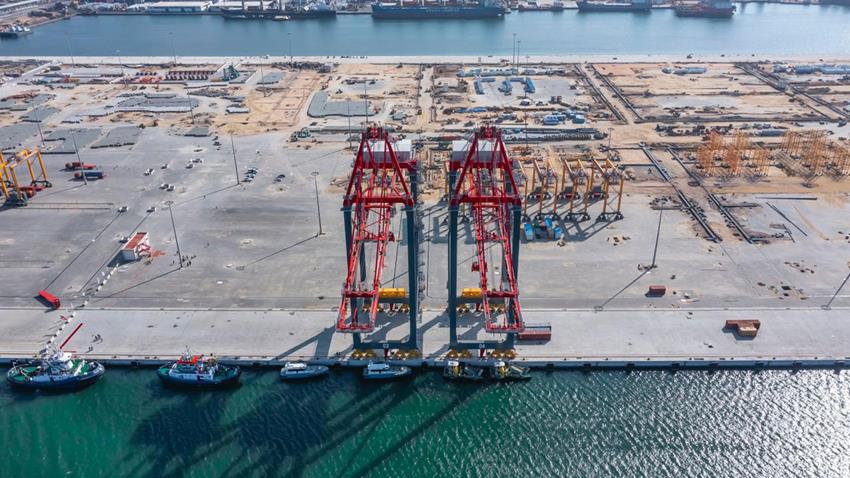
-4 berth cranes to total 10 cranes, when the station reaches its maximum operating capacity.
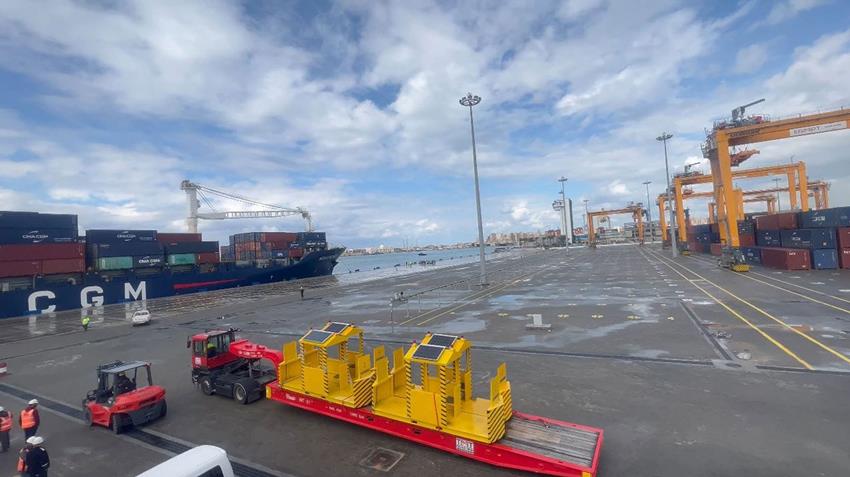
-12 yard cranes to total 30 cranes, when the station reaches its maximum operating capacity.
-32 container tractors to total 71 tractors, when the station reaches its maximum operating capacity.
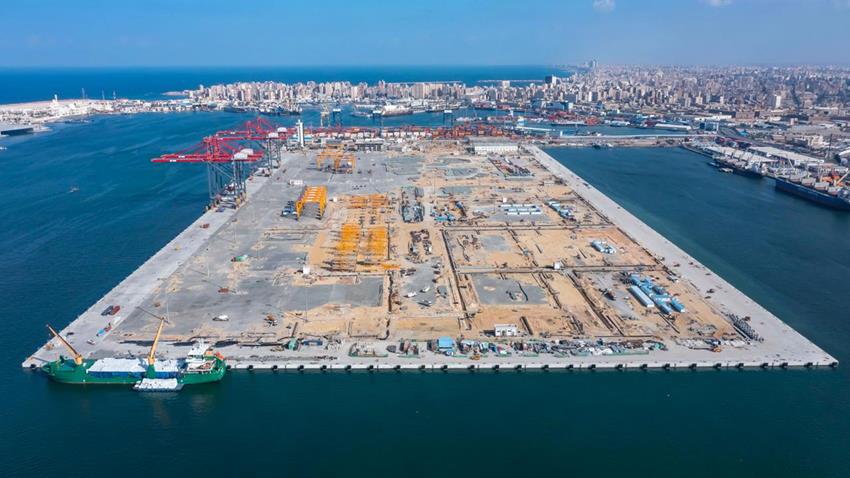
The terminal contains trading yards on an area of 400-thousad square meters. It is divided into 3 trading stations (containers - general cargo - cars), and is capable of handling 12-15 million tons of goods annually and receiving 6-7 large container ships at the same time.
The station's berths are 2,530 meters long. This qualifies them to accommodate ships with large tonnages, as the maximum depth reaches 17.50 m.
The terminal has a management and control building, which was equipped to the highest standards. It is located on an area of 1,200 meters and consists of 4 floors. Those include the Operation Department that controls the operation of the entire terminal and monitors the discharge, handling and stationing of the yard, as well as the entry and exit of containerized trucks and their places inside the terminal through control screens. There is also the Information Technology Department, that is responsible for controlling the terminal’s systems such as the Computerized Maintenance Management System (CMMS Software) and Terminal Operating Systems (TOS), in addition to the maintenance, the financial and management system (ERP), and the follow-up of the operation and detection of containers through OCR (Optical Character Recognition) cameras. There are also the Financial Department and the Occupational Safety and Health and Human Resources Department.
The terminal also houses a main workshop for the maintenance of the terminal’s equipment, the general cargo stores, as well as the entry and exit gates which operate with the OCR (Optical Character Recognition) camera system to register the entry and exit of all trucks and goods heading to the terminal and prevent any trucks, containers or general goods that are not allowed in. This contributes to achieving the shortest entry and waiting time for the trucks and is thus conducive to the highest turnover of containers inside the terminal as a Global Performance Indicator gauging the station’s performance.
The terminal also houses areas for training workers, which has been established in line with the highest standards of selection and their integrating into the training plan at the highest level inside and outside of Egypt, in order to achieve the utmost preparedness for operation and the best global performance rates. The terminal also contains storage places for refrigerated containers, known as Refeers, as well as the customs inspection area.
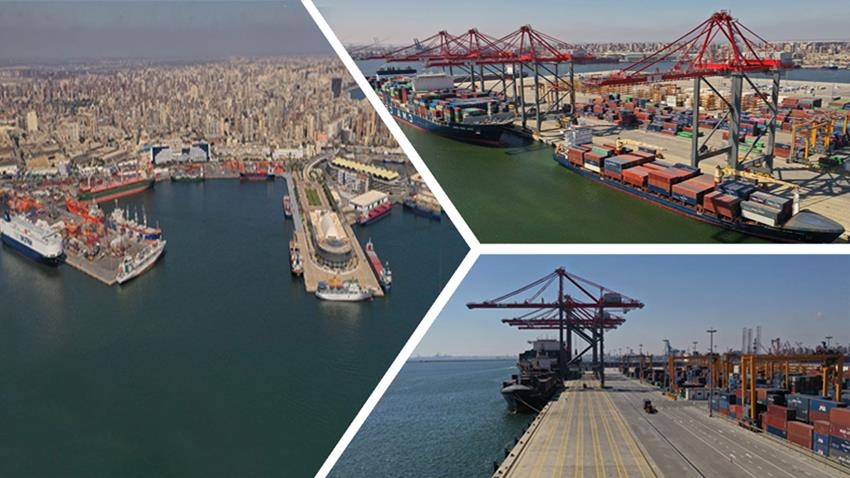
The terminal is a giant economic project that raises the rank of the port of Alexandria and contributes to placing Egypt among the countries that own ports with modern global performance.
More than 95% of the terminal is staffed by Egyptians, thus providing about 1,500 direct jobs and 2,000 indirect jobs.
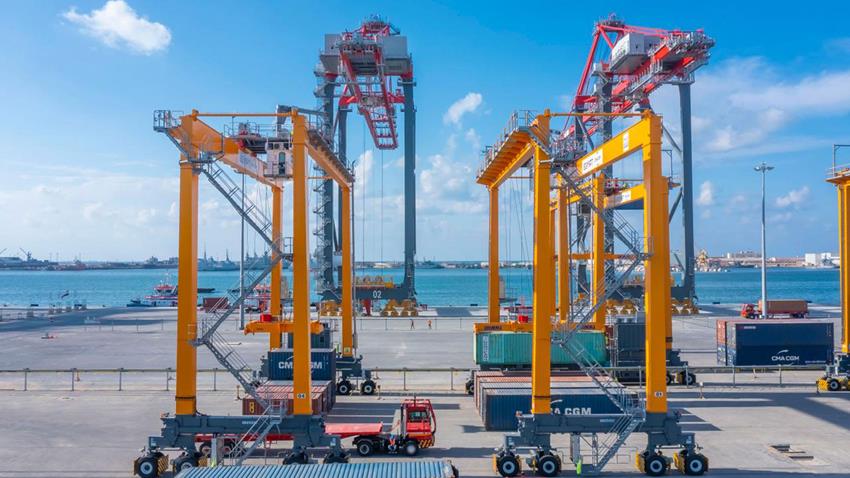
The terminal was equipped with world-class high-end equipment to accommodate the new generation of giant vessels including:
-4 berth cranes to total 10 cranes, when the station reaches its maximum operating capacity.
-12 yard cranes to total 30 cranes, when the station reaches its maximum operating capacity.
-32 container tractors to total 71 tractors, when the station reaches its maximum operating capacity.
The terminal contains trading yards on an area of 400-thousad square meters. It is divided into 3 trading stations (containers - general cargo - cars), and is capable of handling 12-15 million tons of goods annually and receiving 6-7 large container ships at the same time.
The station's berths are 2,530 meters long. This qualifies them to accommodate ships with large tonnages, as the maximum depth reaches 17.50 m.
The terminal has a management and control building, which was equipped to the highest standards. It is located on an area of 1,200 meters and consists of 4 floors. Those include the Operation Department that controls the operation of the entire terminal and monitors the discharge, handling and stationing of the yard, as well as the entry and exit of containerized trucks and their places inside the terminal through control screens. There is also the Information Technology Department, that is responsible for controlling the terminal’s systems such as the Computerized Maintenance Management System (CMMS Software) and Terminal Operating Systems (TOS), in addition to the maintenance, the financial and management system (ERP), and the follow-up of the operation and detection of containers through OCR (Optical Character Recognition) cameras. There are also the Financial Department and the Occupational Safety and Health and Human Resources Department.
The terminal also houses a main workshop for the maintenance of the terminal’s equipment, the general cargo stores, as well as the entry and exit gates which operate with the OCR (Optical Character Recognition) camera system to register the entry and exit of all trucks and goods heading to the terminal and prevent any trucks, containers or general goods that are not allowed in. This contributes to achieving the shortest entry and waiting time for the trucks and is thus conducive to the highest turnover of containers inside the terminal as a Global Performance Indicator gauging the station’s performance.
The terminal also houses areas for training workers, which has been established in line with the highest standards of selection and their integrating into the training plan at the highest level inside and outside of Egypt, in order to achieve the utmost preparedness for operation and the best global performance rates. The terminal also contains storage places for refrigerated containers, known as Refeers, as well as the customs inspection area.


All rights reserved to the presidency Copyright © 2020
All rights reserved to the presidency Copyright © 2020