
All rights reserved to the presidency Copyright © 2020


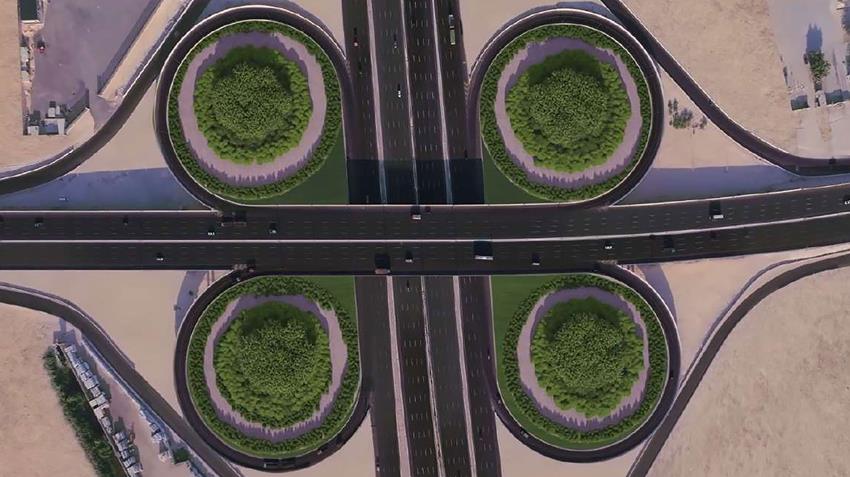
Construction work on El-Tameer Axis, designed to be a traffic-free axis, commenced in October 2020. Under the directives of President Abdel Fattah El-Sisi, work began on the construction of the two phases of Abu Zekry Axis project, with a total length of 81 km. Phase I of the axis extends from the intersection of the Alexandria-Cairo desert road, in front of Sawary City, to Sidi Kerir Bridge, with a length of 35 km. Phase II extends from Sidi Kerir Bridge to the intersection of the new Burg El-Arab Road, with a length of 15 km. This is, in addition to the implementation of other transverse axes for connection on the coastal road, with a length of 31 km. This classification was set according with the quality of the soil on the axis.
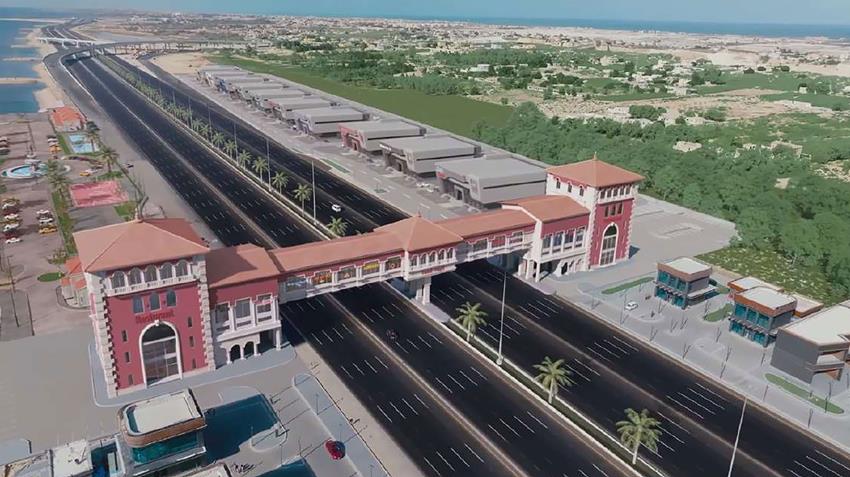
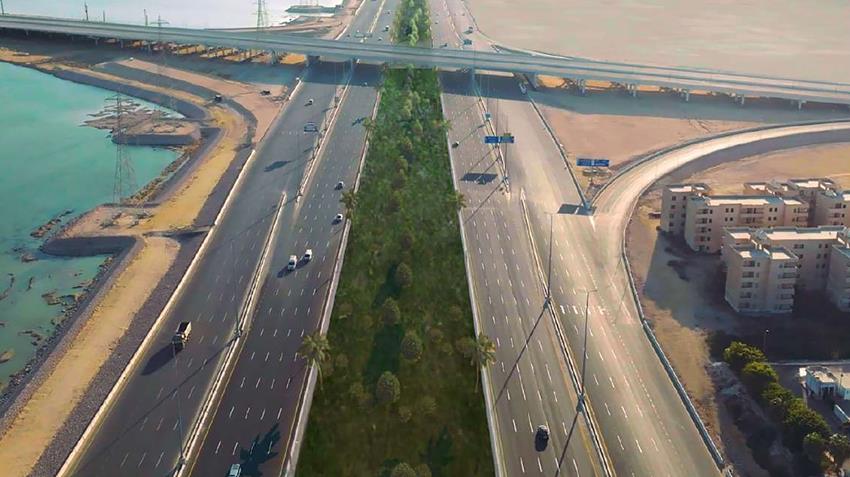
The axis was designed to include 9 lanes in each direction; 5 lanes on the main road and 4 on the side-road to serve heavy vehicle movements to and from the ports of Alexandria, El Dekheila and El Mex. This totals, 18 traffic lanes, with a width ranging from 90m to 120m, and an island of at least 5m and up to 45m in some areas.
Axis Engineering Works:
· Phase 1 involves the implementation of 18 industrial works (concrete bridges), with a length of 18 km and a total of 320-thousand flat meters
· Development and maintenance works have been carried out for 6 existing bridges, with a total of 1330-thousand flat meters
· Phase 2 includes the implementation of 14 industrial works (concrete bridges), with a length of 14 km and a total of 300-thousand flat meters; 92% of this phase was implemented
Phase 1 is divided into 3 sectors, with a total length of 35 km, as follows:
· Sector 1: Mariut Valley, with a length of 14 km
· Sector 2: El Malahat (Salt ponds), with a length of 11 km
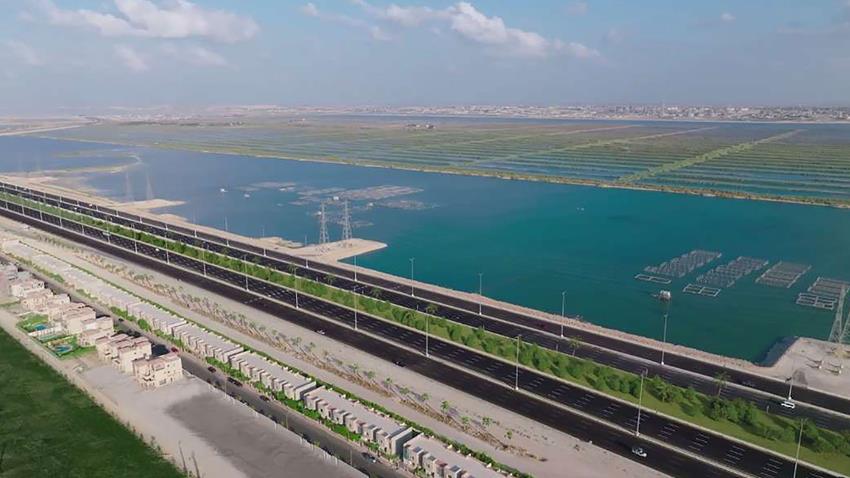
· Sector 3: Lake Mariut, with a length of 10 km
Description of Road Works:
· Layers of about 17 million m3 of sand and 8 million m3 of soil were used for backfilling.
· The road works involved the construction of an asphalt base layer of about 1.3 million m3, a layer of surface bonding of about 3.5 million flat meters, a surface layer of 2.5 million flat meters, as well as the installation of traffic signs and signals. Coordination was made with the Ministry of Interior with regard to checkpoints, speed safety cameras and speed violation detection radars to maintain the safety and security of the axis users.
Lighting Works:
· The axis was illuminated with 800 High Mast street light poles.
· 3,800 energy efficient light poles were installed on the axis, with intelligent systems capable of decreasing the intensity of the light on the road in the absence of cars and at certain periods of time.
Power Rooms and Medium Voltage Cables:
· 25 electric transformer rooms
· A total of 6400 KVA (kilo-volt-amperes) electrical power capacity
· The electrical capacity of the lighting works has been increased, in addition to the extension of medium voltage cables, with a total length of 46.5 km
Agriculture Works:
Traffic islands along the axis were cultivated:
• 700 palm trees
• 3300 fruitful trees
• 52-thousand seedlings of soil covers
Project challenges:
The nature of the clay soil required removing the alluvium in order to implement the backfilling of water surfaces, as the quantities of alluvium and salts deposited along the path of the road, which were removed from Lake Mariout, El Malahat (Salt ponds), canals and drains on both sides of the axis, amounted to 3.5 million m3, with an average thickness of 1.5m of deposits of salt layers.
160,000 sand columns with a diameter of 50 cm were implemented using the appropriate technology and local equipment, at close distances ranging from 2m to 3m, with an average length of 18m per column, and a total length of 2.4 million linear meters.
Transmission of Parallel and Intersecting Ultra-High Voltage Power Lines:
• 104 high-voltage power towers
• 31.5 km of 220 kV power lines
• 700-thousand m3 of dust for the places of the alternative tracks of the power line
• 80-thousand m3 of rubblization works for the places of the concrete bases
Securing Tanker Lines for Petroleum Companies:
3 projects for the maintenance and protection of oil pipelines:
• Protection of Arab Petroleum Pipelines Company "SUMED " pipelines
• Protection of MIDTAP Company pipelines
• Protection of Middle East Oil Refinery (Midor) Company pipelines
Water works, Irrigation and fisheries:
• 600 feddans of purification works for Lake Mariout
• 1.5 million m3 is the outcome of purification works, using marine dredging
• 240 feddans of natural island formation
• 4800 linear meters of precast concrete tunnel pipes, with average diameters of 1500 mm
• Replacing and partially renewing the "GRP" water pipes with a diameter of 1000 mm
Statistical Data:
The project was implemented by:
• 8 consulting offices with 2,500 engineers
• 15 contracting companies, with 1,500 heavy equipment, and a total of 6,000 engineers, workers and technicians
• 10,000 direct jobs and 30,000 indirect jobs were also generated
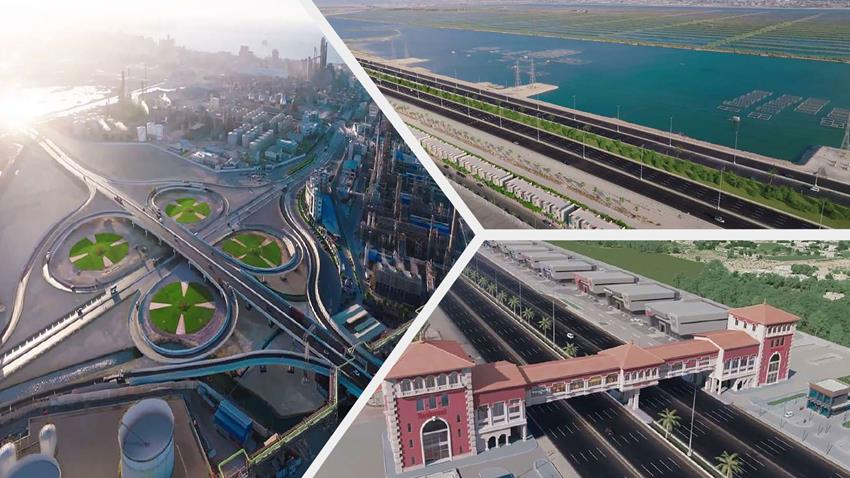

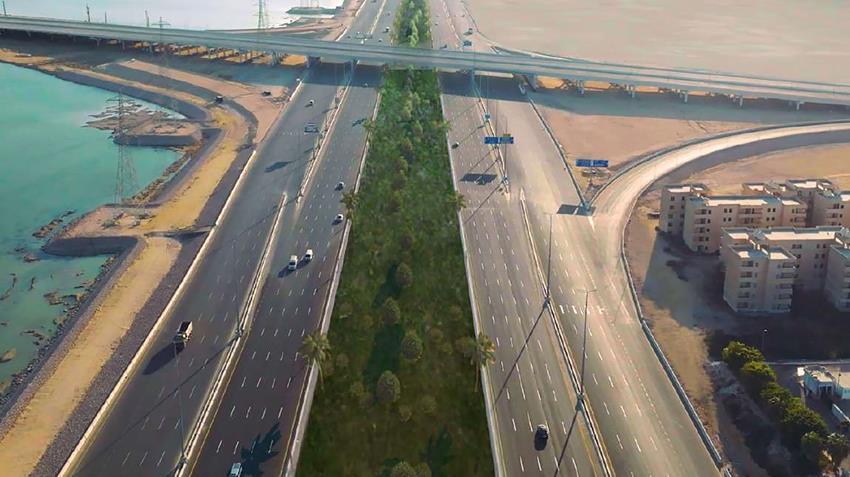
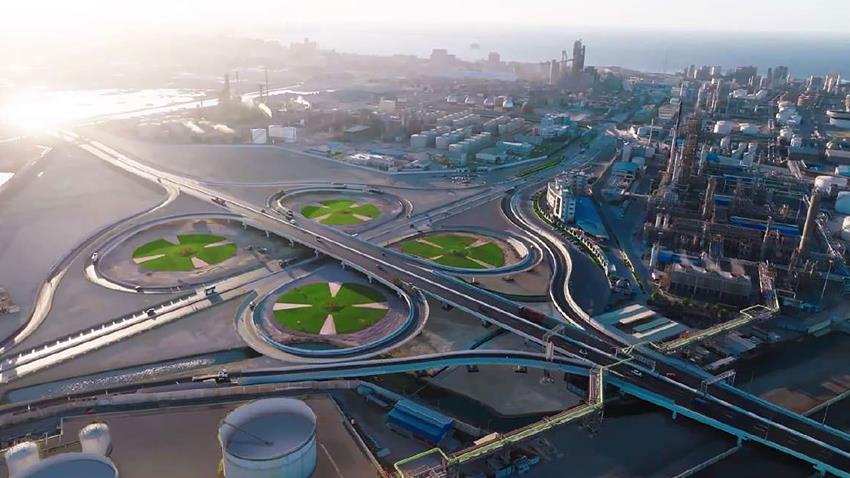
Construction work on El-Tameer Axis, designed to be a traffic-free axis, commenced in October 2020. Under the directives of President Abdel Fattah El-Sisi, work began on the construction of the two phases of Abu Zekry Axis project, with a total length of 81 km. Phase I of the axis extends from the intersection of the Alexandria-Cairo desert road, in front of Sawary City, to Sidi Kerir Bridge, with a length of 35 km. Phase II extends from Sidi Kerir Bridge to the intersection of the new Burg El-Arab Road, with a length of 15 km. This is, in addition to the implementation of other transverse axes for connection on the coastal road, with a length of 31 km. This classification was set according with the quality of the soil on the axis.
The axis was designed to include 9 lanes in each direction; 5 lanes on the main road and 4 on the side-road to serve heavy vehicle movements to and from the ports of Alexandria, El Dekheila and El Mex. This totals, 18 traffic lanes, with a width ranging from 90m to 120m, and an island of at least 5m and up to 45m in some areas.
Axis Engineering Works:
· Phase 1 involves the implementation of 18 industrial works (concrete bridges), with a length of 18 km and a total of 320-thousand flat meters
· Development and maintenance works have been carried out for 6 existing bridges, with a total of 1330-thousand flat meters
· Phase 2 includes the implementation of 14 industrial works (concrete bridges), with a length of 14 km and a total of 300-thousand flat meters; 92% of this phase was implemented
Phase 1 is divided into 3 sectors, with a total length of 35 km, as follows:
· Sector 1: Mariut Valley, with a length of 14 km
· Sector 2: El Malahat (Salt ponds), with a length of 11 km
· Sector 3: Lake Mariut, with a length of 10 km
Description of Road Works:
· Layers of about 17 million m3 of sand and 8 million m3 of soil were used for backfilling.
· The road works involved the construction of an asphalt base layer of about 1.3 million m3, a layer of surface bonding of about 3.5 million flat meters, a surface layer of 2.5 million flat meters, as well as the installation of traffic signs and signals. Coordination was made with the Ministry of Interior with regard to checkpoints, speed safety cameras and speed violation detection radars to maintain the safety and security of the axis users.
Lighting Works:
· The axis was illuminated with 800 High Mast street light poles.
· 3,800 energy efficient light poles were installed on the axis, with intelligent systems capable of decreasing the intensity of the light on the road in the absence of cars and at certain periods of time.
Power Rooms and Medium Voltage Cables:
· 25 electric transformer rooms
· A total of 6400 KVA (kilo-volt-amperes) electrical power capacity
· The electrical capacity of the lighting works has been increased, in addition to the extension of medium voltage cables, with a total length of 46.5 km
Agriculture Works:
Traffic islands along the axis were cultivated:
• 700 palm trees
• 3300 fruitful trees
• 52-thousand seedlings of soil covers
Project challenges:
The nature of the clay soil required removing the alluvium in order to implement the backfilling of water surfaces, as the quantities of alluvium and salts deposited along the path of the road, which were removed from Lake Mariout, El Malahat (Salt ponds), canals and drains on both sides of the axis, amounted to 3.5 million m3, with an average thickness of 1.5m of deposits of salt layers.
160,000 sand columns with a diameter of 50 cm were implemented using the appropriate technology and local equipment, at close distances ranging from 2m to 3m, with an average length of 18m per column, and a total length of 2.4 million linear meters.
Transmission of Parallel and Intersecting Ultra-High Voltage Power Lines:
• 104 high-voltage power towers
• 31.5 km of 220 kV power lines
• 700-thousand m3 of dust for the places of the alternative tracks of the power line
• 80-thousand m3 of rubblization works for the places of the concrete bases
Securing Tanker Lines for Petroleum Companies:
3 projects for the maintenance and protection of oil pipelines:
• Protection of Arab Petroleum Pipelines Company "SUMED " pipelines
• Protection of MIDTAP Company pipelines
• Protection of Middle East Oil Refinery (Midor) Company pipelines
Water works, Irrigation and fisheries:
• 600 feddans of purification works for Lake Mariout
• 1.5 million m3 is the outcome of purification works, using marine dredging
• 240 feddans of natural island formation
• 4800 linear meters of precast concrete tunnel pipes, with average diameters of 1500 mm
• Replacing and partially renewing the "GRP" water pipes with a diameter of 1000 mm
Statistical Data:
The project was implemented by:
• 8 consulting offices with 2,500 engineers
• 15 contracting companies, with 1,500 heavy equipment, and a total of 6,000 engineers, workers and technicians
• 10,000 direct jobs and 30,000 indirect jobs were also generated


All rights reserved to the presidency Copyright © 2020
All rights reserved to the presidency Copyright © 2020