
All rights reserved to the presidency Copyright © 2020


Monday, 12 October 2026 / 12:04 AM
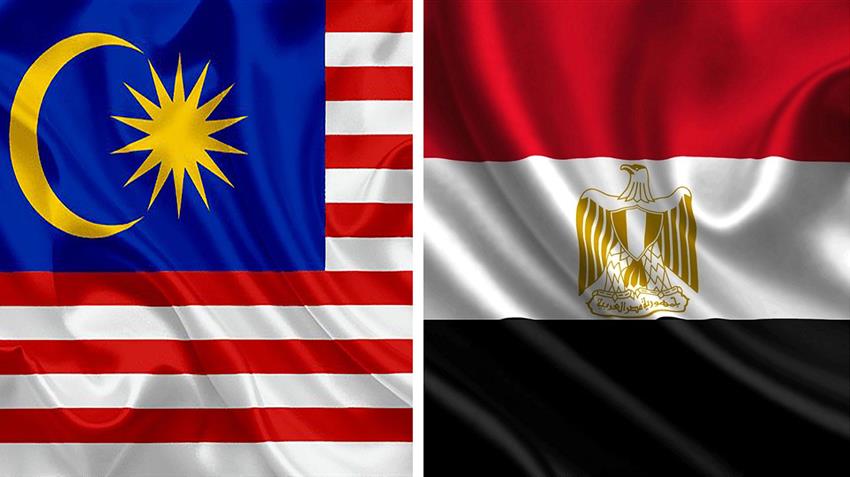
Joint Statement between Malaysia and the Arab Republic of Egypt on the occasion of the State visit by His Excellency President Abdel Fattah El-Sisi, President of the Arab Republic of Egypt to Malaysia, 9-10 October 2026
1. At the invitation of His Majesty Sultan Ibrahim, King of Malaysia, His Excellency Abdel Fattah Al Sisi, President of the Arab Republic of Egypt undertook a State Visit to Malaysia from 9 to 10 October 2026. This marked President Al Sisi’s first State Visit to Malaysia.
2. During the visit, President Al Sisi was accorded a State Welcoming Ceremony, followed by an Audience with His Majesty Sultan Ibrahim at the Istana Negara. Honourable Dato’ Seri Anwar Ibrahim, Prime Minister of Malaysia and President Al Sisi, subsequently held a bilateral meeting on 10 October 2026, where both Leaders engaged in extensive and in-depth discussions, covering the full spectrum of bilateral relations. This encompasses political engagement, trade and investment, defence and security cooperation, digital economy, energy, agriculture, health, education, tourism, people-to-people contacts as well as regional and international issues of mutual concern.
3. Since the establishment of diplomatic relations on 10 November 1959, Malaysia and Egypt have enjoyed a strong and enduring partnership underpinned by mutual respect, shared values and common aspirations. While tracing back the historical ties between the two countries, the bilateral relations have witnessed profound growth and have continuously strengthened throughout the decades.
4. Recalling the commitment made on 10 November 2024 in Cairo, Prime Minister Anwar Ibrahim and President Al Sisi announced the elevation of bilateral relations between Malaysia and Egypt to a Strategic Partnership. Under this framework, both Leaders reaffirmed their shared interest to accelerate efforts in building a more dynamic and resilient partnership across all sectors, thereby jointly promoting global prosperity and stability. Both Leaders acknowledged the importance of regular dialogue through existing bilateral institutional mechanisms and in this regard, agreed to convene the Second Joint Commission Meeting (JCM) and the Second Bilateral Consultations (BC) at the earliest opportunity.
5. Both Leaders lauded the growing economic partnership between Malaysia and Egypt, noting the vast untapped economic potential between the two nations. In this spirit, both Leaders agreed to enhance trade and investment, encouraging business-led cooperation in areas such as agriculture; the halal industry; education; Technical and Vocational Education and Training (TVET); digital transformation; renewable energy; infrastructure development; automotive; manufacturing and semiconductors. Furthermore, both Leaders recognised that their countries are strategically positioned to serve as economic hubs and gateways for one another into the broader ASEAN, Arab, African and European markets.
6. Both Leaders recognised the longstanding and cordial defence and security relations between the two countries, built upon mutually beneficial cooperation and the importance of enhancing these relations.
7. Both Leaders acknowledged the immense benefits of people-to-people exchanges in forging closer bonds of friendship between the two nations. These include the exchange of scholarships, human capital development and academic cooperation. Malaysia remains committed to strengthening capacity-building cooperation with Egypt, in areas of mutually agreed priorities, including through the Malaysian Technical Cooperation Programme (MTCP).
8. Both Leaders underscored the importance of strengthening cooperation and the long-standing partnership in education, higher education and capacity building across all fields of religious and Arabic studies, as well as technical and scientific programs. The two countries will continue to expand these academic ties through collaborative research, language programs, and student exchange initiatives that strengthen cultural, religious, and scientific cooperation.
9. Both Leaders emphasised the importance of air connectivity in supporting closer economic cooperation and encouraged their respective national airlines to explore opportunities for enhanced collaboration. Recognising its significance for tourism, trade, and cultural exchanges, the Leaders reaffirmed their shared commitment to facilitating greater two-way travel and strengthening people-to-people connections.
10. On ASEAN, Malaysia welcomed Egypt’s accession to the Treaty of Amity and Cooperation in Southeast Asia (TAC) in 2016 and expressed support for Egypt’s proposal to formalise its engagement with ASEAN by pursuing Sectoral Dialogue Partner status. Malaysia believes this cooperation will further solidify Egypt's relations with all ASEAN Member States. Malaysia looks forward to Egypt’s support for ASEAN to explore cooperation with the African Union (AU) as ASEAN continues to diversify and strengthen its resilience through expanding its relations with regions across the world.
11. The two countries expressed their commitment to working together towards achieving peace and stability in the Gulf region and the West Asia, including in the Strait of Hormuz, and underscored the importance of ensuring freedom of navigation, according to international law.
12. The two Leaders reaffirmed that the Palestinian issue remains the core issue in West Asia and the Middle East, and stressed the importance of achieving a just and lasting peace and the implementation of the two-state solution, which guarantees the establishment of an independent and sovereign Palestinian state based on the pre-1967 borders with East Jerusalem as its capital. They renewed their categorical rejection of any plans to displace the Palestinian people from their homeland under any pretexts or labels. The two sides called for the need to consolidate the ceasefire in the Gaza Strip, facilitate the flow of humanitarian aid without restrictions, and ensure the full and effective implementation of United Nations Security Council Resolution 2803 (2025), as well as the return of the Palestinian Authority to the Strip at the soonest time. Prime Minister Anwar Ibrahim expressed Malaysia’s deep appreciation for Egypt’s pivotal role in working to end the war in the Gaza Strip and facilitating the delivery of Malaysian humanitarian assistance to the Palestinian people in the Strip. They expressed their concern about the dangerous escalation in the West Bank and East Jerusalem, and condemned the increased pace of settler violence, land confiscation, and the construction of settlements. They stressed the importance of preserving the unity of the Palestinian territories, supporting the role of the United Nations Relief and Works Agency for Palestine Refugees in the Near East, and the need to preserve and uphold its mandate.
13. The two Leaders affirmed the position of Malaysia and Egypt in support of the sovereignty, unity, and territorial integrity of Lebanon, and stressed the need for an end to all occupying power attacks and for its withdrawal from the occupied Lebanese territories, as well as the full and non-selective implementation of United Nations Security Council Resolution 1701 (2006). They also reiterated their condemnation of violations by the occupying power and incursions into Syrian territory, calling for the withdrawal from the occupied Syrian territories and compliance with the 1974 Disengagement of Forces Agreement.
14. Both Leaders affirmed the critical importance of maintaining peace, security and stability in the Horn of Africa and Sudan. They underscored the necessity of respecting the sovereignty and territorial integrity of all states in the region, urging all parties to refrain from taking any unilateral measures or arrangements that allow access to the red sea and the Gulf of Aden in violation of the sovereign rights of coastal countries. To this end, they stressed that the governance and security of the red sea are the exclusive responsibility of its coastal countries, and they also underscored the importance of the freedom of navigation and unimpeded international trade in accordance with international law, including the 1982 United Nations Convention of the Law of the Sea (UNCLOS), to address common challenges and prevent the escalation of tensions.
15. The Malaysian side recognized the importance of the Nile River to Egypt's water security. Both sides emphasized the importance of peaceful resolution of disputes, and to refrain from taking unilateral actions. They urged all Nile Basin countries to strengthen dialogue to achieve mutual benefit and consensus in accordance with international law.
16. Both Leaders reaffirmed their commitment to active cooperation across various multilateral platforms, particularly the UN, Organisation of Islamic Cooperation (OIC), Non-Aligned Movement (NAM), Group of 77 (G-77), and D-8 Organization for Economic Cooperation (D-8). With regard to BRICS, Malaysia expressed its aspiration to become a member of BRICS and its hope to work closely with Egypt and other BRICS Member States towards this aspiration, as well as to advance the Global South agenda.
17. President Abdel Fattah Al Sisi expressed his profound gratitude to His Majesty Sultan Ibrahim, the Government and the people of Malaysia for the warm welcome and gracious hospitality extended throughout the historic visit.
18. His Excellency Abdel Fattah Al Sisi, President of the Arab Republic of Egypt, extended an invitation to His Majesty Sultan Ibrahim, King of Malaysia to visit Egypt.


Monday, 12 October 2026 / 12:04 AM
Joint Statement between Malaysia and the Arab Republic of Egypt on the occasion of the State visit by His Excellency President Abdel Fattah El-Sisi, President of the Arab Republic of Egypt to Malaysia, 9-10 October 2026
1. At the invitation of His Majesty Sultan Ibrahim, King of Malaysia, His Excellency Abdel Fattah Al Sisi, President of the Arab Republic of Egypt undertook a State Visit to Malaysia from 9 to 10 October 2026. This marked President Al Sisi’s first State Visit to Malaysia.
2. During the visit, President Al Sisi was accorded a State Welcoming Ceremony, followed by an Audience with His Majesty Sultan Ibrahim at the Istana Negara. Honourable Dato’ Seri Anwar Ibrahim, Prime Minister of Malaysia and President Al Sisi, subsequently held a bilateral meeting on 10 October 2026, where both Leaders engaged in extensive and in-depth discussions, covering the full spectrum of bilateral relations. This encompasses political engagement, trade and investment, defence and security cooperation, digital economy, energy, agriculture, health, education, tourism, people-to-people contacts as well as regional and international issues of mutual concern.
3. Since the establishment of diplomatic relations on 10 November 1959, Malaysia and Egypt have enjoyed a strong and enduring partnership underpinned by mutual respect, shared values and common aspirations. While tracing back the historical ties between the two countries, the bilateral relations have witnessed profound growth and have continuously strengthened throughout the decades.
4. Recalling the commitment made on 10 November 2024 in Cairo, Prime Minister Anwar Ibrahim and President Al Sisi announced the elevation of bilateral relations between Malaysia and Egypt to a Strategic Partnership. Under this framework, both Leaders reaffirmed their shared interest to accelerate efforts in building a more dynamic and resilient partnership across all sectors, thereby jointly promoting global prosperity and stability. Both Leaders acknowledged the importance of regular dialogue through existing bilateral institutional mechanisms and in this regard, agreed to convene the Second Joint Commission Meeting (JCM) and the Second Bilateral Consultations (BC) at the earliest opportunity.
5. Both Leaders lauded the growing economic partnership between Malaysia and Egypt, noting the vast untapped economic potential between the two nations. In this spirit, both Leaders agreed to enhance trade and investment, encouraging business-led cooperation in areas such as agriculture; the halal industry; education; Technical and Vocational Education and Training (TVET); digital transformation; renewable energy; infrastructure development; automotive; manufacturing and semiconductors. Furthermore, both Leaders recognised that their countries are strategically positioned to serve as economic hubs and gateways for one another into the broader ASEAN, Arab, African and European markets.
6. Both Leaders recognised the longstanding and cordial defence and security relations between the two countries, built upon mutually beneficial cooperation and the importance of enhancing these relations.
7. Both Leaders acknowledged the immense benefits of people-to-people exchanges in forging closer bonds of friendship between the two nations. These include the exchange of scholarships, human capital development and academic cooperation. Malaysia remains committed to strengthening capacity-building cooperation with Egypt, in areas of mutually agreed priorities, including through the Malaysian Technical Cooperation Programme (MTCP).
8. Both Leaders underscored the importance of strengthening cooperation and the long-standing partnership in education, higher education and capacity building across all fields of religious and Arabic studies, as well as technical and scientific programs. The two countries will continue to expand these academic ties through collaborative research, language programs, and student exchange initiatives that strengthen cultural, religious, and scientific cooperation.
9. Both Leaders emphasised the importance of air connectivity in supporting closer economic cooperation and encouraged their respective national airlines to explore opportunities for enhanced collaboration. Recognising its significance for tourism, trade, and cultural exchanges, the Leaders reaffirmed their shared commitment to facilitating greater two-way travel and strengthening people-to-people connections.
10. On ASEAN, Malaysia welcomed Egypt’s accession to the Treaty of Amity and Cooperation in Southeast Asia (TAC) in 2016 and expressed support for Egypt’s proposal to formalise its engagement with ASEAN by pursuing Sectoral Dialogue Partner status. Malaysia believes this cooperation will further solidify Egypt's relations with all ASEAN Member States. Malaysia looks forward to Egypt’s support for ASEAN to explore cooperation with the African Union (AU) as ASEAN continues to diversify and strengthen its resilience through expanding its relations with regions across the world.
11. The two countries expressed their commitment to working together towards achieving peace and stability in the Gulf region and the West Asia, including in the Strait of Hormuz, and underscored the importance of ensuring freedom of navigation, according to international law.
12. The two Leaders reaffirmed that the Palestinian issue remains the core issue in West Asia and the Middle East, and stressed the importance of achieving a just and lasting peace and the implementation of the two-state solution, which guarantees the establishment of an independent and sovereign Palestinian state based on the pre-1967 borders with East Jerusalem as its capital. They renewed their categorical rejection of any plans to displace the Palestinian people from their homeland under any pretexts or labels. The two sides called for the need to consolidate the ceasefire in the Gaza Strip, facilitate the flow of humanitarian aid without restrictions, and ensure the full and effective implementation of United Nations Security Council Resolution 2803 (2025), as well as the return of the Palestinian Authority to the Strip at the soonest time. Prime Minister Anwar Ibrahim expressed Malaysia’s deep appreciation for Egypt’s pivotal role in working to end the war in the Gaza Strip and facilitating the delivery of Malaysian humanitarian assistance to the Palestinian people in the Strip. They expressed their concern about the dangerous escalation in the West Bank and East Jerusalem, and condemned the increased pace of settler violence, land confiscation, and the construction of settlements. They stressed the importance of preserving the unity of the Palestinian territories, supporting the role of the United Nations Relief and Works Agency for Palestine Refugees in the Near East, and the need to preserve and uphold its mandate.
13. The two Leaders affirmed the position of Malaysia and Egypt in support of the sovereignty, unity, and territorial integrity of Lebanon, and stressed the need for an end to all occupying power attacks and for its withdrawal from the occupied Lebanese territories, as well as the full and non-selective implementation of United Nations Security Council Resolution 1701 (2006). They also reiterated their condemnation of violations by the occupying power and incursions into Syrian territory, calling for the withdrawal from the occupied Syrian territories and compliance with the 1974 Disengagement of Forces Agreement.
14. Both Leaders affirmed the critical importance of maintaining peace, security and stability in the Horn of Africa and Sudan. They underscored the necessity of respecting the sovereignty and territorial integrity of all states in the region, urging all parties to refrain from taking any unilateral measures or arrangements that allow access to the red sea and the Gulf of Aden in violation of the sovereign rights of coastal countries. To this end, they stressed that the governance and security of the red sea are the exclusive responsibility of its coastal countries, and they also underscored the importance of the freedom of navigation and unimpeded international trade in accordance with international law, including the 1982 United Nations Convention of the Law of the Sea (UNCLOS), to address common challenges and prevent the escalation of tensions.
15. The Malaysian side recognized the importance of the Nile River to Egypt's water security. Both sides emphasized the importance of peaceful resolution of disputes, and to refrain from taking unilateral actions. They urged all Nile Basin countries to strengthen dialogue to achieve mutual benefit and consensus in accordance with international law.
16. Both Leaders reaffirmed their commitment to active cooperation across various multilateral platforms, particularly the UN, Organisation of Islamic Cooperation (OIC), Non-Aligned Movement (NAM), Group of 77 (G-77), and D-8 Organization for Economic Cooperation (D-8). With regard to BRICS, Malaysia expressed its aspiration to become a member of BRICS and its hope to work closely with Egypt and other BRICS Member States towards this aspiration, as well as to advance the Global South agenda.
17. President Abdel Fattah Al Sisi expressed his profound gratitude to His Majesty Sultan Ibrahim, the Government and the people of Malaysia for the warm welcome and gracious hospitality extended throughout the historic visit.
18. His Excellency Abdel Fattah Al Sisi, President of the Arab Republic of Egypt, extended an invitation to His Majesty Sultan Ibrahim, King of Malaysia to visit Egypt.

All rights reserved to the presidency Copyright © 2020
All rights reserved to the presidency Copyright © 2020