
All rights reserved to the presidency Copyright © 2020


Tuesday, 20 October 2026 / 06:04 PM
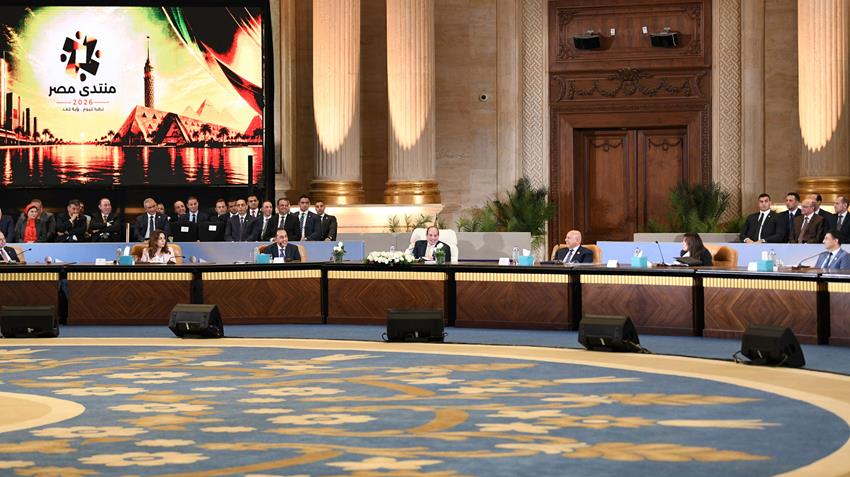
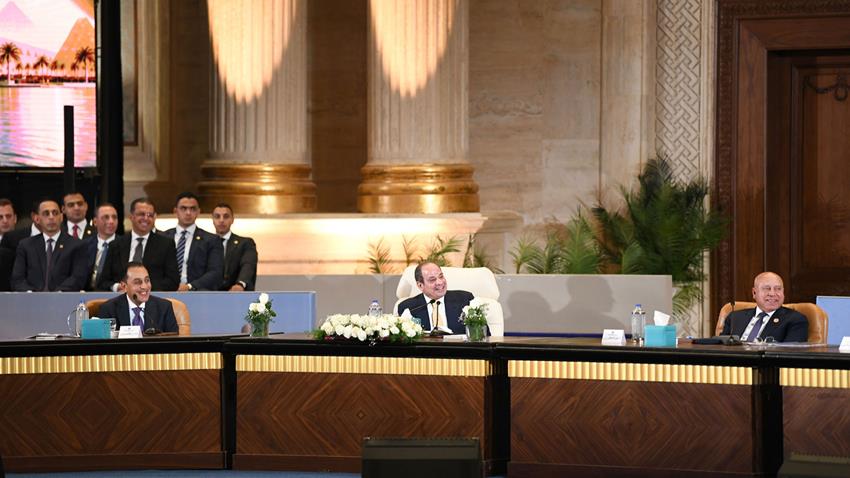
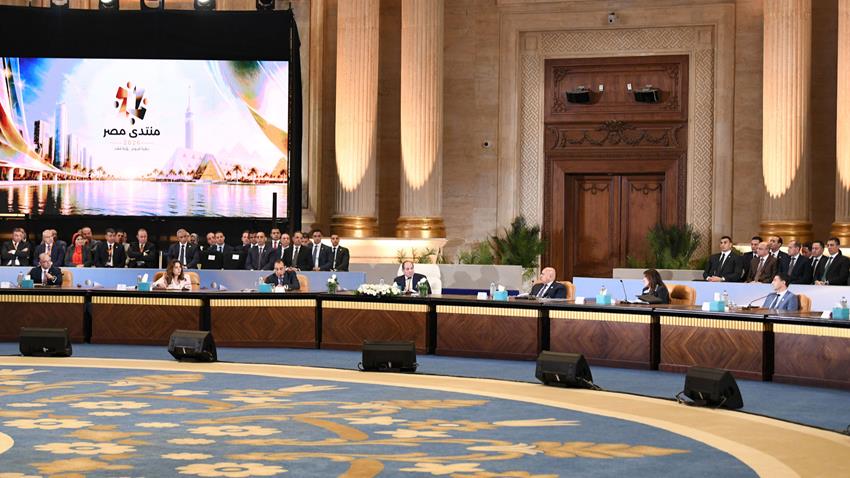
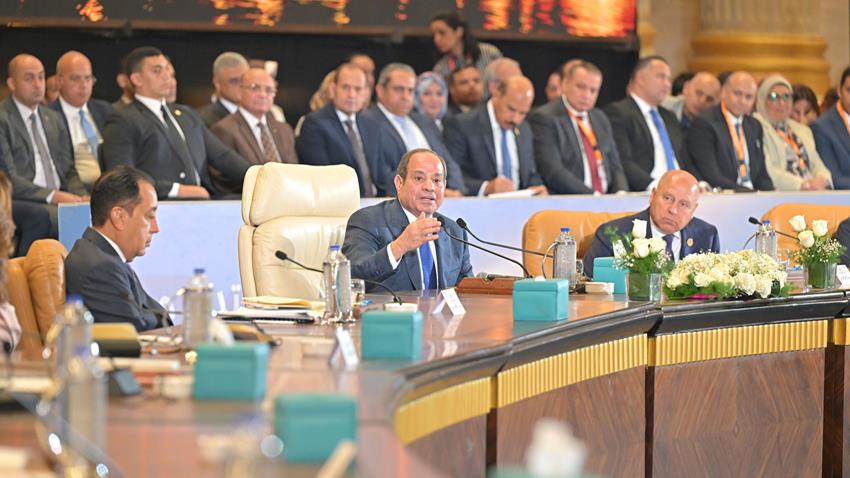
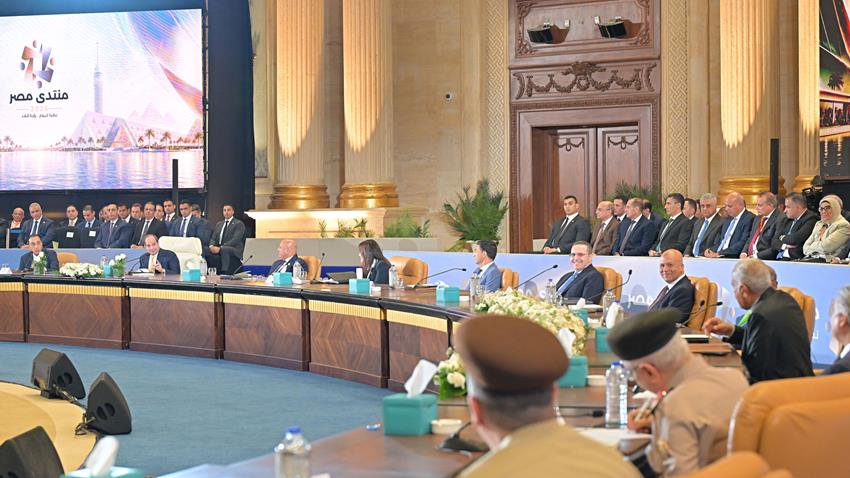
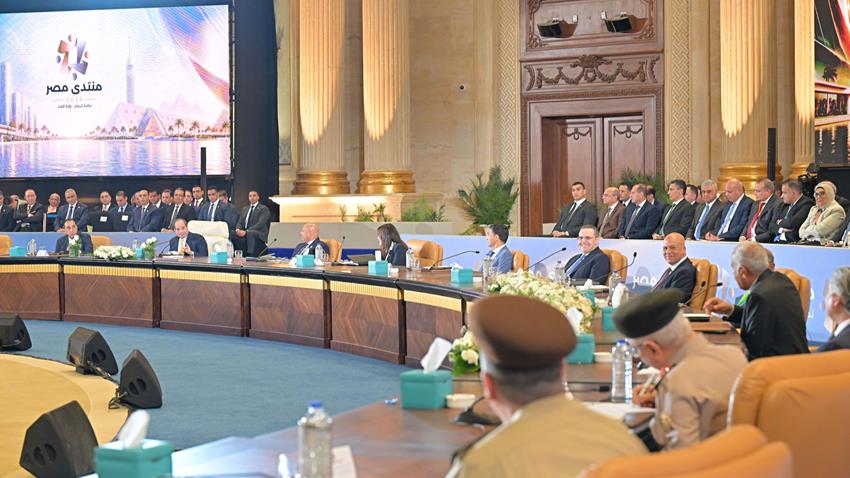
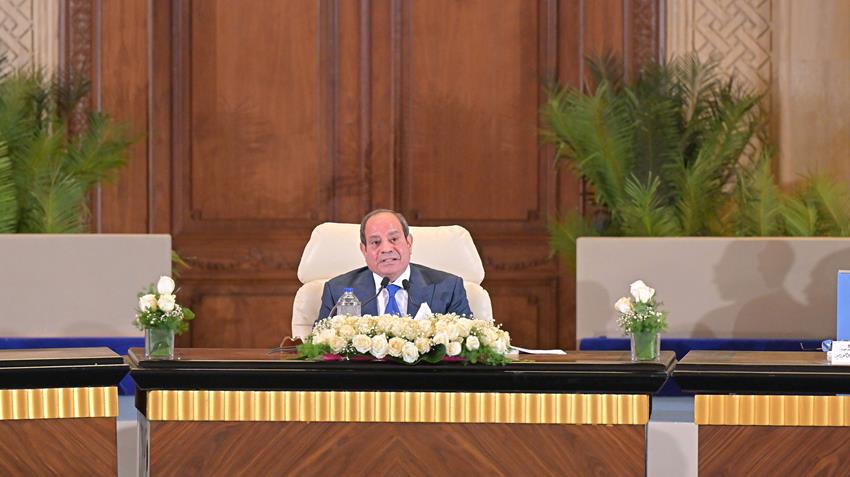
Today, President Abdel Fattah El-Sisi participated in a session on urban and spatial development, on the second day of the Egypt Forum 2026. Prime Minister Dr. Moustafa Madbouly also attended.
The Spokesman for the Presidency, Ambassador Mohamed El-Shennawy,
said the session addressed urban development efforts undertaken in Egypt since 2014 across the sectors of roads, ports, and transportation. This includes the establishment of local manufacturing facilities for various modes of transport and railway cars, as part of a broader initiative to localize industry. The session also addressed relevant challenges, particularly those concerning road networks, railways, the metro system, and maritime transport. Furthermore, the discussion reviewed the state of the transport sector prior to 2014, alongside the achievements made in roads, bridges, the metro, electric rail transit, railways, maritime transport, and ports. The session also covered future targets, governance measures, efforts to reduce accidents, and the promotion of green mass transit. It was emphasized that the state is working to advance these developments across all governorates. Moreover, the economic, social, and environmental impacts of both completed and underway transport projects were tackled.
The session also addressed challenges related to the development of rural areas, as well as drinking water and sanitation infrastructure. This is in addition to reviewing efforts to establish new residential areas and cities and targets for enhancing the urban environment and improving the quality of life nationwide, also efforts to develop major cities and provincial capitals across 13 governorates—alongside the achievements made in eradicating slums. In this context, it was noted that 61 new cities have been established.
The session also touched upon the project to develop Khedivial Cairo, as well as efforts to advance the drinking water sector, which includes the implementation of 522 related projects. Additionally, the session reviewed progress in the sanitation sector and the status of housing projects—both completed and ongoing—which have so far resulted in the construction of 1.96 million new residential units.
President El-Sisi made an intervention to point out that an "ideal" approach to addressing any existing issue or challenge is, in itself, inherently flawed, noting that critics of a given issue often propose an "ideal" solution. The President noted that the Egyptian population lives on only about 7% of the country’s total land area—an expanse of roughly 60,000 to 70,000 square kilometers, adding that this situation has had social, security cultural and investment repercussions. The President described the situation as inhumane, unnatural, and a hindrance to growth—even if the Egyptian people have become accustomed to it, compounded by a lack of comprehensive urban planning to keep pace with the nation’s growth over the years. This has subsequently led to the proliferation of slum areas around Cairo, the deterioration of transport services, and the spread of negative practices.
The President explained the difficulty of confronting all challenges through "ideal" solutions, citing the current road toll fees as an example, noting that they fail to cover the costs of initial investment or even ongoing maintenance. The President also highlighted that the Egyptian state successfully resolved the electricity crisis, a step essential for fostering development and stabilizing the nation. Regarding the removal of certain burial sites, the President explained that this action was necessitated by groundwater issues affecting a large number of graves. The President noted that while the ideal solution would have been to leave the sites untouched, a pragmatic approach was required—driven by religious and humanitarian considerations, as well as the State’s respect for its citizens. The President pointed out that the State is in the process of constructing, approximately 70,000 new burial plots across three phases in the vicinity of Helwan and the city of 10th of Ramadan. The President emphasized that the State undertook these measures for the public good, and has also assumed the associated costs.
The President commended the initiative of Wafai Makadi, the head of Al-Sarariya village in Minya, in addressing the challenges facing his village. The President described this experience as an exemplary model capable of driving positive transformation in villages across the country, while also helping to alleviate the burden on the State. The President underscored the importance of shaping public opinion responsibly and avoiding attempts to incite citizens; stressig that the media—and all relevant stakeholders—must work to inform and raise public awareness regarding the true facts of the situation.
In the context of housing, the President directed the government and the Tahya Misr Fund to collaborate on the construction of 200,000 residential units intended for rental, with the costs to be shared equally between them.
Regarding the old rent law, the President emphasized that its original intent was to break the prevailing focus on home ownership and reintroduce the practice of renting. The situation over the past decades led to a major crisis of slums and unplanned housing in Egypt, as the state was unable to step in for the private sector and civil society to provide housing units that met citizens' needs. The President added that it is not possible to achieve everything we aspire to, in light of the limited resources—especially considering Egypt’s large size, the immense scale of the challenges it faces, and the significant deterioration that had affected all state institutions and their operational paths.
The President pointed out that nations typically grow and develop over a span of 50 to 100 years; therefore, it is unrealistic to expect such a transformation to occur within 10 or 12 years, noting that he had never made such a promise to the Egyptian people, noting that if the desired development and progress could be achieved within 20 to 30 years, it would be the best possible outcome.
The President further underscored the commitment to concluding the ongoing development and modernization efforts by 2030, positioning Egypt on the threshold of real progress, investment, and development to take the Egyptian people to better horizons. The President wished his successors more success and achievements.
The President pointed out that what has been accomplished in Egypt would not have been done in less than 30 years.
On the sidelines of the forum’s second day, the President witnessed the announcement of an agreement between the Egyptian state and the Talaat Moustafa Group. The agreement entails the development, construction, and operation of four major, mixed-use projects with a total value of 11 trillion Egyptian pounds. These include the "North Madinaty" project; a development spanning 11.3 million square meters in Alexandria; an integrated economic hub—comprising industrial, logistical, and real estate components—in Abu Qir; and a coastal destination on the North Coast, modeled after "SouthMed."
On this occasion, the President extended his congratulations on the conclusion of the agreement regarding these projects and noted that the state encourages investors to operate across all sectors, while emphasizing the importance of the social responsibility component within investment projects. In this context, the President requested that the government collaborate with the Talaat Moustafa Group to develop 200,000 residential units intended for rental purposes.
Furthermore, the President underscored the state’s commitment to completing all projects associated with the "Decent Life" initiative by no later than 2030, highlighting the significance of partnerships with the private sector and the state’s support for it.


Tuesday, 20 October 2026 / 06:04 PM
Today, President Abdel Fattah El-Sisi participated in a session on urban and spatial development, on the second day of the Egypt Forum 2026. Prime Minister Dr. Moustafa Madbouly also attended.
The Spokesman for the Presidency, Ambassador Mohamed El-Shennawy,
said the session addressed urban development efforts undertaken in Egypt since 2014 across the sectors of roads, ports, and transportation. This includes the establishment of local manufacturing facilities for various modes of transport and railway cars, as part of a broader initiative to localize industry. The session also addressed relevant challenges, particularly those concerning road networks, railways, the metro system, and maritime transport. Furthermore, the discussion reviewed the state of the transport sector prior to 2014, alongside the achievements made in roads, bridges, the metro, electric rail transit, railways, maritime transport, and ports. The session also covered future targets, governance measures, efforts to reduce accidents, and the promotion of green mass transit. It was emphasized that the state is working to advance these developments across all governorates. Moreover, the economic, social, and environmental impacts of both completed and underway transport projects were tackled.
The session also addressed challenges related to the development of rural areas, as well as drinking water and sanitation infrastructure. This is in addition to reviewing efforts to establish new residential areas and cities and targets for enhancing the urban environment and improving the quality of life nationwide, also efforts to develop major cities and provincial capitals across 13 governorates—alongside the achievements made in eradicating slums. In this context, it was noted that 61 new cities have been established.
The session also touched upon the project to develop Khedivial Cairo, as well as efforts to advance the drinking water sector, which includes the implementation of 522 related projects. Additionally, the session reviewed progress in the sanitation sector and the status of housing projects—both completed and ongoing—which have so far resulted in the construction of 1.96 million new residential units.
President El-Sisi made an intervention to point out that an "ideal" approach to addressing any existing issue or challenge is, in itself, inherently flawed, noting that critics of a given issue often propose an "ideal" solution. The President noted that the Egyptian population lives on only about 7% of the country’s total land area—an expanse of roughly 60,000 to 70,000 square kilometers, adding that this situation has had social, security cultural and investment repercussions. The President described the situation as inhumane, unnatural, and a hindrance to growth—even if the Egyptian people have become accustomed to it, compounded by a lack of comprehensive urban planning to keep pace with the nation’s growth over the years. This has subsequently led to the proliferation of slum areas around Cairo, the deterioration of transport services, and the spread of negative practices.
The President explained the difficulty of confronting all challenges through "ideal" solutions, citing the current road toll fees as an example, noting that they fail to cover the costs of initial investment or even ongoing maintenance. The President also highlighted that the Egyptian state successfully resolved the electricity crisis, a step essential for fostering development and stabilizing the nation. Regarding the removal of certain burial sites, the President explained that this action was necessitated by groundwater issues affecting a large number of graves. The President noted that while the ideal solution would have been to leave the sites untouched, a pragmatic approach was required—driven by religious and humanitarian considerations, as well as the State’s respect for its citizens. The President pointed out that the State is in the process of constructing, approximately 70,000 new burial plots across three phases in the vicinity of Helwan and the city of 10th of Ramadan. The President emphasized that the State undertook these measures for the public good, and has also assumed the associated costs.
The President commended the initiative of Wafai Makadi, the head of Al-Sarariya village in Minya, in addressing the challenges facing his village. The President described this experience as an exemplary model capable of driving positive transformation in villages across the country, while also helping to alleviate the burden on the State. The President underscored the importance of shaping public opinion responsibly and avoiding attempts to incite citizens; stressig that the media—and all relevant stakeholders—must work to inform and raise public awareness regarding the true facts of the situation.
In the context of housing, the President directed the government and the Tahya Misr Fund to collaborate on the construction of 200,000 residential units intended for rental, with the costs to be shared equally between them.
Regarding the old rent law, the President emphasized that its original intent was to break the prevailing focus on home ownership and reintroduce the practice of renting. The situation over the past decades led to a major crisis of slums and unplanned housing in Egypt, as the state was unable to step in for the private sector and civil society to provide housing units that met citizens' needs. The President added that it is not possible to achieve everything we aspire to, in light of the limited resources—especially considering Egypt’s large size, the immense scale of the challenges it faces, and the significant deterioration that had affected all state institutions and their operational paths.
The President pointed out that nations typically grow and develop over a span of 50 to 100 years; therefore, it is unrealistic to expect such a transformation to occur within 10 or 12 years, noting that he had never made such a promise to the Egyptian people, noting that if the desired development and progress could be achieved within 20 to 30 years, it would be the best possible outcome.
The President further underscored the commitment to concluding the ongoing development and modernization efforts by 2030, positioning Egypt on the threshold of real progress, investment, and development to take the Egyptian people to better horizons. The President wished his successors more success and achievements.
The President pointed out that what has been accomplished in Egypt would not have been done in less than 30 years.
On the sidelines of the forum’s second day, the President witnessed the announcement of an agreement between the Egyptian state and the Talaat Moustafa Group. The agreement entails the development, construction, and operation of four major, mixed-use projects with a total value of 11 trillion Egyptian pounds. These include the "North Madinaty" project; a development spanning 11.3 million square meters in Alexandria; an integrated economic hub—comprising industrial, logistical, and real estate components—in Abu Qir; and a coastal destination on the North Coast, modeled after "SouthMed."
On this occasion, the President extended his congratulations on the conclusion of the agreement regarding these projects and noted that the state encourages investors to operate across all sectors, while emphasizing the importance of the social responsibility component within investment projects. In this context, the President requested that the government collaborate with the Talaat Moustafa Group to develop 200,000 residential units intended for rental purposes.
Furthermore, the President underscored the state’s commitment to completing all projects associated with the "Decent Life" initiative by no later than 2030, highlighting the significance of partnerships with the private sector and the state’s support for it.

All rights reserved to the presidency Copyright © 2020
All rights reserved to the presidency Copyright © 2020