
All rights reserved to the presidency Copyright © 2020


Thursday, 22 October 2026 / 03:31 PM
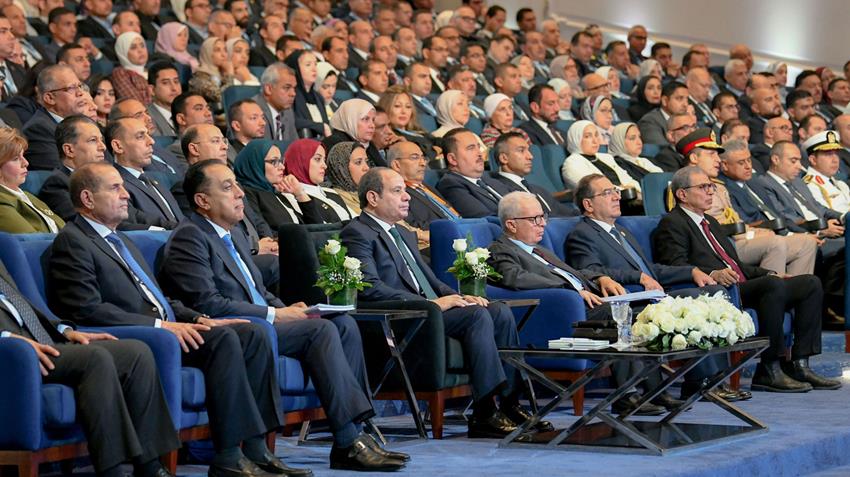
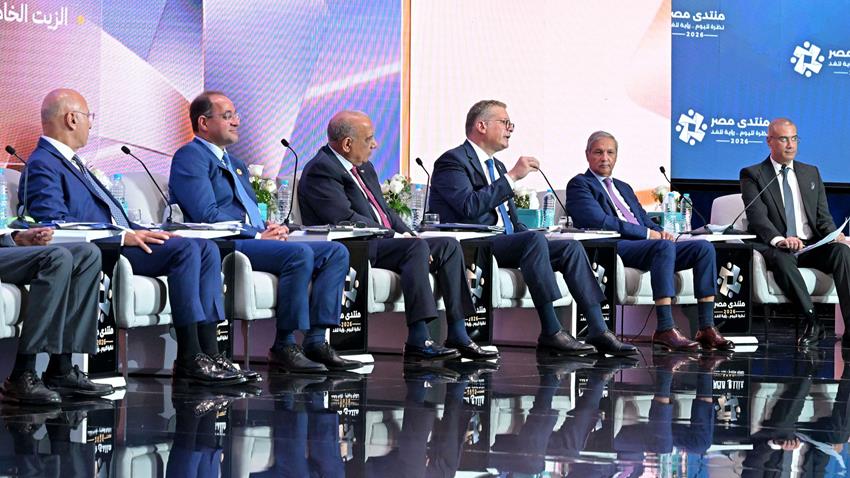
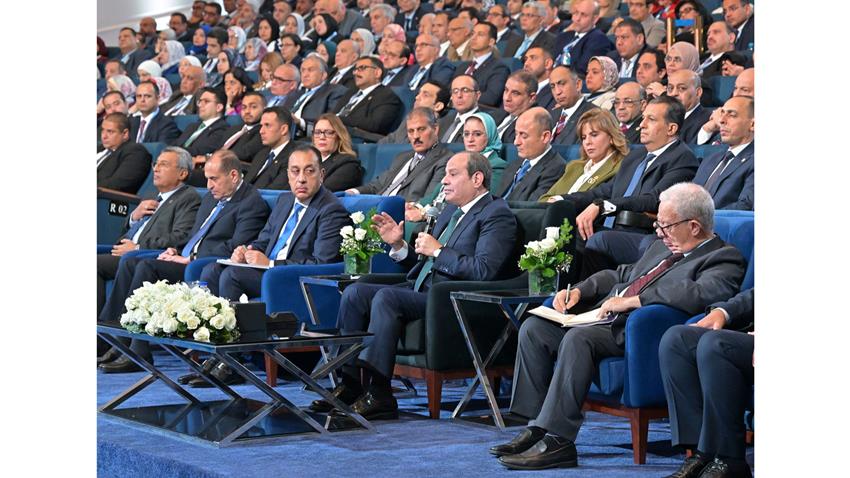
Today, President Abdel Fattah El-Sisi participated in a session titled "The Journey of Egyptian Energy: National Achievements and Future Horizons," on the fourth day of the Egypt Forum 2026. Prime Minister Dr. Moustafa Madbouly attended. Finance Minister Ahmed Kouchouk, Minister of Electricity and Renewable Energy Dr. Mahmoud Esmat, Minister of Petroleum and Mineral Resources Eng. Karim Badawi, former chairman of the Egyptian Natural Gas Holding Company (EGAS) Eng. Mohamed Shoeib, Chairman of Taqa Company and Vice President- International Gas Union Eng. Khaled Abu Bakr and Professor at the Institute of Graduate Studies and Research at Alexandria University Dr. Moataz Billah Suleiman participated in the session.
The Spokesman for the Presidency, Ambassador Mohamed El-Shennawy, said the session reviewed the progress made in the energy sector over the past years, highlighting achievements such as strengthening the national electricity transmission network to accommodate renewable energy production and power development projects, as well as enhancing electricity distribution networks. The session also addressed the state's success in halting the decline in natural gas production, restoring growth, securing the needs of all sectors, and enhancing capacities for receiving liquefied natural gas (LNG). Furthermore, the session discussed current challenges, including global and regional geopolitical tension and supply chain disruptions, in addition to the measures taken by the state to mitigate the impact of these challenges. During the session, a film was screened featuring citizens' views regarding the energy sector in Egypt.
President El-Sisi made an intervention, noting that the purpose of the forum is to explain the facts to the citizens, including the challenges facing the state in the energy sector, in light of the state’s keenness to ensure the continuous availability of all means of energy despite the challenges. The President added that since 2014 the state has been keen to endorse a plan to confront the energy crisis that Egypt witnessed in 2012 and 2013, and that the main challenge was the size and source of funding. The President noted that a comprehensive energy infrastructure has been planned for Egypt, relying on new and renewable energy sources. The President stressed that it is necessary to realize the many elements that must be available to build power generation plants, whether with fossil energy or through new and renewable energy. This is in addition to the cost of establishing the energy distribution network after establishing the power plants and the cost of control and distribution stations, taking into account other challenges associated with international geopolitical conditions.
In connection with the issue of rising energy prices, the President stated that the state bears the largest part of the actual cost of the energy that is provided, especially in light of rising global energy prices. The President stressed that the public must be aware of all aspects of this sector, pointing out, for example, that bids for the highest prices in the energy sector take five to seven years to bear fruit.
The President explained that the limited resources available to the state often lead to borrowing to ensure the continuity of energy services for both citizens and the industrial sector. Therefore, it is important to explain the true context of the challenges facing the Egyptian state. The President called on the Egyptian people to stand by their country and continue working and producing to overcome all these challenges.
President El-Sisi stressed that the state is keen to continue cooperation with the private sector to further develop the energy sector, noting the Egyptian state’s commitment to paying all dues to foreign partners, which actually happened in June 2026 by fully settling these arrears.
Regarding the financial subsidies provided by the government in all areas, the Minister of Finance indicated that it amounts to 840 billion pounds in this fiscal year, with related loan expenses representing approximately an extra 20%, bringing the actual value of the subsidy total to around one trillion Egyptian pounds.
In this context, the Prime Minister noted that the state budget for the fiscal year was based on an oil import price of $75 per barrel. However, current geopolitical circumstances have led to the price to reach $110 per barrel. These are all burdens resulting from circumstances beyond the state's will, and it is necessary to address them. Consequently, the state has three options: passing on the cost of these price differences to the citizens; the state bearing these differences, taking into account that the state does not have the necessary resources, or for the government to borrow to pay for oil import requirements. This last option is criticized by some, who raise questions about increasing the size of the state's debt. In this context, PM Madbouly affirmed that the state is working to the fullest extent possible to apply new and renewable energy and to create a diversified energy mix, noting that the goal is to reach 50% reliance on new and renewable energy by 2030.


Thursday, 22 October 2026 / 03:31 PM
Today, President Abdel Fattah El-Sisi participated in a session titled "The Journey of Egyptian Energy: National Achievements and Future Horizons," on the fourth day of the Egypt Forum 2026. Prime Minister Dr. Moustafa Madbouly attended. Finance Minister Ahmed Kouchouk, Minister of Electricity and Renewable Energy Dr. Mahmoud Esmat, Minister of Petroleum and Mineral Resources Eng. Karim Badawi, former chairman of the Egyptian Natural Gas Holding Company (EGAS) Eng. Mohamed Shoeib, Chairman of Taqa Company and Vice President- International Gas Union Eng. Khaled Abu Bakr and Professor at the Institute of Graduate Studies and Research at Alexandria University Dr. Moataz Billah Suleiman participated in the session.
The Spokesman for the Presidency, Ambassador Mohamed El-Shennawy, said the session reviewed the progress made in the energy sector over the past years, highlighting achievements such as strengthening the national electricity transmission network to accommodate renewable energy production and power development projects, as well as enhancing electricity distribution networks. The session also addressed the state's success in halting the decline in natural gas production, restoring growth, securing the needs of all sectors, and enhancing capacities for receiving liquefied natural gas (LNG). Furthermore, the session discussed current challenges, including global and regional geopolitical tension and supply chain disruptions, in addition to the measures taken by the state to mitigate the impact of these challenges. During the session, a film was screened featuring citizens' views regarding the energy sector in Egypt.
President El-Sisi made an intervention, noting that the purpose of the forum is to explain the facts to the citizens, including the challenges facing the state in the energy sector, in light of the state’s keenness to ensure the continuous availability of all means of energy despite the challenges. The President added that since 2014 the state has been keen to endorse a plan to confront the energy crisis that Egypt witnessed in 2012 and 2013, and that the main challenge was the size and source of funding. The President noted that a comprehensive energy infrastructure has been planned for Egypt, relying on new and renewable energy sources. The President stressed that it is necessary to realize the many elements that must be available to build power generation plants, whether with fossil energy or through new and renewable energy. This is in addition to the cost of establishing the energy distribution network after establishing the power plants and the cost of control and distribution stations, taking into account other challenges associated with international geopolitical conditions.
In connection with the issue of rising energy prices, the President stated that the state bears the largest part of the actual cost of the energy that is provided, especially in light of rising global energy prices. The President stressed that the public must be aware of all aspects of this sector, pointing out, for example, that bids for the highest prices in the energy sector take five to seven years to bear fruit.
The President explained that the limited resources available to the state often lead to borrowing to ensure the continuity of energy services for both citizens and the industrial sector. Therefore, it is important to explain the true context of the challenges facing the Egyptian state. The President called on the Egyptian people to stand by their country and continue working and producing to overcome all these challenges.
President El-Sisi stressed that the state is keen to continue cooperation with the private sector to further develop the energy sector, noting the Egyptian state’s commitment to paying all dues to foreign partners, which actually happened in June 2026 by fully settling these arrears.
Regarding the financial subsidies provided by the government in all areas, the Minister of Finance indicated that it amounts to 840 billion pounds in this fiscal year, with related loan expenses representing approximately an extra 20%, bringing the actual value of the subsidy total to around one trillion Egyptian pounds.
In this context, the Prime Minister noted that the state budget for the fiscal year was based on an oil import price of $75 per barrel. However, current geopolitical circumstances have led to the price to reach $110 per barrel. These are all burdens resulting from circumstances beyond the state's will, and it is necessary to address them. Consequently, the state has three options: passing on the cost of these price differences to the citizens; the state bearing these differences, taking into account that the state does not have the necessary resources, or for the government to borrow to pay for oil import requirements. This last option is criticized by some, who raise questions about increasing the size of the state's debt. In this context, PM Madbouly affirmed that the state is working to the fullest extent possible to apply new and renewable energy and to create a diversified energy mix, noting that the goal is to reach 50% reliance on new and renewable energy by 2030.

All rights reserved to the presidency Copyright © 2020
All rights reserved to the presidency Copyright © 2020