
All rights reserved to the presidency Copyright © 2020


Monday, 26 October 2026 / 12:01 PM
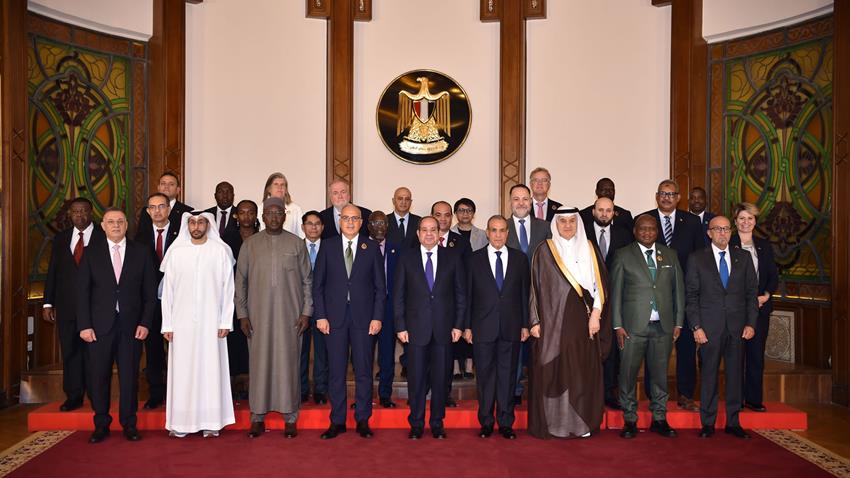
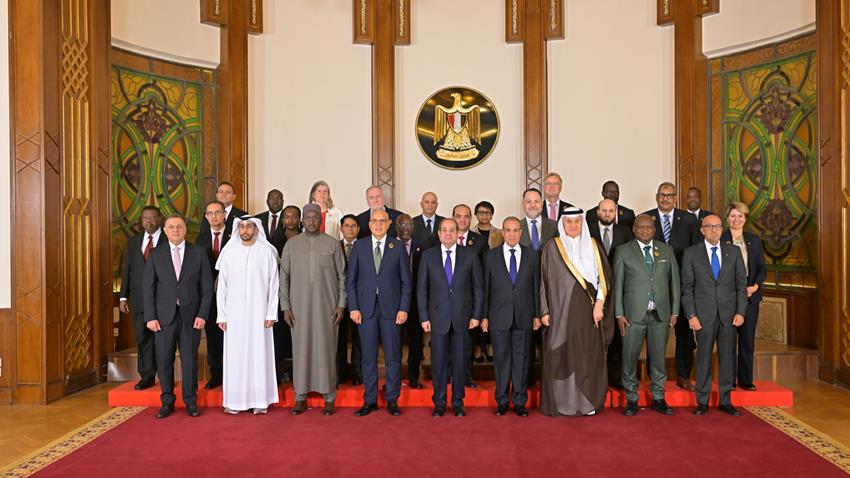
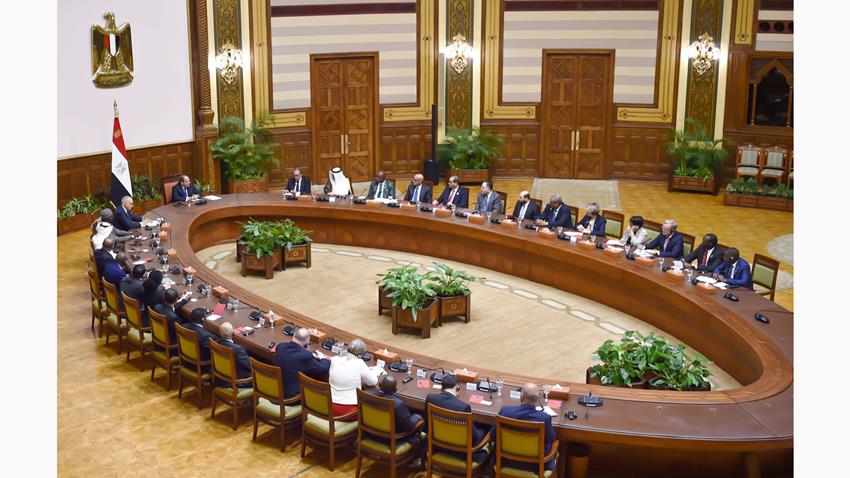
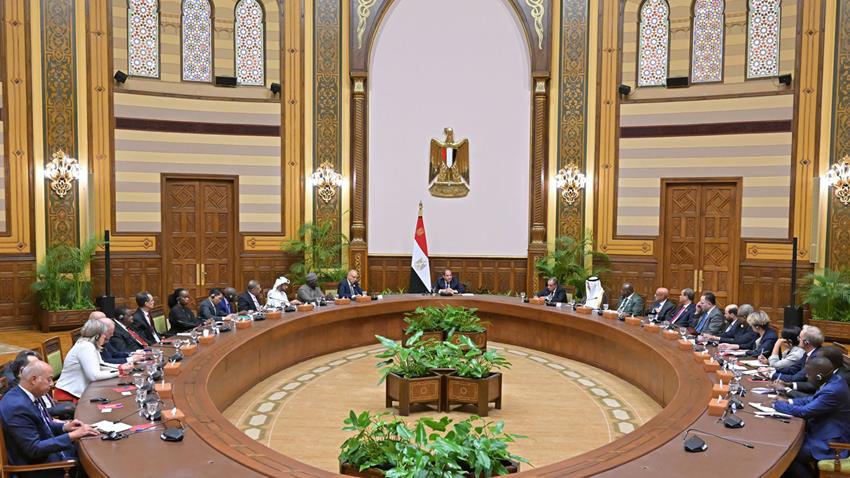
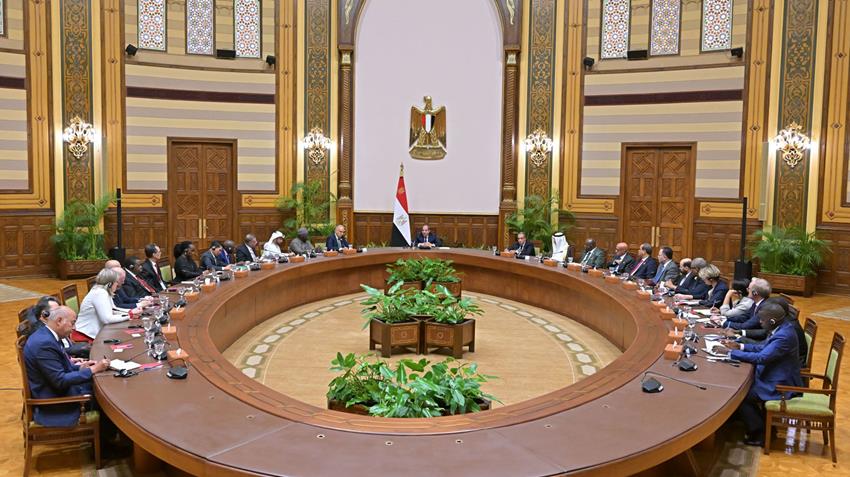
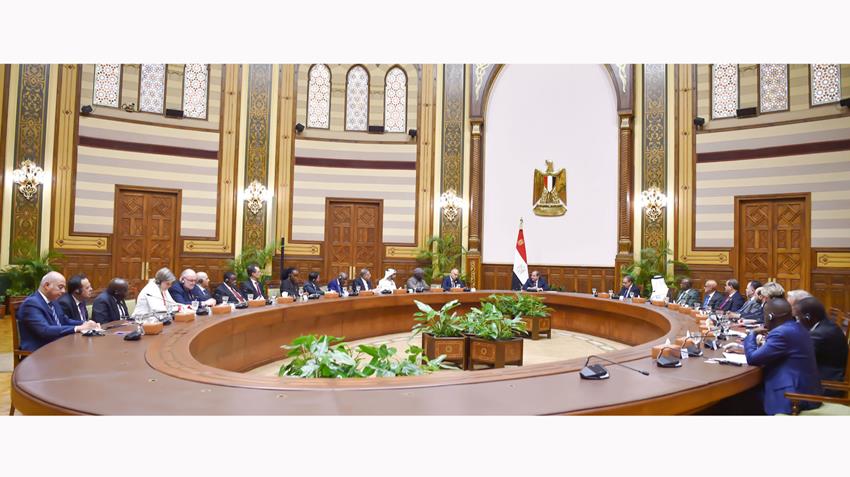
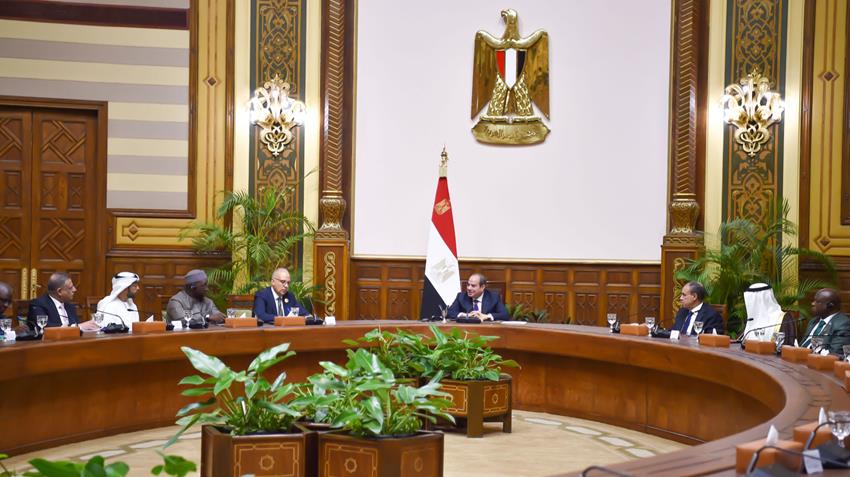
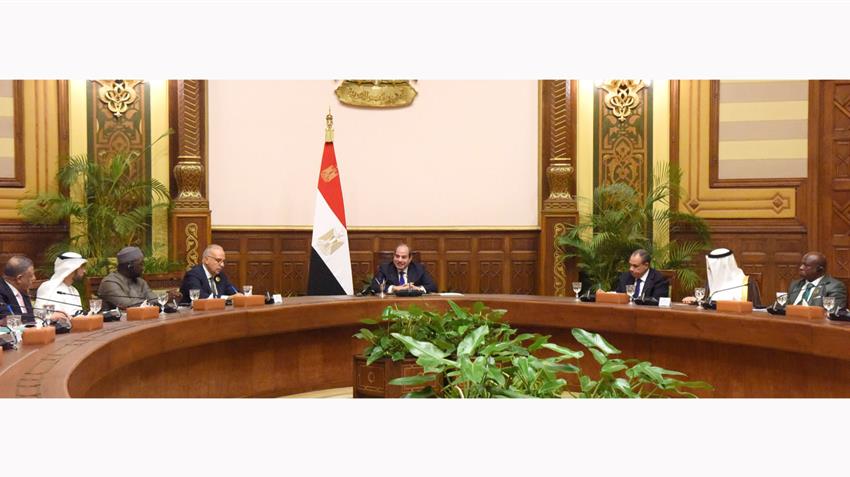
This morning, President Abdel Fattah El-Sisi received at Al-Ittihadiya Palace the ministers and heads of delegations participating in the ninth edition of Cairo Water Week 2026, in the presence of Minister of Water Resources and Irrigation Dr. Hany Sewilam, and Minister of Foreign Affairs, International Cooperation and Egyptian Expatriates Dr. Badr Abdelatty.
The Spokesman for the Presidency, Ambassador Mohamed El-Shennawy, stated that President El-Sisi delivered the following speech:
“Ministers and Heads of Delegations participating in the ninth edition of Cairo Water Week,
I welcome you to Cairo and express my appreciation for your participation in this edition of Cairo Water Week, which has become an important international platform for dialogue, the exchange of expertise, and the building of partnerships.
I would like to emphasize that Egypt’s foreign policy accords high priority to water issues, as they are a cornerstone for cooperation, development, and shared prosperity, not a cause of conflicts or disputes.
I affirm that Egypt is not alone in facing water challenges. Most countries around the world suffer from water scarcity, the risks of drought and floods, and growing demand for water, food, and energy. Accordingly, water security has become a shared responsibility that requires effective international cooperation, adequate financing, technology transfer, and capacity building.
In this regard, I would like to underscore that Egypt believes in the importance of strengthening water cooperation based on respect for the rules of international law. Egypt is keen to exchange expertise and establish partnerships and projects that serve the interests of peoples. I would also like to note that Egypt relies on the Nile River for more than 98% of its renewable water resources, all of which originate outside its borders. Egypt is also one of the world’s most arid countries, with average annual rainfall not exceeding 18 millimeters, while per capita water availability has declined to approximately 473 cubic meters annually. Therefore, Egypt reuses approximately 23 billion cubic meters of water every year, making every drop of water extremely valuable.
Our efforts have not been limited to managing water scarcity. We have launched the second generation of Egypt’s water management system, which is based on smart water management, digital transformation, infrastructure development, and enhanced capacity to adapt to climate change. We welcome the exchange of this expertise with our partners.
In this context, I would like to affirm Egypt’s respect for and support of the right of all Nile Basin countries to development. This has been demonstrated in practice through our cooperation on development projects proposed under investment programs in the southern Nile Basin countries.
Experience has also proved that prior notification, the exchange of studies, and consultation are important tools for building confidence and supporting project financing, rather than means of obstructing development or imposing guardianship on any country. In this regard, we look forward to consolidating the same approach in the Eastern Nile Basin in a manner that serves the interests of Egypt, Sudan, and Ethiopia.
The Nile Basin is not poor in water resources, as it receives approximately 2,050 billion cubic meters of rainfall annually. Yet, only around 84 billion cubic meters of this amount reaches Aswan on average, representing just 4–5%.
I call for maximizing the utilization of available resources in the basin countries, including rainfall, land, and renewable energy sources, and transforming them into opportunities for development and shared prosperity. I also emphasize the importance of a comprehensive framework that includes all basin countries. Currently, four basin countries remain outside the Framework Agreement, and the way to bring them together is to address their concerns through an agreed-upon amendment or supplementary protocol within the consultative process of the Ministers' Council on Water.
Egypt chaired the African Ministers’ Conference on Water (AMCOW) from 2023 to 2025, contributing to the development of the Africa Water Agenda 2063 and the establishment of the African Center for Water and Climate Adaptation (PACWA) to train African personnel. Egypt also chairs the African Water Facility (AWF) Governing Council from 2025 to 2027. Its new 2026–2030 strategy has been adopted in Cairo. Egypt is working with its partners to mobilize funding for water projects in Africa.
At the Arab level, Egypt receives the presidency of the 17th session of the Arab Ministerial Water Council, which Cairo will host this week, coinciding with the hosting of the 7th Arab Water Conference, thus strengthening Arab water cooperation.
At the international level, Egypt had the honor of co-chairing, with Japan, the 3rd interactive dialogue on "Water for the Planet" for the second consecutive time, reflecting international confidence in its role with regard to water issues.
We look forward to expanding cooperation with our international partners in the areas of financing, technology transfer, and capacity building, in support of water projects and the achievement of development goals.
I emphasize that development and water security are a right for all. Egypt extends its hand for cooperation based on international law, consultation, coordination, good neighborliness, and the principle of not causing harm. The Nile unites us, and our shared interests are far greater than any differences. We reiterate our call to make water an instrument for peace and shared prosperity, to move from crisis management to building solutions, and from pledges to implementation.”
The ministers highlighted Egypt's vital role in managing water issues and promoting regional and international cooperation. They commended the Cairo Water Week, which has become an important global platform for dialogue and the exchange of expertise. They emphasized the potential of scientific solutions in addressing water challenges, the importance of sharing experiences and knowledge on water issues, and the imperative of joint action to confront related challenges. For his part, Minister of Water Resources and Irrigation Dr. Sweilam pointed out that the world is facing unprecedented water challenges as a result of climate change. He stressed that confronting these challenges requires building more resilient water systems and shifting from crisis management to preemptive management. Dr. Sweilam reviewed Egypt’s unique water situation, given it is one of the world's most water-scarce countries and relies almost completely on the Nile River. He reiterated that the management of international rivers must be based on cooperation, transparency, and adherence to the rules of international law to serve the interests of all riparian states.
President El-Sisi emphasized at the conclusion of the meeting that Egypt suffers from water scarcity and that it is crucial for everyone to understand its position and perspective on water issues, especially since Egypt has virtually no water source other than the Nile River. The President added that the Egyptian state has implemented massive projects to achieve optimal water use and recycling, taking into account that Egypt's population has reached 110 million, in addition to another 10 million foreign residents. The President stressed that all Egypt demands is that its share of the Nile waters not be compromised, saying: “water is an exclusive right for all and cannot be exploited for political purposes." In this context, the President pointed out that the volume of water and rainfall in the Nile Basin is sufficient for everyone, and that if the necessary cooperation were established through the implementation of related projects, it would be beneficial to all. The President explained that there are exemplary models of cooperation between countries sharing transboundary international rivers, and that this cooperation is conducted in accordance with international law.
The President affirmed that he believes in peace, stability, and development, and the possibility of utilizing existing capabilities, stressing the importance of stability for achieving development.


Monday, 26 October 2026 / 12:01 PM
This morning, President Abdel Fattah El-Sisi received at Al-Ittihadiya Palace the ministers and heads of delegations participating in the ninth edition of Cairo Water Week 2026, in the presence of Minister of Water Resources and Irrigation Dr. Hany Sewilam, and Minister of Foreign Affairs, International Cooperation and Egyptian Expatriates Dr. Badr Abdelatty.
The Spokesman for the Presidency, Ambassador Mohamed El-Shennawy, stated that President El-Sisi delivered the following speech:
“Ministers and Heads of Delegations participating in the ninth edition of Cairo Water Week,
I welcome you to Cairo and express my appreciation for your participation in this edition of Cairo Water Week, which has become an important international platform for dialogue, the exchange of expertise, and the building of partnerships.
I would like to emphasize that Egypt’s foreign policy accords high priority to water issues, as they are a cornerstone for cooperation, development, and shared prosperity, not a cause of conflicts or disputes.
I affirm that Egypt is not alone in facing water challenges. Most countries around the world suffer from water scarcity, the risks of drought and floods, and growing demand for water, food, and energy. Accordingly, water security has become a shared responsibility that requires effective international cooperation, adequate financing, technology transfer, and capacity building.
In this regard, I would like to underscore that Egypt believes in the importance of strengthening water cooperation based on respect for the rules of international law. Egypt is keen to exchange expertise and establish partnerships and projects that serve the interests of peoples. I would also like to note that Egypt relies on the Nile River for more than 98% of its renewable water resources, all of which originate outside its borders. Egypt is also one of the world’s most arid countries, with average annual rainfall not exceeding 18 millimeters, while per capita water availability has declined to approximately 473 cubic meters annually. Therefore, Egypt reuses approximately 23 billion cubic meters of water every year, making every drop of water extremely valuable.
Our efforts have not been limited to managing water scarcity. We have launched the second generation of Egypt’s water management system, which is based on smart water management, digital transformation, infrastructure development, and enhanced capacity to adapt to climate change. We welcome the exchange of this expertise with our partners.
In this context, I would like to affirm Egypt’s respect for and support of the right of all Nile Basin countries to development. This has been demonstrated in practice through our cooperation on development projects proposed under investment programs in the southern Nile Basin countries.
Experience has also proved that prior notification, the exchange of studies, and consultation are important tools for building confidence and supporting project financing, rather than means of obstructing development or imposing guardianship on any country. In this regard, we look forward to consolidating the same approach in the Eastern Nile Basin in a manner that serves the interests of Egypt, Sudan, and Ethiopia.
The Nile Basin is not poor in water resources, as it receives approximately 2,050 billion cubic meters of rainfall annually. Yet, only around 84 billion cubic meters of this amount reaches Aswan on average, representing just 4–5%.
I call for maximizing the utilization of available resources in the basin countries, including rainfall, land, and renewable energy sources, and transforming them into opportunities for development and shared prosperity. I also emphasize the importance of a comprehensive framework that includes all basin countries. Currently, four basin countries remain outside the Framework Agreement, and the way to bring them together is to address their concerns through an agreed-upon amendment or supplementary protocol within the consultative process of the Ministers' Council on Water.
Egypt chaired the African Ministers’ Conference on Water (AMCOW) from 2023 to 2025, contributing to the development of the Africa Water Agenda 2063 and the establishment of the African Center for Water and Climate Adaptation (PACWA) to train African personnel. Egypt also chairs the African Water Facility (AWF) Governing Council from 2025 to 2027. Its new 2026–2030 strategy has been adopted in Cairo. Egypt is working with its partners to mobilize funding for water projects in Africa.
At the Arab level, Egypt receives the presidency of the 17th session of the Arab Ministerial Water Council, which Cairo will host this week, coinciding with the hosting of the 7th Arab Water Conference, thus strengthening Arab water cooperation.
At the international level, Egypt had the honor of co-chairing, with Japan, the 3rd interactive dialogue on "Water for the Planet" for the second consecutive time, reflecting international confidence in its role with regard to water issues.
We look forward to expanding cooperation with our international partners in the areas of financing, technology transfer, and capacity building, in support of water projects and the achievement of development goals.
I emphasize that development and water security are a right for all. Egypt extends its hand for cooperation based on international law, consultation, coordination, good neighborliness, and the principle of not causing harm. The Nile unites us, and our shared interests are far greater than any differences. We reiterate our call to make water an instrument for peace and shared prosperity, to move from crisis management to building solutions, and from pledges to implementation.”
The ministers highlighted Egypt's vital role in managing water issues and promoting regional and international cooperation. They commended the Cairo Water Week, which has become an important global platform for dialogue and the exchange of expertise. They emphasized the potential of scientific solutions in addressing water challenges, the importance of sharing experiences and knowledge on water issues, and the imperative of joint action to confront related challenges. For his part, Minister of Water Resources and Irrigation Dr. Sweilam pointed out that the world is facing unprecedented water challenges as a result of climate change. He stressed that confronting these challenges requires building more resilient water systems and shifting from crisis management to preemptive management. Dr. Sweilam reviewed Egypt’s unique water situation, given it is one of the world's most water-scarce countries and relies almost completely on the Nile River. He reiterated that the management of international rivers must be based on cooperation, transparency, and adherence to the rules of international law to serve the interests of all riparian states.
President El-Sisi emphasized at the conclusion of the meeting that Egypt suffers from water scarcity and that it is crucial for everyone to understand its position and perspective on water issues, especially since Egypt has virtually no water source other than the Nile River. The President added that the Egyptian state has implemented massive projects to achieve optimal water use and recycling, taking into account that Egypt's population has reached 110 million, in addition to another 10 million foreign residents. The President stressed that all Egypt demands is that its share of the Nile waters not be compromised, saying: “water is an exclusive right for all and cannot be exploited for political purposes." In this context, the President pointed out that the volume of water and rainfall in the Nile Basin is sufficient for everyone, and that if the necessary cooperation were established through the implementation of related projects, it would be beneficial to all. The President explained that there are exemplary models of cooperation between countries sharing transboundary international rivers, and that this cooperation is conducted in accordance with international law.
The President affirmed that he believes in peace, stability, and development, and the possibility of utilizing existing capabilities, stressing the importance of stability for achieving development.

All rights reserved to the presidency Copyright © 2020
All rights reserved to the presidency Copyright © 2020