
All rights reserved to the presidency Copyright © 2020



Tuesday, 29 September 2026 / 05:20 PM
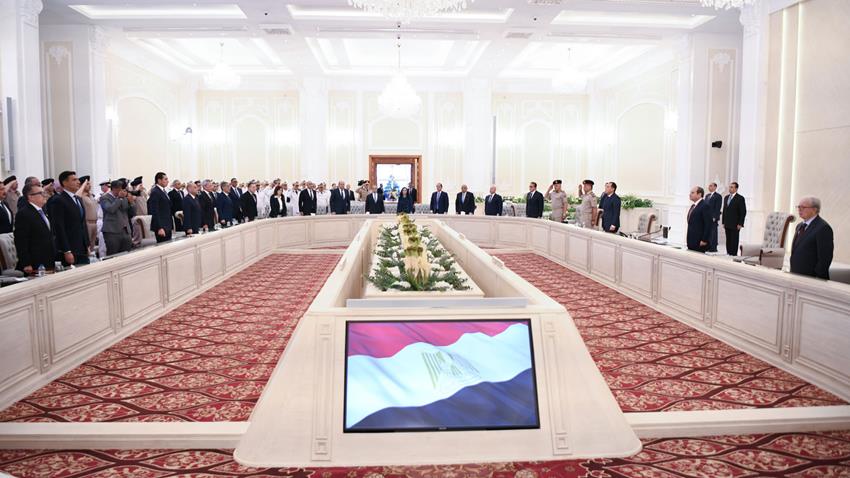
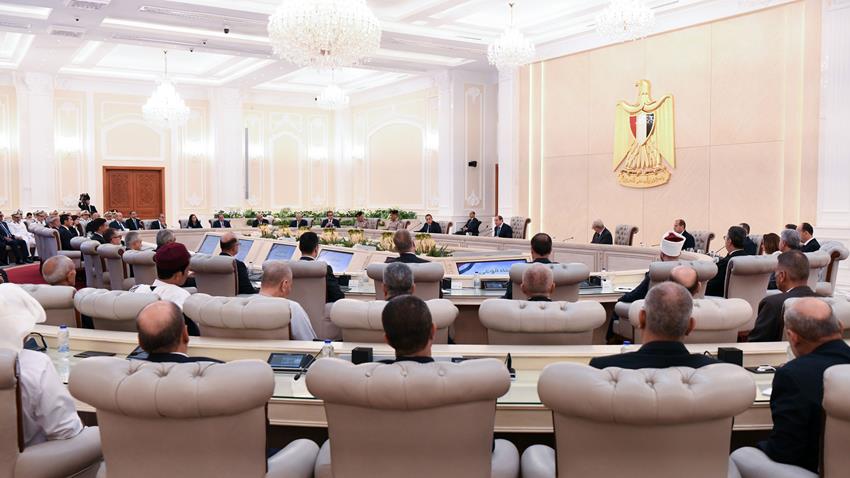
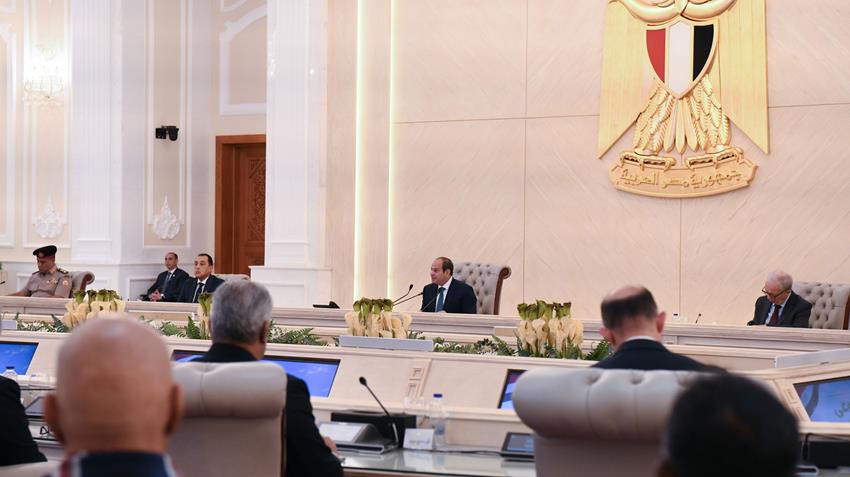
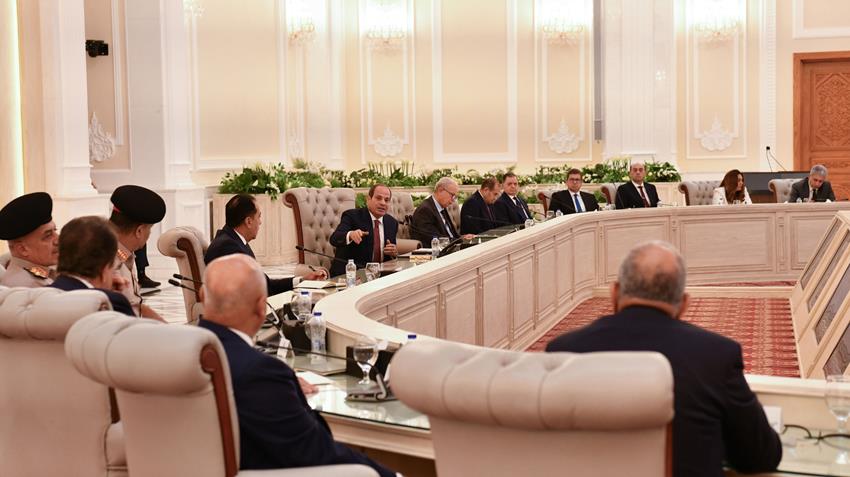
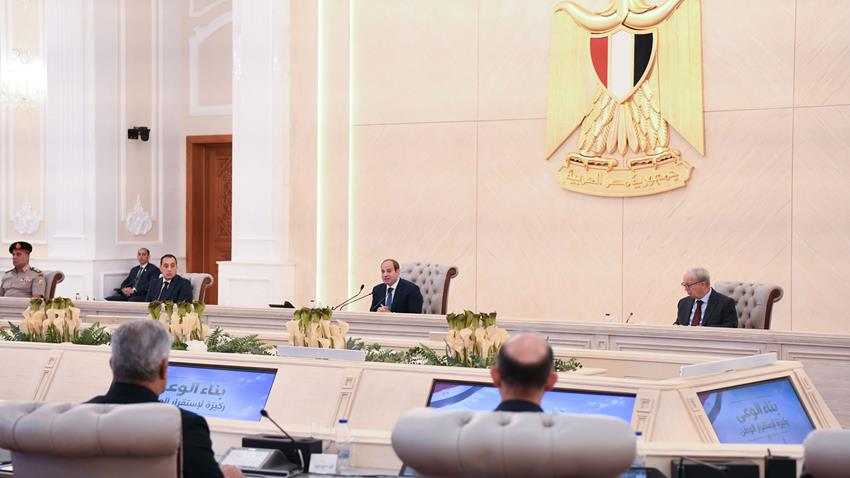
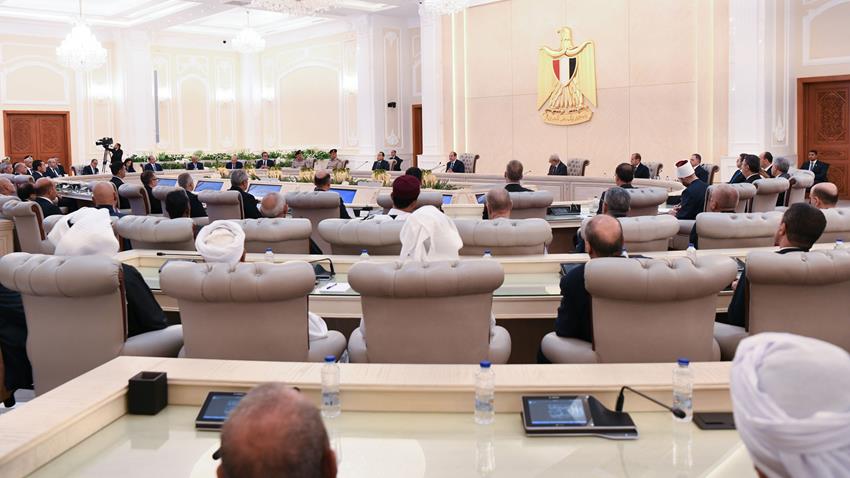
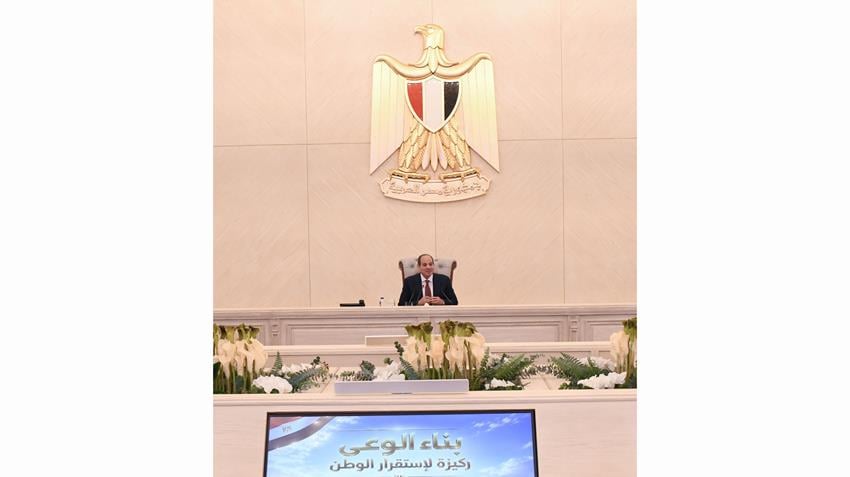
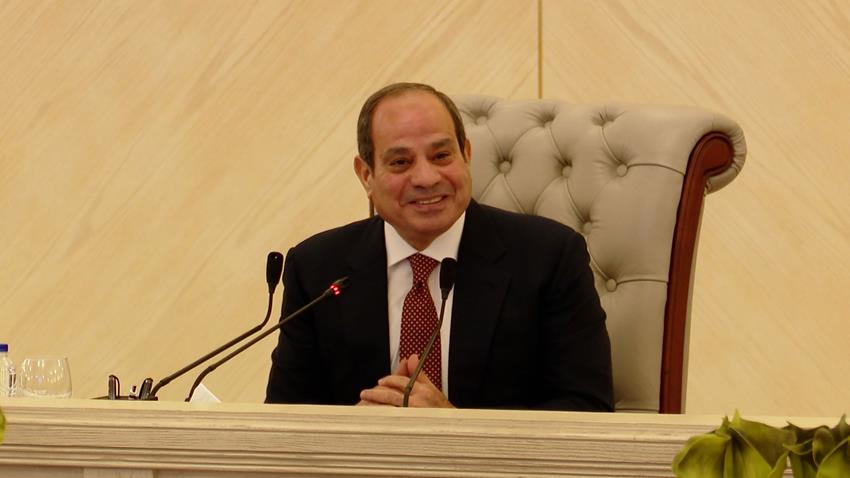
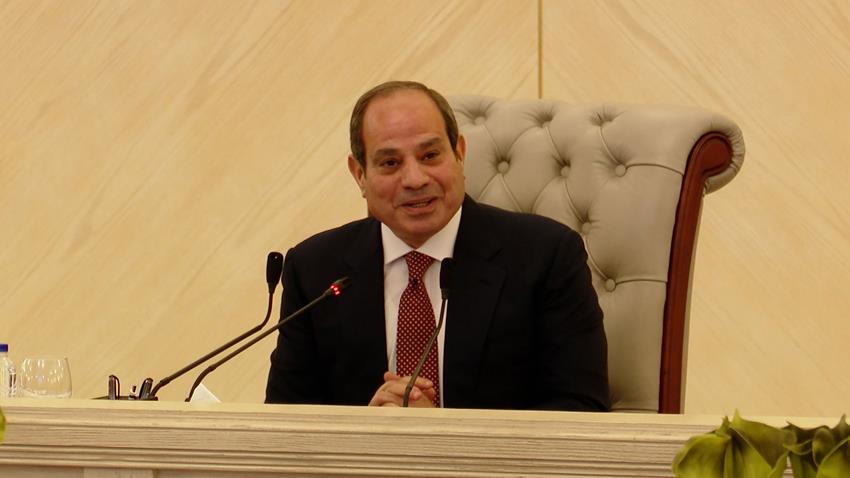
Today, President Abdel Fattah El-Sisi met with Prime Minister Dr. Mostafa Madbouly, along with the full Cabinet and the Council of Governors, in addition to a number of senior officials. The meeting was also attended by leaders of the Armed Forces and the Civil Police, a group of mayors and sheikhs from various villages and hamlets across Egypt's governorates, as well as a number of experts and specialists. The meeting was held at the Strategic Command headquarters in the New Capital.
Spokesman for the Presidency Ambassador Mohamed El-Shennawy stated that President El-Sisi opened the meeting by emphasizing his keenness to hold such meetings continuously and regularly to exchange views and perspectives, taking into account the fact that the state faces numerous challenges. The President stressed the importance of making good use of the state’s resources, consolidating confidence in its institutions, and ensuring the security of the domestic front, particularly given the diversity and multiple attempts to harm the Egyptian state and the persistence behind them.
President El-Sisi underscored that the awareness of the Egyptian people is the shield of defense against such attempts. The President further mentioned that the period of turbulence Egypt witnessed between 2011 and 2013 resulted in a contraction of the Egyptian economy, and that recovery from this could take up to 15 years, noting that the greatest challenge after 2013 was to preserve the survival of the state and its institutions.
President El-Sisi further pointed out that Egypt has been exposed to economic shocks from 2020 to the present, foremost among them the repercussions of the COVID-19 pandemic, the Russian-Ukrainian war, and the war in the Gaza Strip. The President stated that attempts at displacing Palestinians have not ceased, nor will they ever stop, reaffirming that Egypt’s strategic choice is peace, as established by the late President and wise leader Mohamed Anwar El-Sadat.
President El-Sisi stressed that Egypt has no hidden agenda, and that the Palestinian cause remains the central issue in the Middle East, highlighting that the failure to resolve it is a cause of instability in the region, and that the two-state solution represents the only path toward achieving lasting peace and stability in the region.
The President also noted that the constants of Egypt’s foreign-policy include supporting and safeguarding the security and stability of its brothers in the Arab Gulf states, stressing the need to maintain freedom of navigation in maritime corridors in accordance with international law. The President also noted that Egypt has lost approximately $20 billion in Suez Canal revenues in recent years amid the instability that has affected the region.
The President outlined the wide array of tactics used to harm Egypt, including those deployed on social media platforms. The President also stressed the need for the state to develop its various tools to safeguard the country’s resources and capabilities, explaining that the least costly way to destroy any state is to try to induce its own people to carry out that task themselves. In this regard, the President affirmed the strength of the Egyptian state through its institutions and the awareness of its people.
President El-Sisi reiterated the need for officials' performance to be characterized by greater confidence, noting that securing Egypt is a collective responsibility and that work must be done to maintain the cohesion of the domestic front, which requires the concerted efforts of all institutions and citizens.
While acknowledging that some consider solutions to be difficult, the President emphasized that he takes a far more optimistic view, explaining that Egypt possesses enormous resources and that efforts must be made to utilize them effectively.
President El-Sisi also emphasized his keenness to meet with a number of village mayors to hear their ideas, noting that Egypt has 4,500 villages that are home to 50 percent of the Egyptian population. In this context, the mayor of Al-Sarariya village in Samalout, Minya Governorate, spoke, expressing his appreciation for inviting mayors to participate in this meeting for the first time. He noted that a committee of intellectuals had been formed in his village to counter all rumors, emphasizing that good work serves as a repellent to rumors. He outlined the efforts and practical steps he took for the benefit of the residents of his village, including supporting the most needy families, identifying the number of orphaned children in order to provide them with the necessary care, organizing a Qur’an memorization competition, and addressing the phenomenon of underage marriage.
The President praised the remarks made by the mayor of Al-Sarariya, affirming that he represents a positive model worthy of emulation.
President El-Sisi reaffirmed that wars aim to spread frustration and despair, halt construction and development, morally undermine officials, and deter others from joining the government. The President called on officials to exert their utmost efforts and stressed the need for institutional action to mobilize all this potential in order to preserve the state and its stability. The President further noted that positive action leaves a positive impact on others while also contributing to the building of a strong society.
The President emphasized the need for synergy among all institutions to guarantee this outcome, pointing out that preachers from the Ministry of Endowments, as well as priests, for example, could play a role in raising public awareness about the danger of demolishing the state. This could include a daily address in schools to increase awareness of this danger, as part of continuous institutional work.
In this context, President El-Sisi mentioned that the purpose of the training courses provided by the Egyptian Military Academy to newly recruited employees in all ministries is to give them comprehensive exposure to the various dimensions of Egyptian national security before they join the workforce. The President explained that Egypt has tools whose utilization will yield positive results, and that the state seeks to maintain public morale and avoid discouragement. He stressed the need for officials to treat citizens well when providing services to them.
The ministers of Transport; Health and Population; Local Development; Interior; Electricity and Renewable Energy; Finance; Education and Technical Education; Housing, Utilities and Urban Communities; and Higher Education and Scientific Research reviewed the most important achievements made over the past ten years. They emphasized that the focus was on improving the quality of services provided to citizens and addressing all the chronic challenges and inherited problems that had accumulated over the years through decisive and bold solutions. In this regard, the President stressed the need to take all necessary measures in the interests of citizens and to elevate the services provided to them. President El-Sisi instructed the Ministry of Interior to rationalize vehicle licensing costs, while reiterating the importance of treating citizens well.
The President also emphasized the necessity of focusing on the quality and competence of education, highlighting that building and developing Egypt and achieving the intended reform and modernization are collective responsibilities borne by all officials.
President El-Sisi made a point of having lunch with students of the Egyptian Military Academy, accompanied by all the ministers and governors, leaders of the Armed Forces and Ministry of Interior, and everyone who participated in the meeting. An interactive dialogue was held with the students, tackling topics including the issue of water, the Ethiopian dams, artificial intelligence, and developments in the Middle East, particularly the Strait of Hormuz and Bab el-Mandeb.
In this regard, President El-Sisi underscored that, concerning the issue of the Ethiopian dams, the state is allowing room for diplomacy and peaceful solutions, but that this will not come at the expense of Egypt’s existence and the well-being of its people. The President added that the Ethiopian dam was built only as a consequence of the events Egypt experienced between 2011 and 2013 and the absence of the state during that period.
President El-Sisi further stated that the price Egypt paid in 2011 was extremely high, and that he had deliberately mentioned this today to help ensure the preservation of Egypt. In the same context, the President noted that the state is making strenuous efforts to increase its water resources, including through seawater desalination, water treatment, and water recycling.
Regarding artificial intelligence, the President stressed the importance of paying attention to the quality level of education, as this will grant an opportunity to produce generations capable of dealing with and keeping pace with major technological developments. President El-Sisi emphasized the importance of focusing on the positive aspects of artificial intelligence while remaining cautious of its negative dimensions.
Commenting on developments in the region, President El-Sisi reiterated that these events have resulted in an increase in the prices of oil and basic commodities, which was reflected in prices within Egypt. The President also affirmed that the Egyptian state is making every necessary effort to de-escalate tensions in the region and prevent a renewed outbreak of fighting.


Tuesday, 29 September 2026 / 05:20 PM
Today, President Abdel Fattah El-Sisi met with Prime Minister Dr. Mostafa Madbouly, along with the full Cabinet and the Council of Governors, in addition to a number of senior officials. The meeting was also attended by leaders of the Armed Forces and the Civil Police, a group of mayors and sheikhs from various villages and hamlets across Egypt's governorates, as well as a number of experts and specialists. The meeting was held at the Strategic Command headquarters in the New Capital.
Spokesman for the Presidency Ambassador Mohamed El-Shennawy stated that President El-Sisi opened the meeting by emphasizing his keenness to hold such meetings continuously and regularly to exchange views and perspectives, taking into account the fact that the state faces numerous challenges. The President stressed the importance of making good use of the state’s resources, consolidating confidence in its institutions, and ensuring the security of the domestic front, particularly given the diversity and multiple attempts to harm the Egyptian state and the persistence behind them.
President El-Sisi underscored that the awareness of the Egyptian people is the shield of defense against such attempts. The President further mentioned that the period of turbulence Egypt witnessed between 2011 and 2013 resulted in a contraction of the Egyptian economy, and that recovery from this could take up to 15 years, noting that the greatest challenge after 2013 was to preserve the survival of the state and its institutions.
President El-Sisi further pointed out that Egypt has been exposed to economic shocks from 2020 to the present, foremost among them the repercussions of the COVID-19 pandemic, the Russian-Ukrainian war, and the war in the Gaza Strip. The President stated that attempts at displacing Palestinians have not ceased, nor will they ever stop, reaffirming that Egypt’s strategic choice is peace, as established by the late President and wise leader Mohamed Anwar El-Sadat.
President El-Sisi stressed that Egypt has no hidden agenda, and that the Palestinian cause remains the central issue in the Middle East, highlighting that the failure to resolve it is a cause of instability in the region, and that the two-state solution represents the only path toward achieving lasting peace and stability in the region.
The President also noted that the constants of Egypt’s foreign-policy include supporting and safeguarding the security and stability of its brothers in the Arab Gulf states, stressing the need to maintain freedom of navigation in maritime corridors in accordance with international law. The President also noted that Egypt has lost approximately $20 billion in Suez Canal revenues in recent years amid the instability that has affected the region.
The President outlined the wide array of tactics used to harm Egypt, including those deployed on social media platforms. The President also stressed the need for the state to develop its various tools to safeguard the country’s resources and capabilities, explaining that the least costly way to destroy any state is to try to induce its own people to carry out that task themselves. In this regard, the President affirmed the strength of the Egyptian state through its institutions and the awareness of its people.
President El-Sisi reiterated the need for officials' performance to be characterized by greater confidence, noting that securing Egypt is a collective responsibility and that work must be done to maintain the cohesion of the domestic front, which requires the concerted efforts of all institutions and citizens.
While acknowledging that some consider solutions to be difficult, the President emphasized that he takes a far more optimistic view, explaining that Egypt possesses enormous resources and that efforts must be made to utilize them effectively.
President El-Sisi also emphasized his keenness to meet with a number of village mayors to hear their ideas, noting that Egypt has 4,500 villages that are home to 50 percent of the Egyptian population. In this context, the mayor of Al-Sarariya village in Samalout, Minya Governorate, spoke, expressing his appreciation for inviting mayors to participate in this meeting for the first time. He noted that a committee of intellectuals had been formed in his village to counter all rumors, emphasizing that good work serves as a repellent to rumors. He outlined the efforts and practical steps he took for the benefit of the residents of his village, including supporting the most needy families, identifying the number of orphaned children in order to provide them with the necessary care, organizing a Qur’an memorization competition, and addressing the phenomenon of underage marriage.
The President praised the remarks made by the mayor of Al-Sarariya, affirming that he represents a positive model worthy of emulation.
President El-Sisi reaffirmed that wars aim to spread frustration and despair, halt construction and development, morally undermine officials, and deter others from joining the government. The President called on officials to exert their utmost efforts and stressed the need for institutional action to mobilize all this potential in order to preserve the state and its stability. The President further noted that positive action leaves a positive impact on others while also contributing to the building of a strong society.
The President emphasized the need for synergy among all institutions to guarantee this outcome, pointing out that preachers from the Ministry of Endowments, as well as priests, for example, could play a role in raising public awareness about the danger of demolishing the state. This could include a daily address in schools to increase awareness of this danger, as part of continuous institutional work.
In this context, President El-Sisi mentioned that the purpose of the training courses provided by the Egyptian Military Academy to newly recruited employees in all ministries is to give them comprehensive exposure to the various dimensions of Egyptian national security before they join the workforce. The President explained that Egypt has tools whose utilization will yield positive results, and that the state seeks to maintain public morale and avoid discouragement. He stressed the need for officials to treat citizens well when providing services to them.
The ministers of Transport; Health and Population; Local Development; Interior; Electricity and Renewable Energy; Finance; Education and Technical Education; Housing, Utilities and Urban Communities; and Higher Education and Scientific Research reviewed the most important achievements made over the past ten years. They emphasized that the focus was on improving the quality of services provided to citizens and addressing all the chronic challenges and inherited problems that had accumulated over the years through decisive and bold solutions. In this regard, the President stressed the need to take all necessary measures in the interests of citizens and to elevate the services provided to them. President El-Sisi instructed the Ministry of Interior to rationalize vehicle licensing costs, while reiterating the importance of treating citizens well.
The President also emphasized the necessity of focusing on the quality and competence of education, highlighting that building and developing Egypt and achieving the intended reform and modernization are collective responsibilities borne by all officials.
President El-Sisi made a point of having lunch with students of the Egyptian Military Academy, accompanied by all the ministers and governors, leaders of the Armed Forces and Ministry of Interior, and everyone who participated in the meeting. An interactive dialogue was held with the students, tackling topics including the issue of water, the Ethiopian dams, artificial intelligence, and developments in the Middle East, particularly the Strait of Hormuz and Bab el-Mandeb.
In this regard, President El-Sisi underscored that, concerning the issue of the Ethiopian dams, the state is allowing room for diplomacy and peaceful solutions, but that this will not come at the expense of Egypt’s existence and the well-being of its people. The President added that the Ethiopian dam was built only as a consequence of the events Egypt experienced between 2011 and 2013 and the absence of the state during that period.
President El-Sisi further stated that the price Egypt paid in 2011 was extremely high, and that he had deliberately mentioned this today to help ensure the preservation of Egypt. In the same context, the President noted that the state is making strenuous efforts to increase its water resources, including through seawater desalination, water treatment, and water recycling.
Regarding artificial intelligence, the President stressed the importance of paying attention to the quality level of education, as this will grant an opportunity to produce generations capable of dealing with and keeping pace with major technological developments. President El-Sisi emphasized the importance of focusing on the positive aspects of artificial intelligence while remaining cautious of its negative dimensions.
Commenting on developments in the region, President El-Sisi reiterated that these events have resulted in an increase in the prices of oil and basic commodities, which was reflected in prices within Egypt. The President also affirmed that the Egyptian state is making every necessary effort to de-escalate tensions in the region and prevent a renewed outbreak of fighting.

All rights reserved to the presidency Copyright © 2020
All rights reserved to the presidency Copyright © 2020