
All rights reserved to the presidency Copyright © 2020



Tuesday, 30 June 2026 / 11:57 AM
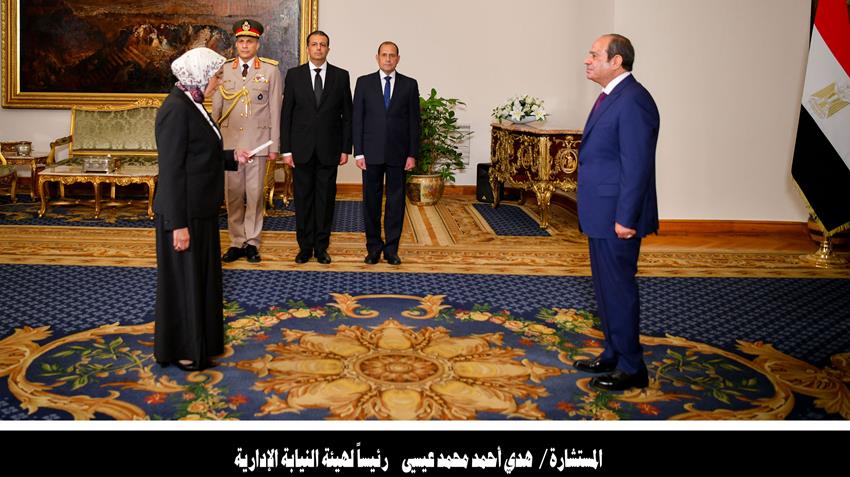
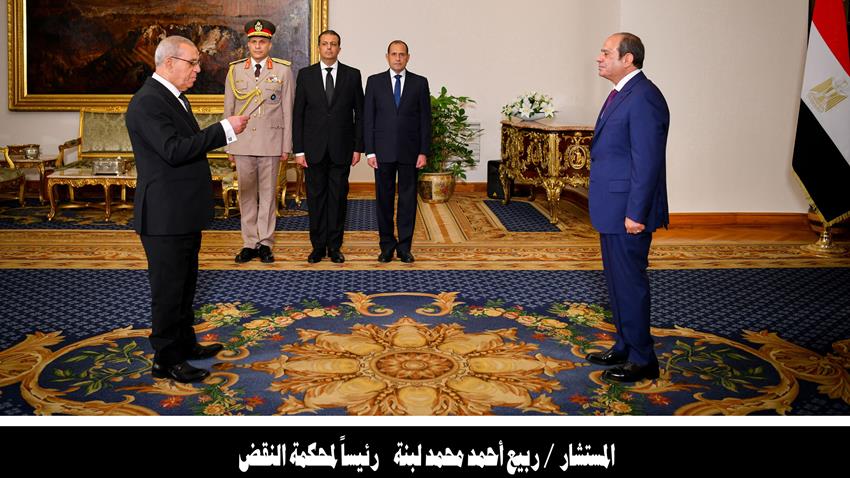
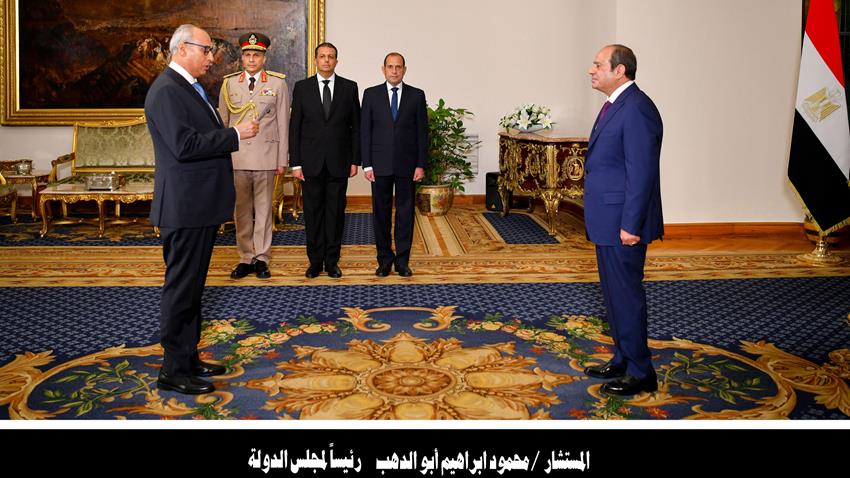
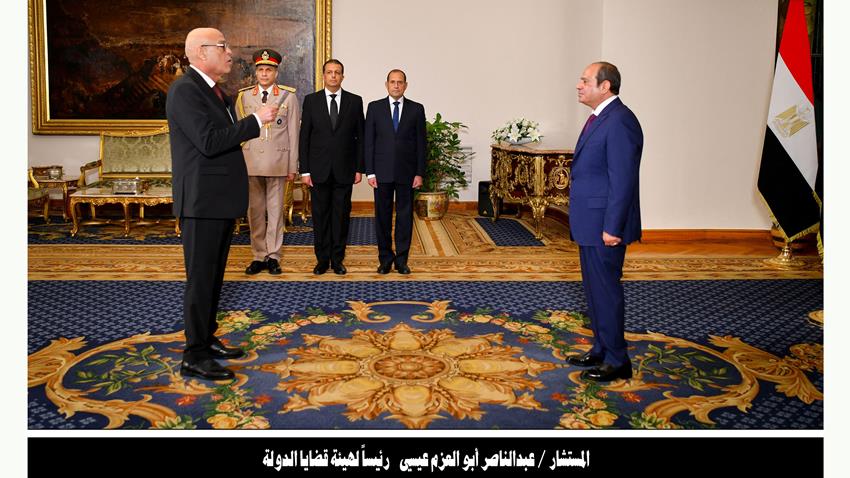
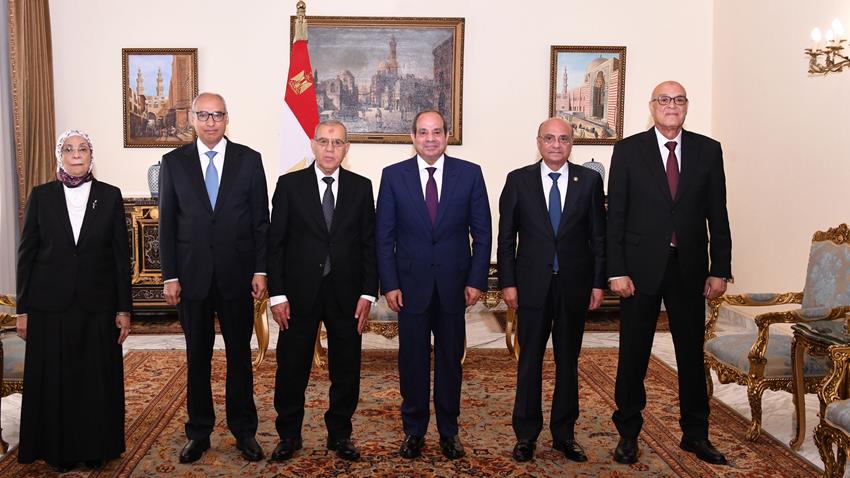
Today, President Abdel Fattah El-Sisi witnessed the swearing-in of the new heads of judicial bodies. They included Counselor Rabie Ahmed Mohamed Lebna who took the oath as President of the Court of Cassation; Counselor Mahmoud Ibrahim Mohamed Abu El-Dahab as Chairman of the State Council; Counselor Abdel Naser Abu El-Azm Eissa as President of the State Lawsuits Authority; and Counselor Hoda Ahmed Mohamed Eissa as President of the Administrative Prosecution Authority.
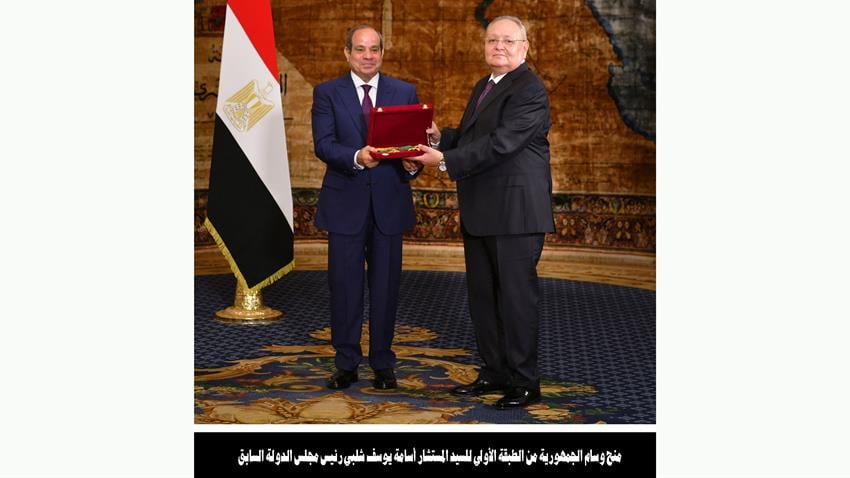
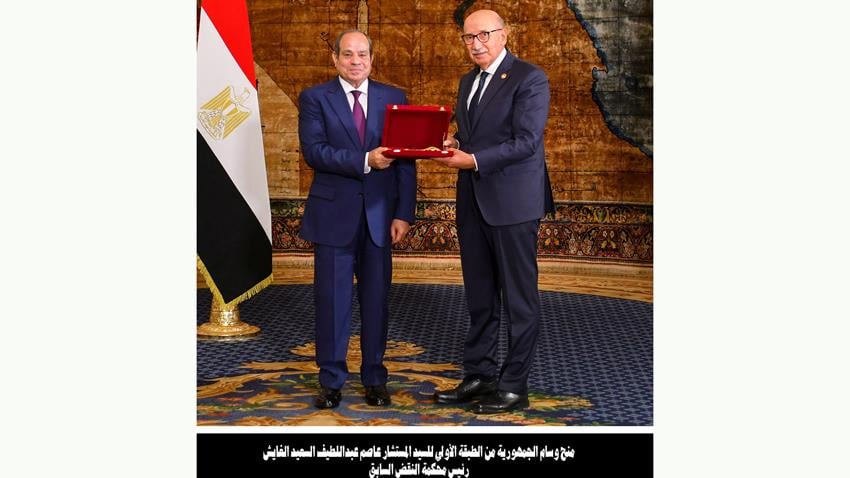
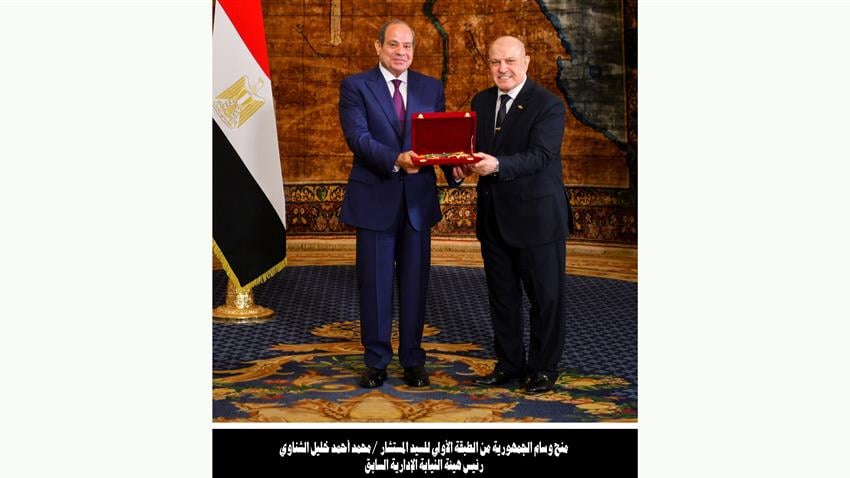
Spokesman for the Presidency Ambassador Mohamed El-Shennawy said the President awarded the Order of the Republic, First Class, to each of Counselor Assem Abdel Latif El-Saeed El-Ghaish, former President of the Court of Cassation; Counselor Osama Youssef Shalaby, former Chairman of the State Council; and Counselor Mohamed Ahmed Khalil El-Shennawy, former President of the Administrative Prosecution Authority. This was in appreciation of their dedication as well as their sincere efforts in serving the homeland, upholding justice, and developing the Egyptian judicial system.
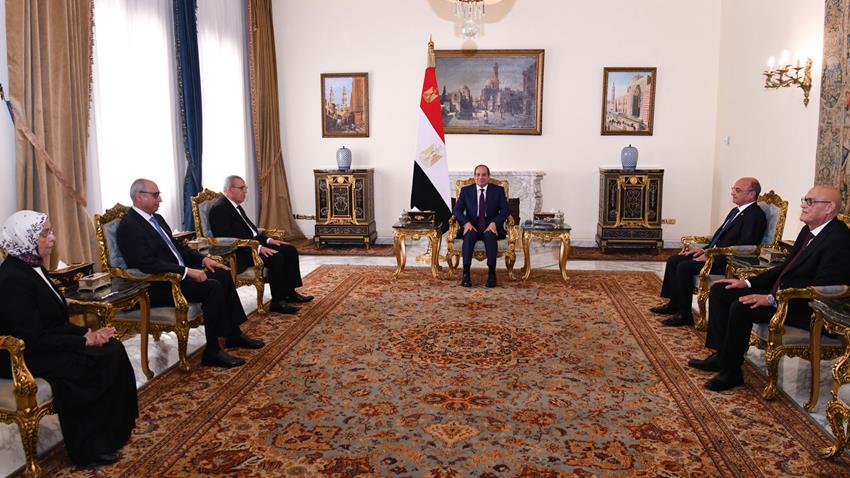
During a meeting with the new heads of the judicial bodies, President El-Sisi wished them success in their national duties, emphasizing his confidence in their ability to further strengthen the rule of law and consolidate the values of justice and equality among all citizens. The President emphasized the commitment of all state institutions to supporting the independence of the judiciary, enforcing the law, and upholding the values of truth and justice, which form the cornerstone of the modern Egyptian State within the framework of the New Republic.
President El-Sisi lauded the central role of the revered judicial institutions and bodies in protecting public funds and state property, combating corruption and terrorism, and safeguarding citizens' freedoms, rights, and properties. The President noted the tangible progress achieved in the speed and mechanisms of litigation, the enhancement of the role of the judiciary, and the empowerment of Egyptian women within the judicial system.



Tuesday, 30 June 2026 / 11:57 AM
Today, President Abdel Fattah El-Sisi witnessed the swearing-in of the new heads of judicial bodies. They included Counselor Rabie Ahmed Mohamed Lebna who took the oath as President of the Court of Cassation; Counselor Mahmoud Ibrahim Mohamed Abu El-Dahab as Chairman of the State Council; Counselor Abdel Naser Abu El-Azm Eissa as President of the State Lawsuits Authority; and Counselor Hoda Ahmed Mohamed Eissa as President of the Administrative Prosecution Authority.
Spokesman for the Presidency Ambassador Mohamed El-Shennawy said the President awarded the Order of the Republic, First Class, to each of Counselor Assem Abdel Latif El-Saeed El-Ghaish, former President of the Court of Cassation; Counselor Osama Youssef Shalaby, former Chairman of the State Council; and Counselor Mohamed Ahmed Khalil El-Shennawy, former President of the Administrative Prosecution Authority. This was in appreciation of their dedication as well as their sincere efforts in serving the homeland, upholding justice, and developing the Egyptian judicial system.
During a meeting with the new heads of the judicial bodies, President El-Sisi wished them success in their national duties, emphasizing his confidence in their ability to further strengthen the rule of law and consolidate the values of justice and equality among all citizens. The President emphasized the commitment of all state institutions to supporting the independence of the judiciary, enforcing the law, and upholding the values of truth and justice, which form the cornerstone of the modern Egyptian State within the framework of the New Republic.
President El-Sisi lauded the central role of the revered judicial institutions and bodies in protecting public funds and state property, combating corruption and terrorism, and safeguarding citizens' freedoms, rights, and properties. The President noted the tangible progress achieved in the speed and mechanisms of litigation, the enhancement of the role of the judiciary, and the empowerment of Egyptian women within the judicial system.

All rights reserved to the presidency Copyright © 2020
All rights reserved to the presidency Copyright © 2020