
All rights reserved to the presidency Copyright © 2020


Tuesday, 07 October 2025 / 02:37 PM
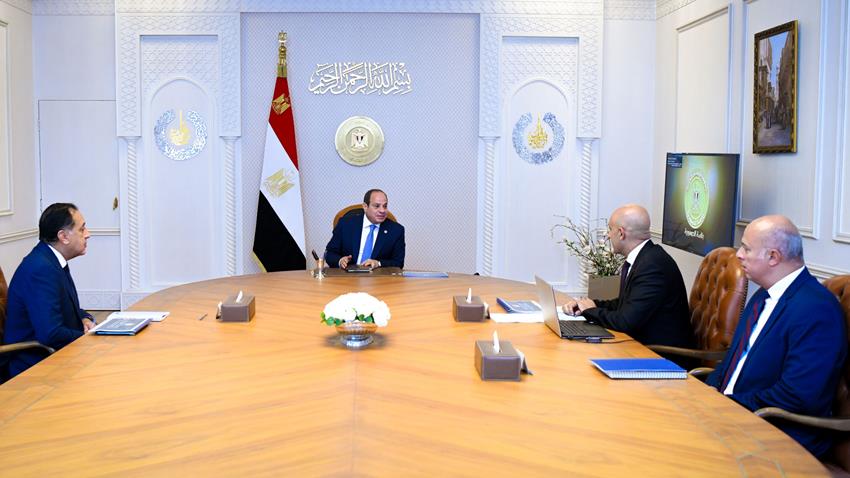
Today, President Abdel Fattah El-Sisi met with Prime Minister, Dr. Moustafa Madbouly, and Minister of Education and Technical Education, Mohamed Abdel Latif.
Spokesman for the Presidency, Ambassador Mohamed El- Shennawy, said the President was keen on following-up on the progress and regularity of the education process, coinciding with the beginning of the new academic year. This year has seen an unprecedented attendance rate of approximately 87.5% of the total number of students, the elimination of high student density and the rectification of the shortage in the number of teachers
The President was briefed on efforts to develop educational curricula. The Minister of Education noted that 94 curricula have been developed across all educational stages. He said the ministry engaged a committee comprising teachers, senior academics and university professors to review the revised curricula. This is in addition to launching a qualification and training program for teachers on the new curricula, in collaboration with UNICEF, with the addition of programming and Artificial Intelligence, AI, subjects, as part of the development process.
President El-Sisi underscored the necessity to strengthen efforts to implement and apply procedures and steps that would develop and support the various components of the educational process. The President stressed the imperative to provide an outstanding educational system, with interest in developing various educational curricula to keep pace with the requirements of the digital age and the major changes in various sciences worldwide. The President also confirmed the importance of linking educational curricula to the needs of the labor market.
The meeting also addressed the priorities of the investment plan for the fiscal year 2025 – 2026 within the education sector, with a focus on expanding distinguished and competitive educational institutions. This is intended to ensure the competitiveness of educational outcomes, while simultaneously developing the technical and applied education system, by fostering partnerships with the private sector for the establishment of applied technology schools that help provide a workforce whose skills are aligned with the demands of the labor market.
The President was also briefed on progress in the implementation of the National Program for Developing Reading and Writing Skills for Primary School Students. The Minister of Education noted that this program is the outcome of a strategic partnership between the Ministry and international organizations, and reflects the shared commitment to improving the quality of education. The goal of the program is to develop reading and writing skills of struggling students by developing the skills of teachers to provide students with basic reading and writing skills. He added that the program is being implemented in 10 governorates, with 2,000 schools, and a total of one million male and female students in the first phase.
The President also followed up on the implementation of the Egyptian Baccalaureate system, which is being applied for the first time this year. The Minister of Education pointed out that while the educational foundations in both the Thanaweya Amma (General Secondary Education Certificate) and Baccalaureate systems are unchanging, the Baccalaureate system offers a better educational framework with fewer subjects and provides multiple testing opportunities. He also noted that the enrollment rate for the new Baccalaureate system since its launch has reached nearly 88% of the total student population.
The meeting discussed the progress of the Egyptian-German Schools initiative, with the first school having been opened in 6th of October City. Expansion is ongoing, with plans to open about 100 new German schools in various governorates. The Minister indicated that this initiative offers a comprehensive educational system, starting from kindergarten and extending to secondary school, with a gradual expansion plan for these schools every year to ensure quality and continuity.
President El-Sisi emphasized the importance of focusing on educational fields related to modern technologies, such as Artificial Intelligence and digitization, given the fact that they are key areas in the development process. The President also directed that public investments in the education sector be increased, and that the educational process should continue to evolve in a way that encourages creativity, innovation, and entrepreneurship, incorporating technology as a core educational element.
Furthermore, the President stressed the need to continue focusing on teachers’ affairs, directing the allocation of a teaching incentive of 1,000 EGP starting from November 1, 2025. He also emphasized the need to improve the economic conditions of teachers, making it one of the country’s top priorities in the upcoming phase.


Tuesday, 07 October 2025 / 02:37 PM
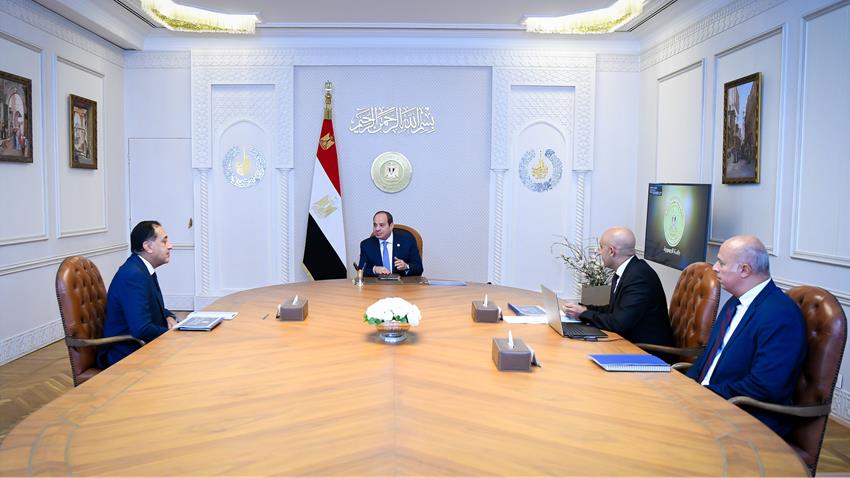
Today, President Abdel Fattah El-Sisi met with Prime Minister, Dr. Moustafa Madbouly, and Minister of Education and Technical Education, Mohamed Abdel Latif.
Spokesman for the Presidency, Ambassador Mohamed El- Shennawy, said the President was keen on following-up on the progress and regularity of the education process, coinciding with the beginning of the new academic year. This year has seen an unprecedented attendance rate of approximately 87.5% of the total number of students, the elimination of high student density and the rectification of the shortage in the number of teachers
The President was briefed on efforts to develop educational curricula. The Minister of Education noted that 94 curricula have been developed across all educational stages. He said the ministry engaged a committee comprising teachers, senior academics and university professors to review the revised curricula. This is in addition to launching a qualification and training program for teachers on the new curricula, in collaboration with UNICEF, with the addition of programming and Artificial Intelligence, AI, subjects, as part of the development process.
President El-Sisi underscored the necessity to strengthen efforts to implement and apply procedures and steps that would develop and support the various components of the educational process. The President stressed the imperative to provide an outstanding educational system, with interest in developing various educational curricula to keep pace with the requirements of the digital age and the major changes in various sciences worldwide. The President also confirmed the importance of linking educational curricula to the needs of the labor market.
The meeting also addressed the priorities of the investment plan for the fiscal year 2025 – 2026 within the education sector, with a focus on expanding distinguished and competitive educational institutions. This is intended to ensure the competitiveness of educational outcomes, while simultaneously developing the technical and applied education system, by fostering partnerships with the private sector for the establishment of applied technology schools that help provide a workforce whose skills are aligned with the demands of the labor market.
The President was also briefed on progress in the implementation of the National Program for Developing Reading and Writing Skills for Primary School Students. The Minister of Education noted that this program is the outcome of a strategic partnership between the Ministry and international organizations, and reflects the shared commitment to improving the quality of education. The goal of the program is to develop reading and writing skills of struggling students by developing the skills of teachers to provide students with basic reading and writing skills. He added that the program is being implemented in 10 governorates, with 2,000 schools, and a total of one million male and female students in the first phase.
The President also followed up on the implementation of the Egyptian Baccalaureate system, which is being applied for the first time this year. The Minister of Education pointed out that while the educational foundations in both the Thanaweya Amma (General Secondary Education Certificate) and Baccalaureate systems are unchanging, the Baccalaureate system offers a better educational framework with fewer subjects and provides multiple testing opportunities. He also noted that the enrollment rate for the new Baccalaureate system since its launch has reached nearly 88% of the total student population.
The meeting discussed the progress of the Egyptian-German Schools initiative, with the first school having been opened in 6th of October City. Expansion is ongoing, with plans to open about 100 new German schools in various governorates. The Minister indicated that this initiative offers a comprehensive educational system, starting from kindergarten and extending to secondary school, with a gradual expansion plan for these schools every year to ensure quality and continuity.
President El-Sisi emphasized the importance of focusing on educational fields related to modern technologies, such as Artificial Intelligence and digitization, given the fact that they are key areas in the development process. The President also directed that public investments in the education sector be increased, and that the educational process should continue to evolve in a way that encourages creativity, innovation, and entrepreneurship, incorporating technology as a core educational element.
Furthermore, the President stressed the need to continue focusing on teachers’ affairs, directing the allocation of a teaching incentive of 1,000 EGP starting from November 1, 2025. He also emphasized the need to improve the economic conditions of teachers, making it one of the country’s top priorities in the upcoming phase.

All rights reserved to the presidency Copyright © 2020
All rights reserved to the presidency Copyright © 2020